1 named cultivar
The Story
Plant Bio
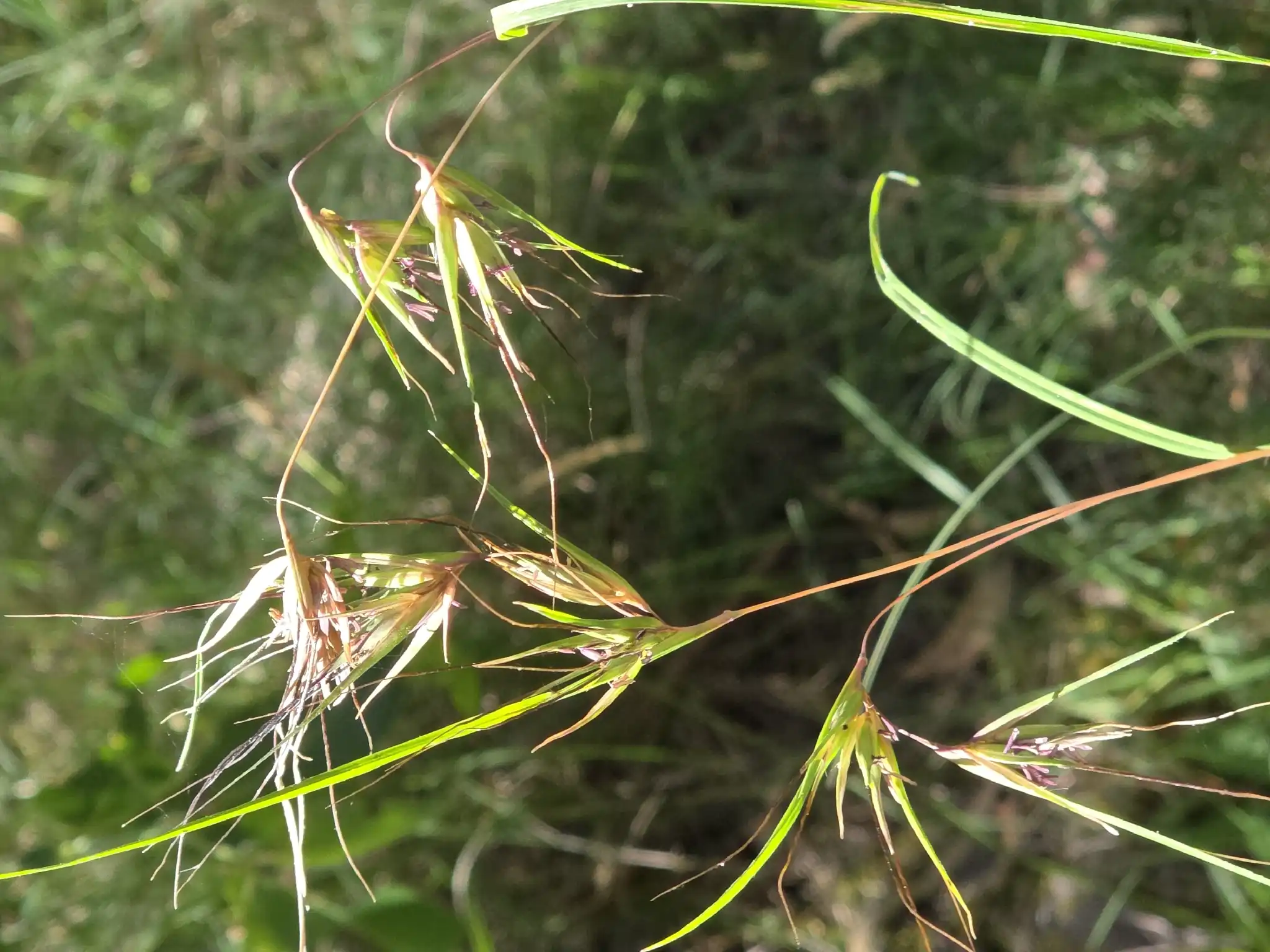
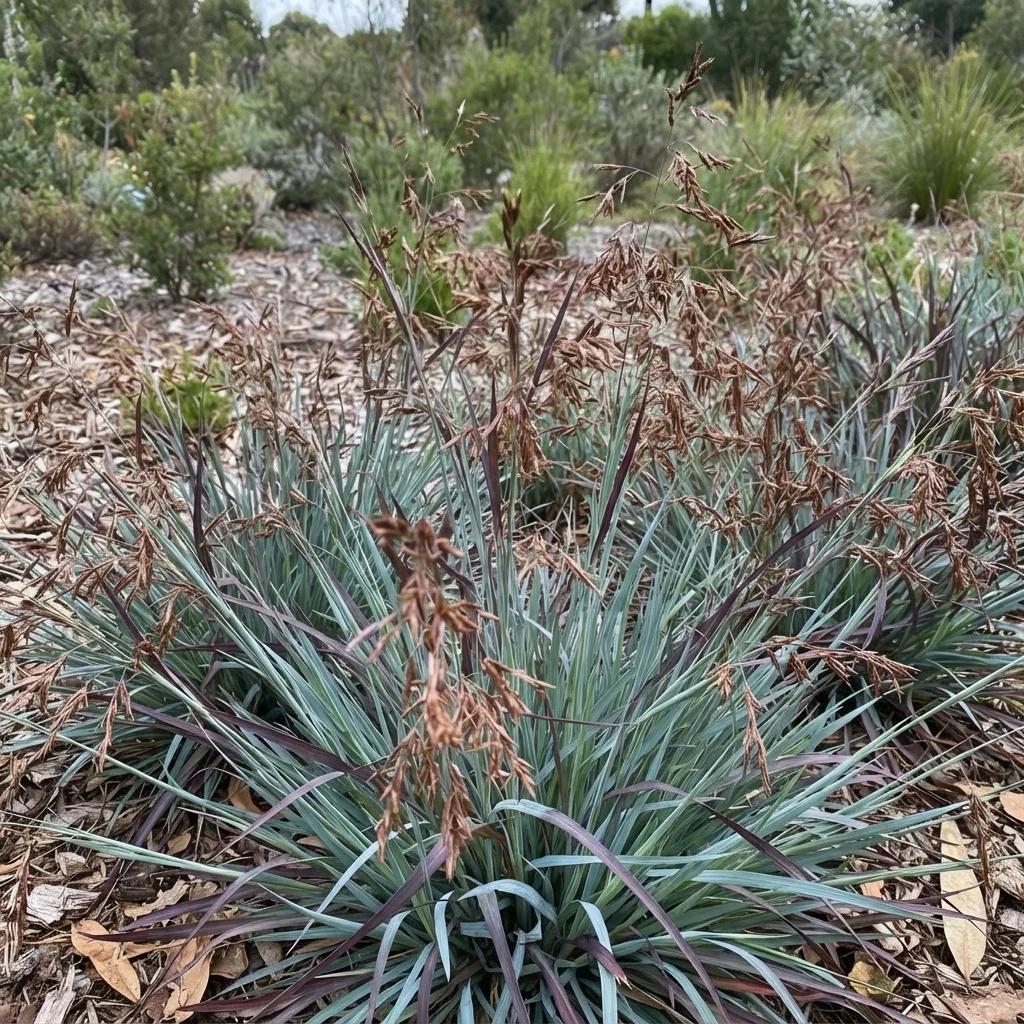
Themeda triandra is a densely tufted, erect perennial grass native to Africa, Asia, and Australia, forming clumps of delicate, arching foliage. The narrow linear leaves transition from green or blue-green to distinct pink and orange-brown tones during the warmer months.
This species is distinguished by its large, branching red-brown spikelets that bear prominent, dark awns up to three inches long. It exhibits exceptional drought tolerance once established and adapts readily to nutrient-poor soils.
Uses & Benefits:
Essentials
At a Glance
Plant Type
Grass
Height
48"
Width
20"
Light
Full Sun, Partial Sun
Zones
8, 9, 10
Water
Low
Humidity
Tolerates varied humidity
Lifespan
Perennial
Native To
Africa, Asia, Australia
Toxicity
Non-toxic
Planting
How to Grow
- Sow seeds in a well-drained propagation mix, applying light or specialized pre-treatment to overcome the natural twelve-month dormancy.
- Transplant young plugs into a full sun to partially shaded position in well-drained soil.
- Water moderately during the first active growing season to establish a deep root system.
- Cease regular irrigation once established, as the mature grass relies on natural rainfall and tolerates dry conditions.
Pro Tip
Avoid frequent or low mowing, which severely weakens the root system; instead, cut the foliage back hard only once every few years to clear out dead thatch.
Keep It Thriving
Care Guide
Do
- Grow in well-drained sandy loams or clay soils.
- Allow the foliage to flush with orange-brown tones in late summer.
- Provide full sun to maximize spikelet development.
Don't
- Do not plant in waterlogged or poorly drained sites.
- Do not apply heavy fertilizers, as the plant thrives in low-nutrient soils.
- Do not shear the grass annually, which depletes its energy reserves.
Seasonal Care Calendar
| Task | Jan | Feb | Mar | Apr | May | Jun | Jul | Aug | Sep | Oct | Nov | Dec |
|---|---|---|---|---|---|---|---|---|---|---|---|---|
| Pest Check | ||||||||||||
| Plant | ||||||||||||
| Propagate | ||||||||||||
| Prune |
Watch Out For
Pests & Diseases
Common Pests
Common Diseases
In the Garden
Landscape Uses & Companions
Landscape Uses
Companion Plants
Multiply
Propagation Methods
Good to Know
Common Questions
Kangaroo Grass questions
What zones can Kangaroo Grass grow in?
Kangaroo Grass is hardy in USDA Zones 8–10. Inside that range it survives winter in the ground; outside it, grow it as an annual or a container plant you protect.
When does Kangaroo Grass bloom?
Kangaroo Grass typically blooms in summer through late summer. Exact timing shifts a week or two with your zone — Sow's bloom calendar maps it to your garden.
Does Kangaroo Grass need full sun?
Kangaroo Grass does best in full sun to part shade. In hot climates, afternoon shade keeps blooms fresher longer.
Is Kangaroo Grass drought tolerant?
Yes — once established (usually after the first full season), Kangaroo Grass handles dry spells with minimal watering. Water deeply its first year to build the root system that makes that possible.
Keep exploring
Explore the genus
Hardy in your zone?
Grow Kangaroo Grass with confidence
See it in a design of your actual yard, get zone-matched care reminders, and track it season by season in your garden journal.