The Story
Plant Bio
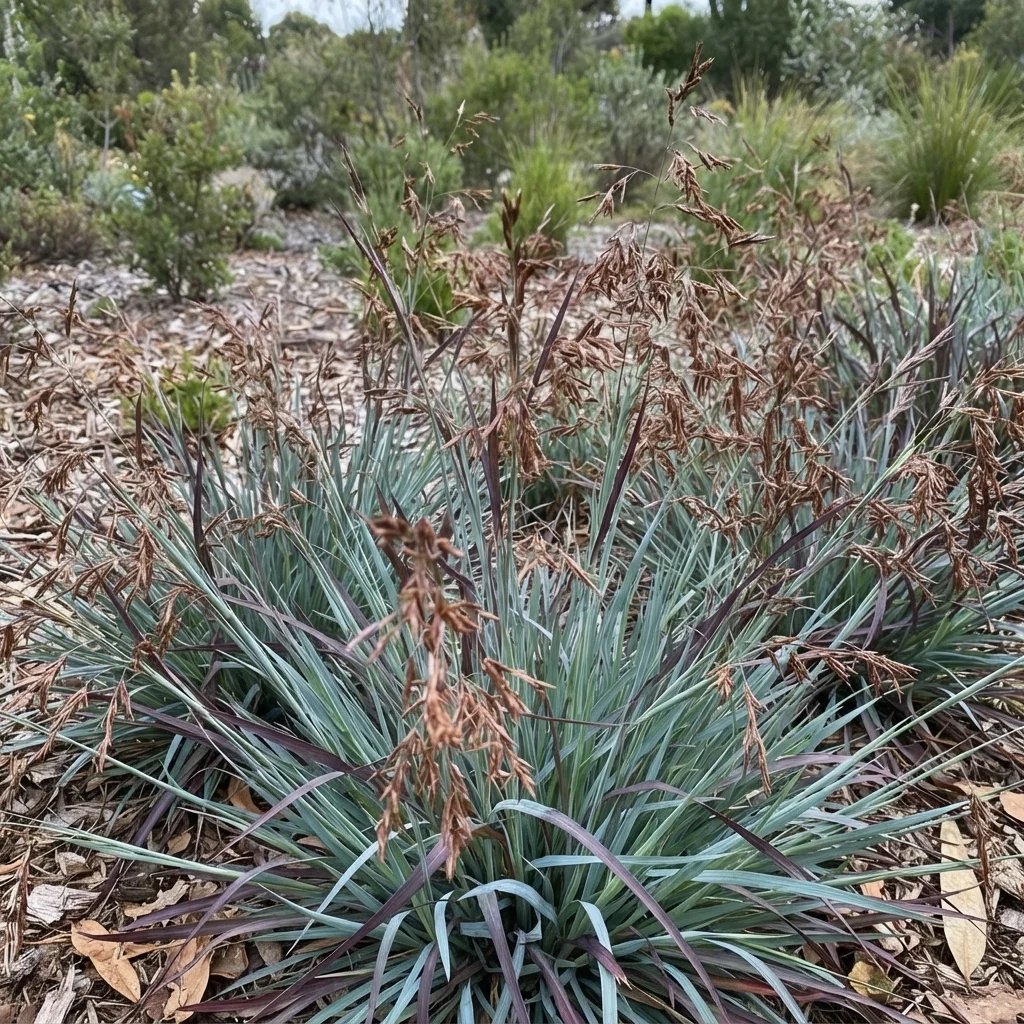
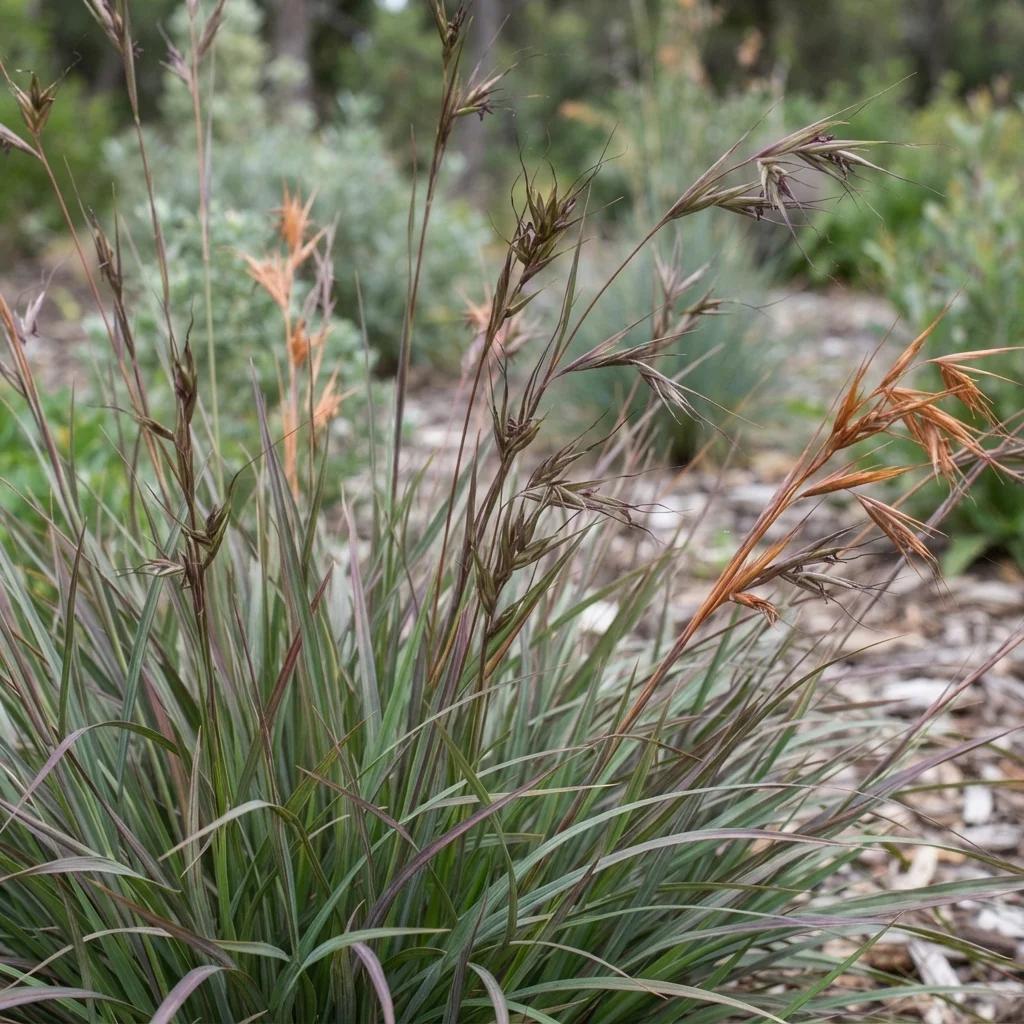
Themeda triandra is a widespread, tufted perennial grass native to Africa, Asia, and Australia, where it forms a key component of native grasslands. The species features narrow, linear leaves that transition through shades of green, blue-grey, and rusty red, topped by nodding, reddish-brown seed heads on tall stems.
'Mingo' is a distinct prostrate cultivar selected for its low-spreading, dense, ground-hugging habit that rarely exceeds one foot in height. Its foliage maintains a pronounced blue-green to blue-grey coloration, making it an effective weed-suppressing groundcover or rockery plant.
Uses & Benefits:
Essentials
At a Glance
Plant Type
Grass
Height
12"
Width
24"
Light
Full Sun, Partial Sun
Zones
8, 9, 10
Water
Low
Humidity
Low to Moderate
Lifespan
Perennial
Native To
Africa, Asia, Australia
Toxicity
Non-toxic
Bloom period
Summer – Autumn
In flower about 6 months of the year
Planting
How to Grow
- Select a planting site in full sun to partial shade with exceptionally well-drained soil.
- Dig a hole twice the width of the root ball and set the plant so the crown sits level with the surrounding soil.
- Water thoroughly immediately after planting to settle the soil around the roots.
- Apply a light layer of organic mulch around the base, keeping it clear of the immediate crown to prevent rot.
- Irrigate sparingly during the first season; once established, restrict water to natural rainfall.
Pro Tip
Never shear this grass down to the ground like a turf lawn, as scalp-pruning into the crown will kill the plant. To maintain vigor, rely on hand-division of established clumps or limit pruning to a light comb-through to remove dead thatch.
Keep It Thriving
Care Guide
Do
- Ensure the soil drains rapidly to prevent root rot.
- Grow in full sun to maintain the tight, prostrate habit and blue-grey foliage color.
- Divide established clumps in early spring to rejuvenate older plantings.
Don't
- Do not over-fertilize, as excess nutrients cause weak, floppy growth.
- Do not shear the plant down to the ground, which can kill the crown.
- Do not allow water to pool around the base of the plant.
Seasonal Care Calendar
| Task | Jan | Feb | Mar | Apr | May | Jun | Jul | Aug | Sep | Oct | Nov | Dec |
|---|---|---|---|---|---|---|---|---|---|---|---|---|
| Divide | ||||||||||||
| Fertilize | ||||||||||||
| Mulch | ||||||||||||
| Pest Check | ||||||||||||
| Spring Cleanup |
Watch Out For
Pests & Diseases
Common Pests
Common Diseases
In the Garden
Landscape Uses & Companions
Landscape Uses
Companion Plants
Multiply
Propagation Methods
Good to Know
Common Questions
Kangaroo Grass questions
What zones can Kangaroo Grass grow in?
Kangaroo Grass is hardy in USDA Zones 8–10. Inside that range it survives winter in the ground; outside it, grow it as an annual or a container plant you protect.
Is Kangaroo Grass deer resistant?
Not reliably. Deer may browse Kangaroo Grass, especially tender spring growth — plan on repellents or fencing where pressure is high.
When does Kangaroo Grass bloom?
Kangaroo Grass typically blooms in summer through autumn. Exact timing shifts a week or two with your zone — Sow's bloom calendar maps it to your garden.
Does Kangaroo Grass need full sun?
Kangaroo Grass does best in full sun to part shade. In hot climates, afternoon shade keeps blooms fresher longer.
Is Kangaroo Grass drought tolerant?
Yes — once established (usually after the first full season), Kangaroo Grass handles dry spells with minimal watering. Water deeply its first year to build the root system that makes that possible.
Keep exploring
Explore the genus
Hardy in your zone?
Grow Kangaroo Grass with confidence
See it in a design of your actual yard, get zone-matched care reminders, and track it season by season in your garden journal.