The Story
Plant Bio
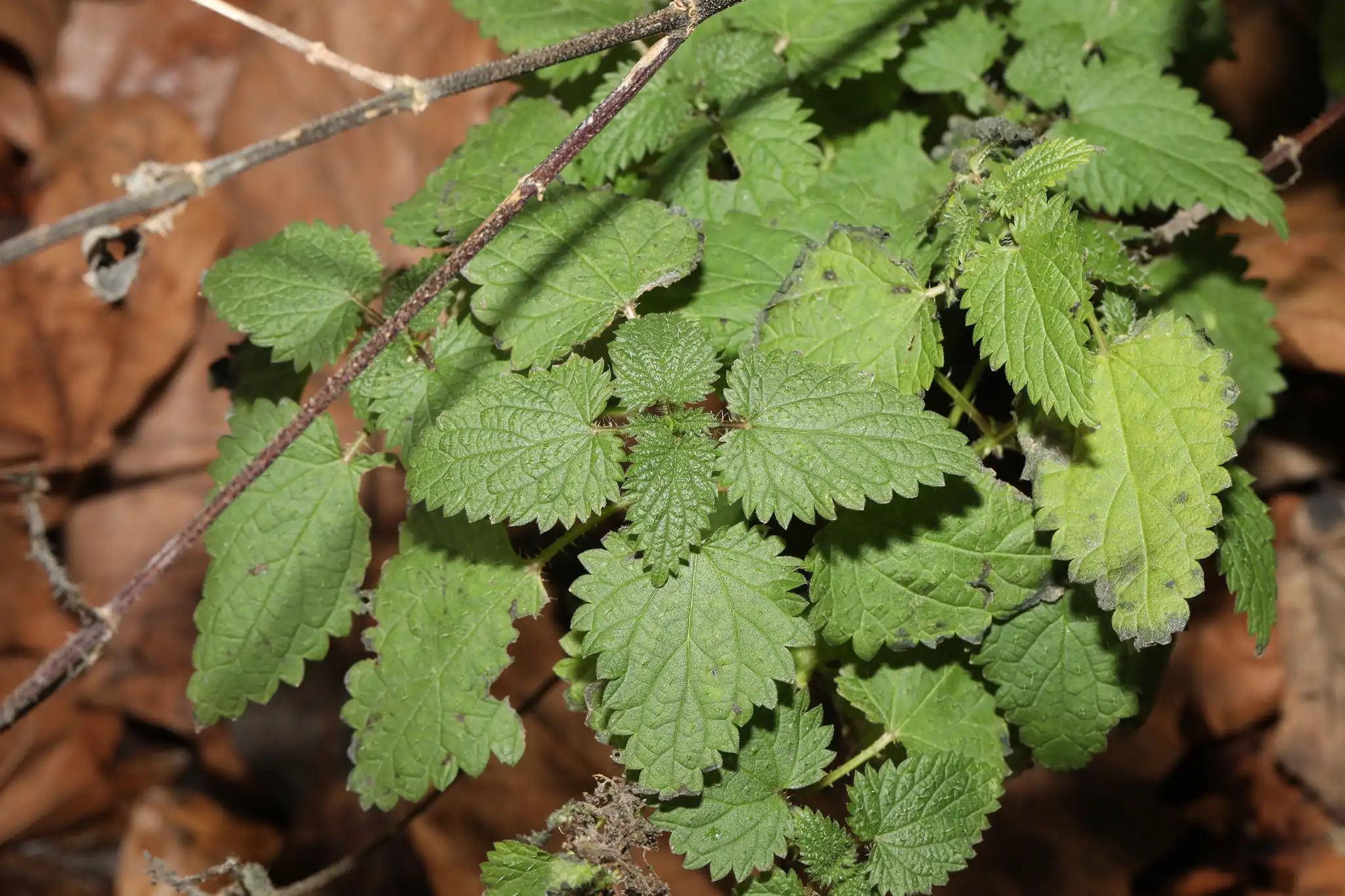
Urtica dioica, commonly known as stinging nettle, is a vigorous, erect herbaceous perennial native across the temperate regions of the Northern Hemisphere. It features lanceolate, coarsely toothed dark green leaves and pubescent stems covered in stinging hairs that release irritating chemicals upon contact.
The species spreads aggressively via creeping underground rhizomes, quickly forming dense colonies in moist, nitrogen-rich soils. In summer, it produces axillary, branching spikes of tiny, inconspicuous greenish flowers that rely on wind pollination.
Uses & Benefits:
Essentials
At a Glance
Plant Type
Perennial
Height
59"
Width
47"
Light
Full Sun, Partial Sun
Zones
4, 5, 6, 7, 8, 9
Water
Moderate
Humidity
High
Lifespan
Perennial
Native To
Europe, Asia, North America
Toxicity
Skin irritant; toxic raw, edible cooked
Bloom period
Summer – Fall
In flower about 6 months of the year
Planting
How to Grow
- Select a planting site with moist, fertile, nitrogen-rich soil in full sun to partial shade.
- Dig a hole twice the width of the root system and install a deep physical root barrier to restrict rhizome spread.
- Set the plant or plug into the hole at the same depth as its original container and backfill with soil.
- Water thoroughly after planting and apply a layer of organic mulch to maintain consistent soil moisture.
Pro Tip
Always install a physical root barrier at least 12 to 18 inches deep when planting to contain the highly invasive, creeping rhizomes and prevent them from overtaking adjacent perennials.
Keep It Thriving
Care Guide
Do
- Wear heavy protective gloves and long sleeves whenever handling the plant to prevent painful skin irritation.
- Cut dead stems back to ground level in late winter or early fall to maintain a clean appearance.
- Provide supplemental watering during severe dry spells to keep the foliage from wilting or going dormant.
Don't
- Do not apply high-nitrogen fertilizers, as the plant naturally thrives and spreads aggressively in rich soils.
- Do not plant in small, uncontained garden beds where the creeping roots can easily crowd out other species.
- Do not consume any part of the raw foliage or roots without first cooking or drying them to neutralize the stinging toxins.
Seasonal Care Calendar
| Task | Jan | Feb | Mar | Apr | May | Jun | Jul | Aug | Sep | Oct | Nov | Dec |
|---|---|---|---|---|---|---|---|---|---|---|---|---|
| Divide | ||||||||||||
| Pest Check | ||||||||||||
| Prune | ||||||||||||
| Winter Prep |
Watch Out For
Pests & Diseases
Common Pests
Common Diseases
In the Garden
Landscape Uses & Companions
Landscape Uses
Multiply
Propagation Methods
Good to Know
Common Questions
Stinging Nettle questions
What zones can Stinging Nettle grow in?
Stinging Nettle is hardy in USDA Zones 4–9. Inside that range it survives winter in the ground; outside it, grow it as an annual or a container plant you protect.
Is Stinging Nettle deer resistant?
Yes — Stinging Nettle is rated deer-resistant. Deer typically pass it over, though extreme hunger can override any plant's defenses.
When does Stinging Nettle bloom?
Stinging Nettle typically blooms in summer through fall. Exact timing shifts a week or two with your zone — Sow's bloom calendar maps it to your garden.
Does Stinging Nettle need full sun?
Stinging Nettle does best in full sun to part shade. In hot climates, afternoon shade keeps blooms fresher longer.
Keep exploring
Explore the genus
Grow Stinging Nettle with confidence
See it in a design of your actual yard, get zone-matched care reminders, and track it season by season in your garden journal.