The Story
Plant Bio
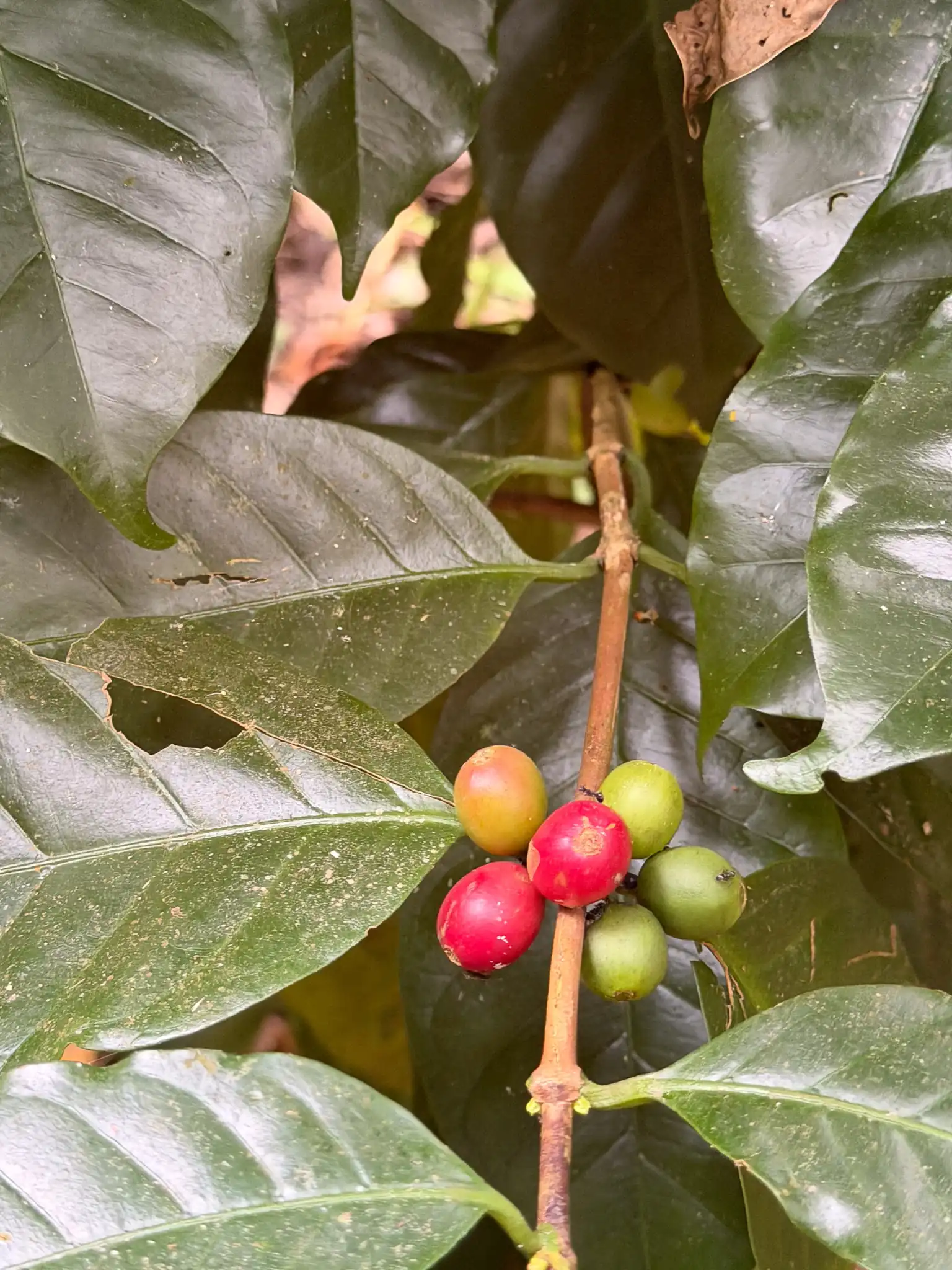
Coffea arabica, the Arabian coffee, is a broadleaf evergreen shrub or small tree featuring an upright, multistemmed habit with spreading or arching branches. The glossy, dark green leaves are elliptic to oblong with acuminate tips and prominent, swollen nodes.
In spring and early summer, fragrant, star-shaped white flowers emerge in dense axillary clusters, releasing a scent resembling jasmine. These blossoms are followed by small green berries that ripen to a deep red, containing the seeds known as coffee beans.
Uses & Benefits:
Essentials
At a Glance
Plant Type
Tropical
Height
196"
Width
98"
Light
Partial Sun, Shade
Zones
10
Water
Moderate
Humidity
High
Lifespan
Perennial
Native To
Tropical Africa
Toxicity
Toxic to pets if raw beans are ingested
Bloom period
Spring – Early summer
In flower about 4 months of the year
Marketplace
Where to Buy
Shipping costs Year-round shipping Free shipping
Planting
How to Grow
- Select a container with ample drainage holes and fill it with a rich, well-draining loamy or sandy potting mix adjusted to a slightly acidic pH of 6.0 to 6.5.
- Position the plant in bright, indirect light or partial shade, avoiding direct afternoon sun which scorches the foliage.
- Water thoroughly when the top inch of soil feels dry, ensuring excess water drains away completely to prevent root rot.
- Maintain high ambient humidity by grouping plants together or using a humidifier, especially during winter when indoor heating dries the air.
Pro Tip
Never prune deep into old, leafless brown wood, as this species lacks the ability to readily produce adventitious buds from mature stems. Keep indoor plants away from dry heating vents and cold drafts below 55°F to prevent sudden defoliation.
Keep It Thriving
Care Guide
Do
- Water consistently to keep the soil evenly moist but never waterlogged.
- Apply a balanced, water-soluble fertilizer formulated for acid-loving plants monthly during the spring and summer.
- Prune lightly once a year after harvesting or in early spring to shape and control height.
Don't
- Do not allow the plant to sit in standing water or soggy soil.
- Do not fertilize during the autumn and winter months when growth slows.
- Do not expose the plant to temperatures below 32°F, which causes immediate foliage damage.
Seasonal Care Calendar
| Task | Jan | Feb | Mar | Apr | May | Jun | Jul | Aug | Sep | Oct | Nov | Dec |
|---|---|---|---|---|---|---|---|---|---|---|---|---|
| Fertilize | ||||||||||||
| Pest Check | ||||||||||||
| Prune | ||||||||||||
| Winter Prep |
Watch Out For
Pests & Diseases
Common Pests
Common Diseases
In the Garden
Landscape Uses & Companions
Landscape Uses
Companion Plants
Multiply
Propagation Methods
Good to Know
Common Questions
Arabian Coffee questions
What zones can Arabian Coffee grow in?
Arabian Coffee is hardy in USDA Zone 10. Inside that range it survives winter in the ground; outside it, grow it as an annual or a container plant you protect.
Is Arabian Coffee deer resistant?
Not reliably. Deer may browse Arabian Coffee, especially tender spring growth — plan on repellents or fencing where pressure is high.
When does Arabian Coffee bloom?
Arabian Coffee typically blooms in spring through early summer. Exact timing shifts a week or two with your zone — Sow's bloom calendar maps it to your garden.
Does Arabian Coffee need full sun?
Arabian Coffee does best in part shade.
More Coffea to compare
Keep exploring
Explore the genus
Hardy in your zone?
Grow Arabian Coffee with confidence
See it in a design of your actual yard, get zone-matched care reminders, and track it season by season in your garden journal.