The Story
Plant Bio
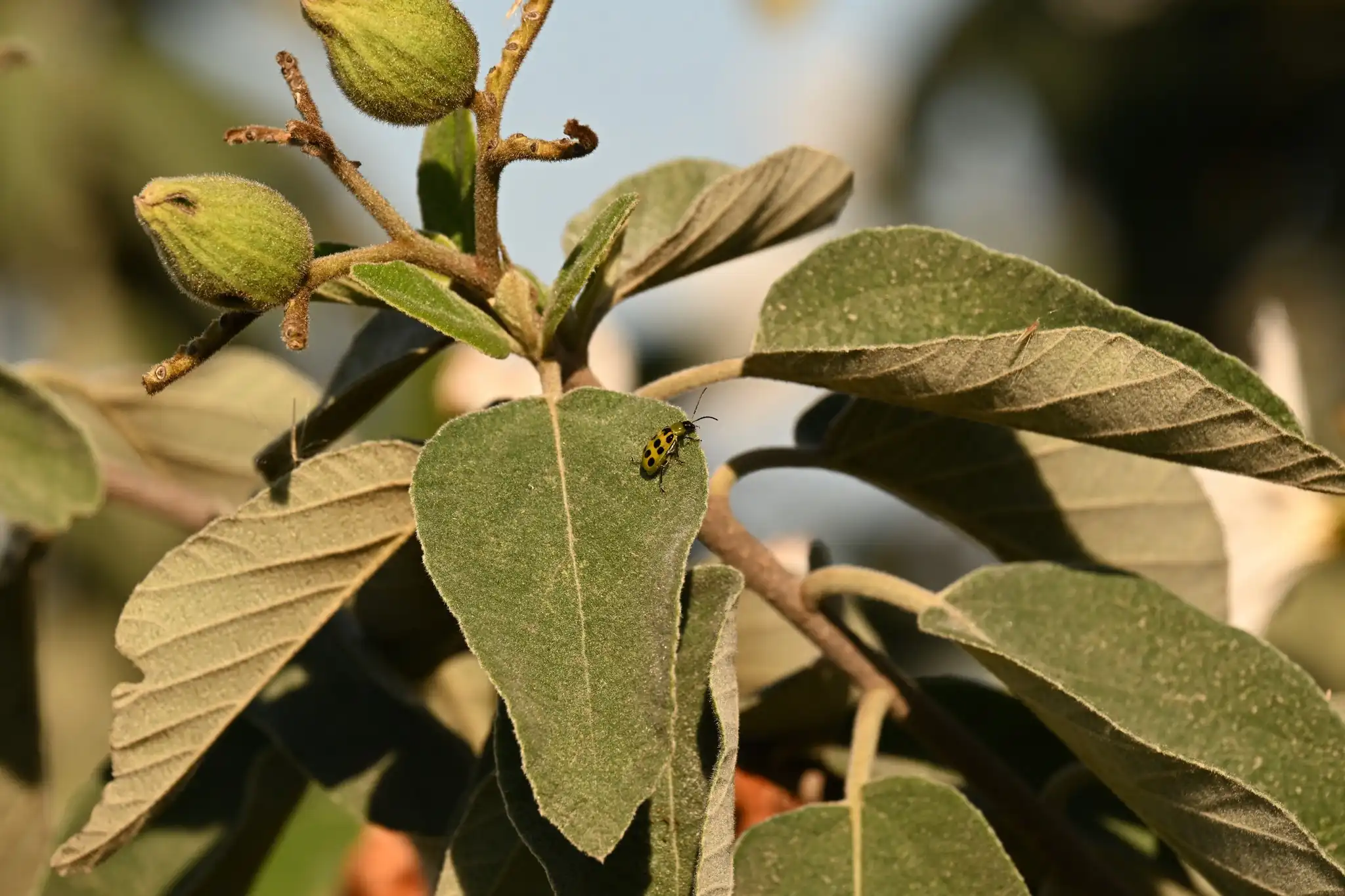
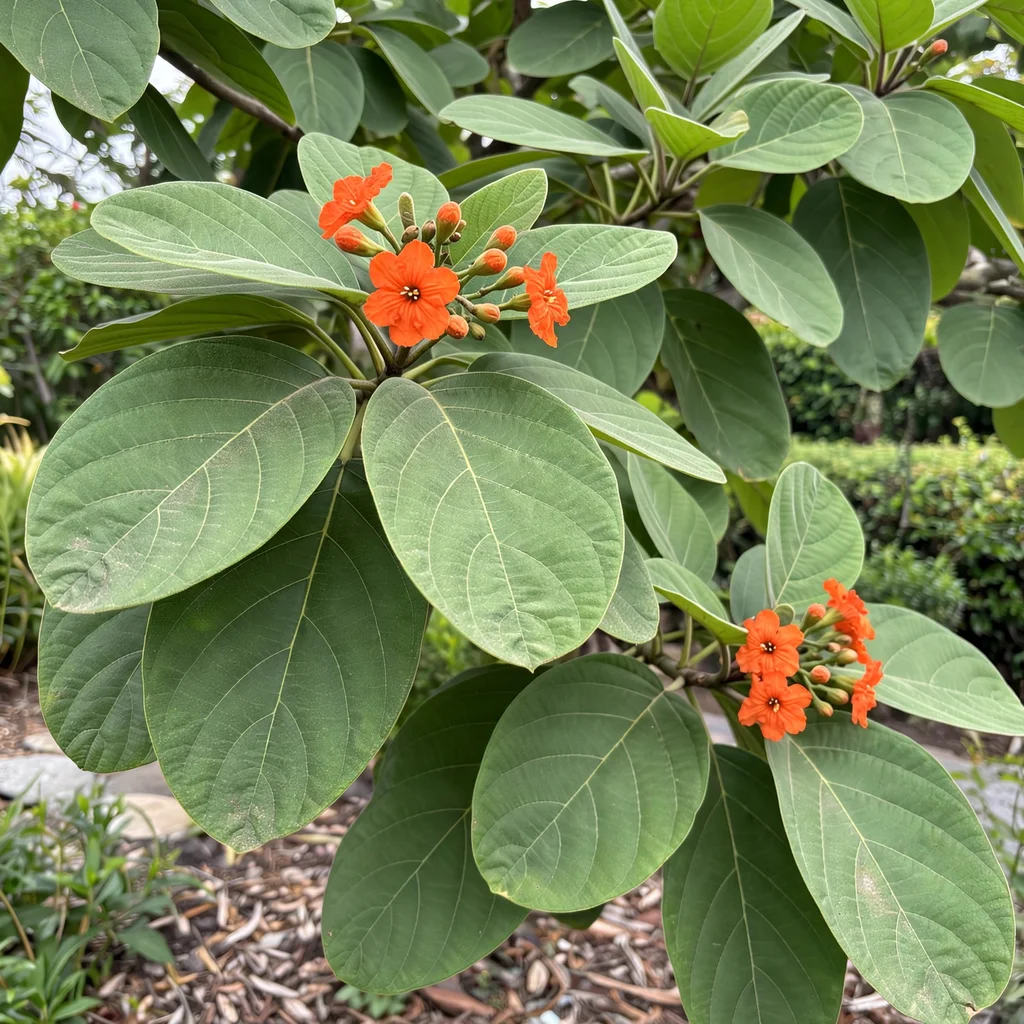
Cordia boissieri, the Texas olive, is an evergreen to semi-deciduous small tree or large shrub reaching fifteen to thirty feet tall, featuring a dense, rounded crown and velvety, gray-green leaves. The showy, trumpet-shaped white flowers feature a crepe-paper texture and bright yellow throats, blooming heavily from late spring through autumn.
This species is highly valued for its exceptional heat and drought tolerance, thriving in intense sunlight where other ornamental trees struggle. Sinuous, picturesque bark develops with age, adding structural interest to the landscape alongside its year-round flowering potential in frost-free regions.
Uses & Benefits:
Essentials
At a Glance
Plant Type
Tree
Height
360"
Width
300"
Light
Full Sun, Partial Sun
Zones
9, 10
Water
Low
Humidity
Moderate
Lifespan
Long-lived
Native To
North America
Toxicity
Mildly toxic if ingested
Bloom period
Late spring – Autumn
In flower about 7 months of the year
Planting
How to Grow
- Select a planting site in full sun with highly permeable, calcareous, or neutral to alkaline soil.
- Dig a hole twice as wide as the root ball but no deeper, ensuring the root flare sits slightly above the surrounding soil grade.
- Backfill with native soil without adding organic amendments, pressing firmly to eliminate air pockets.
- Water deeply to settle the soil, then establish a minimal watering schedule, allowing the root zone to dry completely between applications.
Pro Tip
Plant in exceptionally well-drained, alkaline soil and avoid overwatering, as stagnant moisture in heavy clay quickly induces fatal root rot.
Keep It Thriving
Care Guide
Do
- Grow in full sun to maximize flower production and maintain a dense canopy.
- Ensure sharp soil drainage to prevent fungal root pathogens.
- Prune in early spring after frost danger passes to shape young trees or remove dead wood.
Don't
- Do not plant over patios, pools, or walkways due to the constant drop of spent flowers and fleshy fruits.
- Do not overwater or allow the roots to sit in waterlogged, heavy clay soils.
- Do not prune heavily into thick, old, leafless wood.
Seasonal Care Calendar
| Task | Jan | Feb | Mar | Apr | May | Jun | Jul | Aug | Sep | Oct | Nov | Dec |
|---|---|---|---|---|---|---|---|---|---|---|---|---|
| Fertilize | ||||||||||||
| Pest Check | ||||||||||||
| Prune | ||||||||||||
| Winter Prep |
Watch Out For
Pests & Diseases
Common Pests
Common Diseases
In the Garden
Landscape Uses & Companions
Landscape Uses
Companion Plants
Multiply
Propagation Methods
Good to Know
Common Questions
Texas Olive questions
What zones can Texas Olive grow in?
Texas Olive is hardy in USDA Zones 9–10. Inside that range it survives winter in the ground; outside it, grow it as an annual or a container plant you protect.
When does Texas Olive bloom?
Texas Olive typically blooms in late spring through autumn. Exact timing shifts a week or two with your zone — Sow's bloom calendar maps it to your garden.
Does Texas Olive need full sun?
Texas Olive does best in full sun to part shade. In hot climates, afternoon shade keeps blooms fresher longer.
Is Texas Olive drought tolerant?
Yes — once established (usually after the first full season), Texas Olive handles dry spells with minimal watering. Water deeply its first year to build the root system that makes that possible.
More Cordia to compare
Keep exploring
Explore the genus
Hardy in your zone?
Grow Texas Olive with confidence
See it in a design of your actual yard, get zone-matched care reminders, and track it season by season in your garden journal.