The Story
Plant Bio
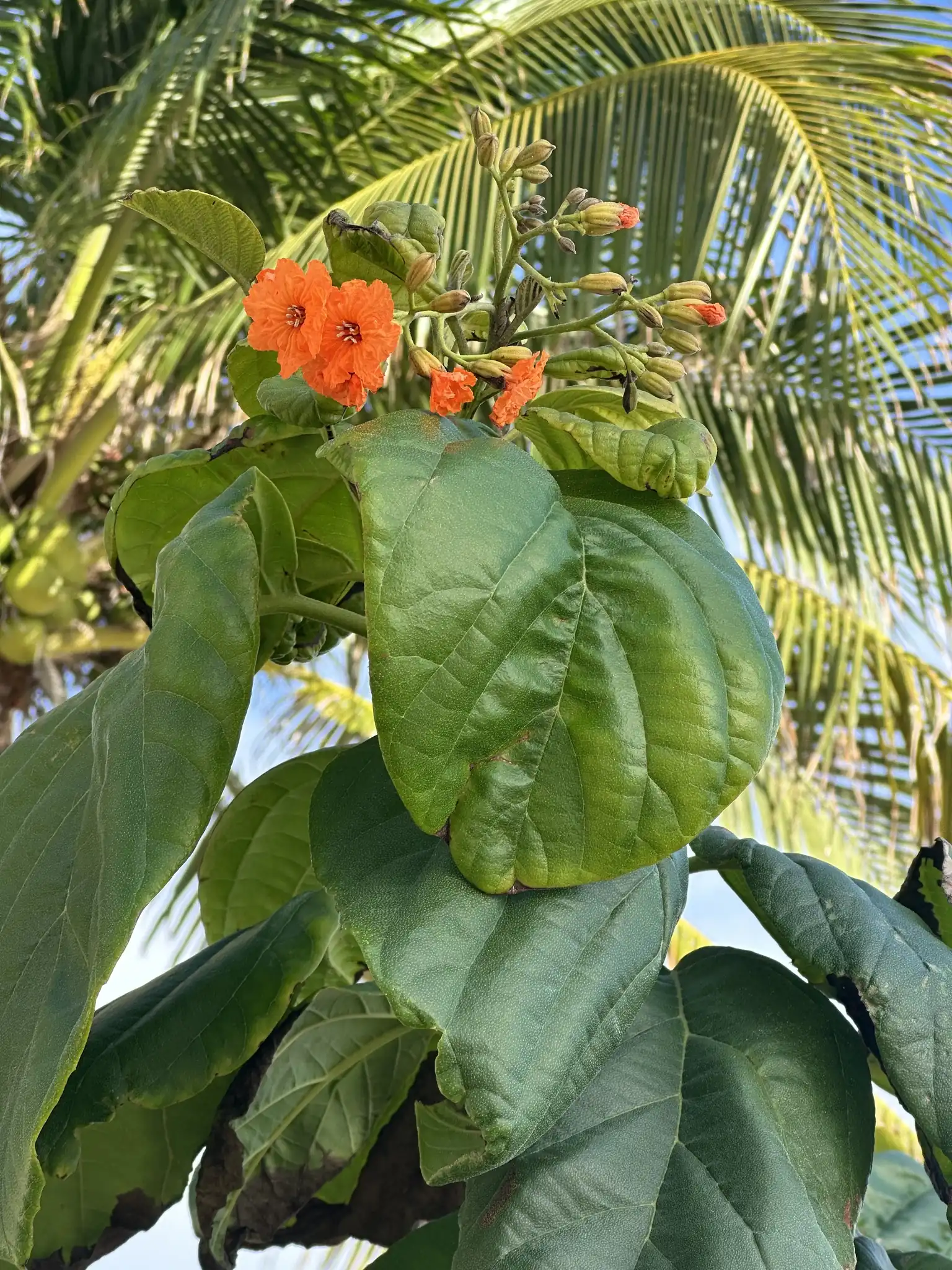
Cordia sebestena is a small, evergreen tropical tree native to the Florida Keys and the Caribbean, characterized by a dense, rounded canopy and rough, sandpapery leaves. The terminal clusters of funnel-shaped, bright orange-red flowers emerge throughout the year, with the heaviest flush occurring during the warm spring and summer months.
This species is highly adapted to harsh coastal environments, showing exceptional tolerance to salt spray, alkaline soils, and prolonged dry spells. Its stiff, hairy foliage acts as a natural deterrent to browsing deer and rabbits, though young shoots may require protection until the woody framework establishes.
Uses & Benefits:
Essentials
At a Glance
Plant Type
Tree
Height
354"
Width
236"
Light
Full Sun
Zones
10
Water
Low
Humidity
High
Lifespan
Long-lived
Native To
Caribbean, Central America, Northern South America, Southern Florida
Toxicity
Non-toxic
Bloom period
Year round
In flower about 12 months of the year
Planting
How to Grow
- Select a planting site in full sun with excellent, sharp drainage to prevent root rot.
- Dig a hole twice as wide as the root ball but no deeper, ensuring the trunk flare sits level with the surrounding soil.
- Water deeply immediately after planting to settle the soil, then establish a regular watering schedule for the first few months.
- Apply a thin layer of organic mulch over the root zone, keeping it several inches away from the trunk to prevent moisture buildup.
Pro Tip
Avoid shearing this tree into formal shapes or hedges; tight pruning destroys the terminal buds where flower clusters form and ruins its natural, multi-stemmed branching habit.
Keep It Thriving
Care Guide
Do
- Plant in sandy, calcareous, or rocky soils that drain rapidly.
- Prune lightly after peak flowering to remove deadwood and shape the canopy.
- Protect young saplings from frost, as temperatures below freezing cause severe damage.
Don't
- Do not plant in heavy clay or low-lying areas prone to standing water.
- Do not over-fertilize, as excess nutrients reduce flowering and promote weak, leggy growth.
- Avoid radical pruning into old, leafless wood, which recovers very slowly.
Seasonal Care Calendar
| Task | Jan | Feb | Mar | Apr | May | Jun | Jul | Aug | Sep | Oct | Nov | Dec |
|---|---|---|---|---|---|---|---|---|---|---|---|---|
| Fertilize | ||||||||||||
| Pest Check | ||||||||||||
| Plant | ||||||||||||
| Prune |
Watch Out For
Pests & Diseases
Common Pests
Common Diseases
In the Garden
Landscape Uses & Companions
Landscape Uses
Companion Plants
Multiply
Propagation Methods
Good to Know
Common Questions
Geiger Tree questions
What zones can Geiger Tree grow in?
Geiger Tree is hardy in USDA Zone 10. Inside that range it survives winter in the ground; outside it, grow it as an annual or a container plant you protect.
Is Geiger Tree deer resistant?
Yes — Geiger Tree is rated deer-resistant. Deer typically pass it over, though extreme hunger can override any plant's defenses.
When does Geiger Tree bloom?
Geiger Tree typically blooms in year round through year round. Exact timing shifts a week or two with your zone — Sow's bloom calendar maps it to your garden.
Does Geiger Tree need full sun?
Geiger Tree does best in full sun (6+ hours).
Is Geiger Tree drought tolerant?
Yes — once established (usually after the first full season), Geiger Tree handles dry spells with minimal watering. Water deeply its first year to build the root system that makes that possible.
More Cordia to compare
Keep exploring
Explore the genus
Hardy in your zone?
Grow Geiger Tree with confidence
See it in a design of your actual yard, get zone-matched care reminders, and track it season by season in your garden journal.