The Story
Plant Bio
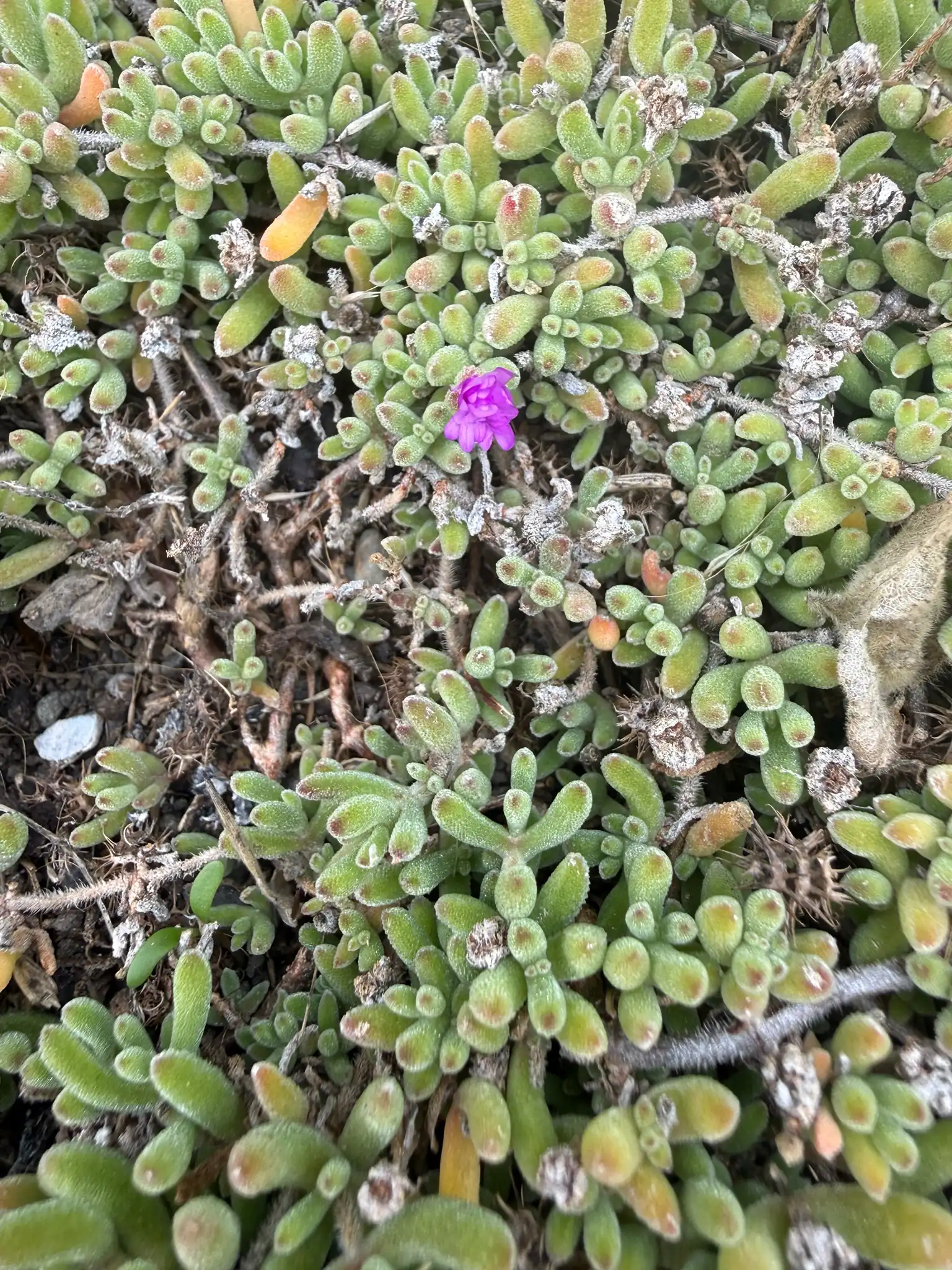
Drosanthemum floribundum, commonly known as rosea ice plant, is a low-growing, mat-forming succulent perennial native to South Africa that forms dense, trailing carpets of glistening green foliage. The small, cylindrical leaves are covered in water-storing bladder cells that sparkle in the light, giving the plant a dewy appearance even in dry conditions.
During spring and summer, the foliage is nearly obscured by a profusion of daisy-like, vivid pink or magenta flowers that open in bright afternoon sun and close at night. The stems root readily at the nodes as they trail, making it an exceptionally fast-spreading groundcover for dry, sunny slopes.
Uses & Benefits:
Essentials
At a Glance
Plant Type
Cactus Succulent
Height
6"
Width
40"
Light
Full Sun
Zones
9, 10
Water
Low
Humidity
Low to Moderate
Lifespan
Perennial
Native To
South Africa
Toxicity
Non-toxic
Bloom period
Spring – Summer
In flower about 6 months of the year
Planting
How to Grow
- Select a planting site in full sun with sharp, fast-draining sandy or gritty soil.
- Space plants 24 to 36 inches apart to allow the trailing stems room to spread and root.
- Water sparingly after planting, allowing the soil to dry out completely between waterings.
- Avoid applying heavy fertilizers, which promote weak, watery growth and reduce flowering.
Pro Tip
Shear the trailing stems back by up to one-third after the summer flowering flush to maintain a tight, dense carpet; never cut back past the green foliage into the bare, woody interior stems, as they will not reshoot.
Keep It Thriving
Care Guide
Do
- Plant in sandy, rocky, or gritty soils that drain rapidly.
- Ensure the site receives full, unobstructed sun all day.
- Allow the soil to dry out completely before watering again.
Don't
- Do not plant in heavy, poorly draining clay soils.
- Do not overwater or allow the roots to sit in waterlogged soil.
- Do not prune aggressively into old, leafless woody stems.
Seasonal Care Calendar
| Task | Jan | Feb | Mar | Apr | May | Jun | Jul | Aug | Sep | Oct | Nov | Dec |
|---|---|---|---|---|---|---|---|---|---|---|---|---|
| Pest Check | ||||||||||||
| Propagate | ||||||||||||
| Prune | ||||||||||||
| Winter Prep |
Watch Out For
Pests & Diseases
Common Pests
Common Diseases
In the Garden
Landscape Uses & Companions
Landscape Uses
Multiply
Propagation Methods
Good to Know
Common Questions
Rosea Ice Plant questions
What zones can Rosea Ice Plant grow in?
Rosea Ice Plant is hardy in USDA Zones 9–10. Inside that range it survives winter in the ground; outside it, grow it as an annual or a container plant you protect.
When does Rosea Ice Plant bloom?
Rosea Ice Plant typically blooms in spring through summer. Exact timing shifts a week or two with your zone — Sow's bloom calendar maps it to your garden.
Does Rosea Ice Plant need full sun?
Rosea Ice Plant does best in full sun (6+ hours).
Is Rosea Ice Plant drought tolerant?
Yes — once established (usually after the first full season), Rosea Ice Plant handles dry spells with minimal watering. Water deeply its first year to build the root system that makes that possible.
More Drosanthemum to compare
Keep exploring
Explore the genus
Hardy in your zone?
Grow Rosea Ice Plant with confidence
See it in a design of your actual yard, get zone-matched care reminders, and track it season by season in your garden journal.