Also known as Dewflower · 19 saves
Drosanthemum
Drosanthemum, the genus most gardeners know as dewflower. We track 3 varieties; the ones most used by real gardeners.
The 3 most-saved Drosanthemum varieties
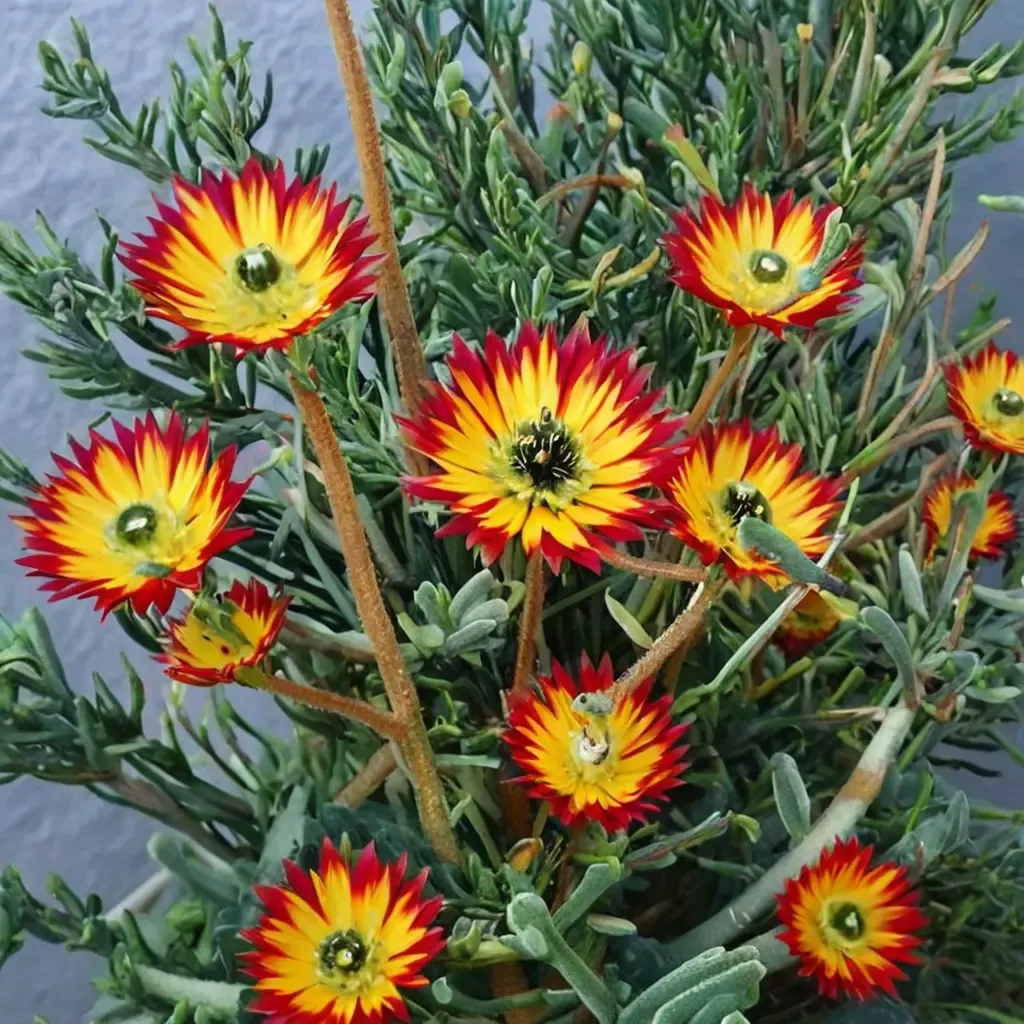
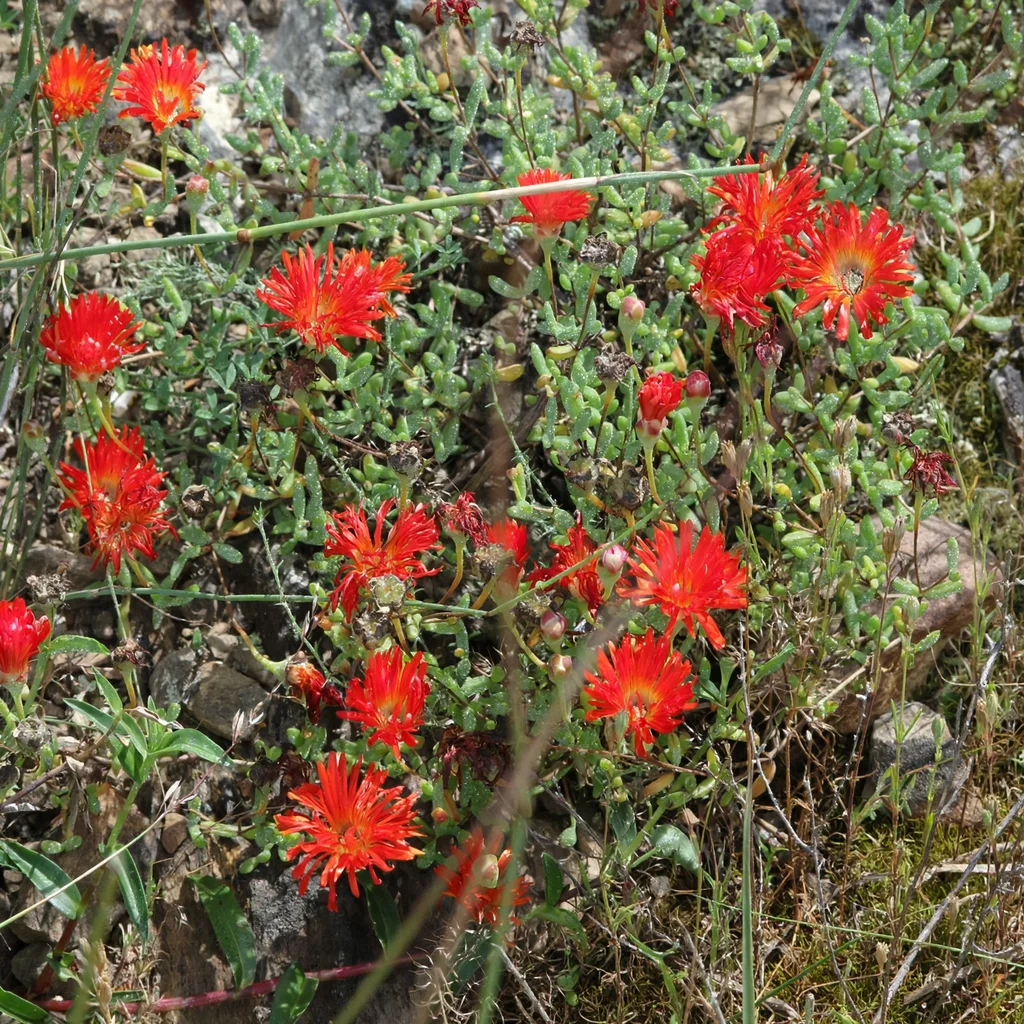
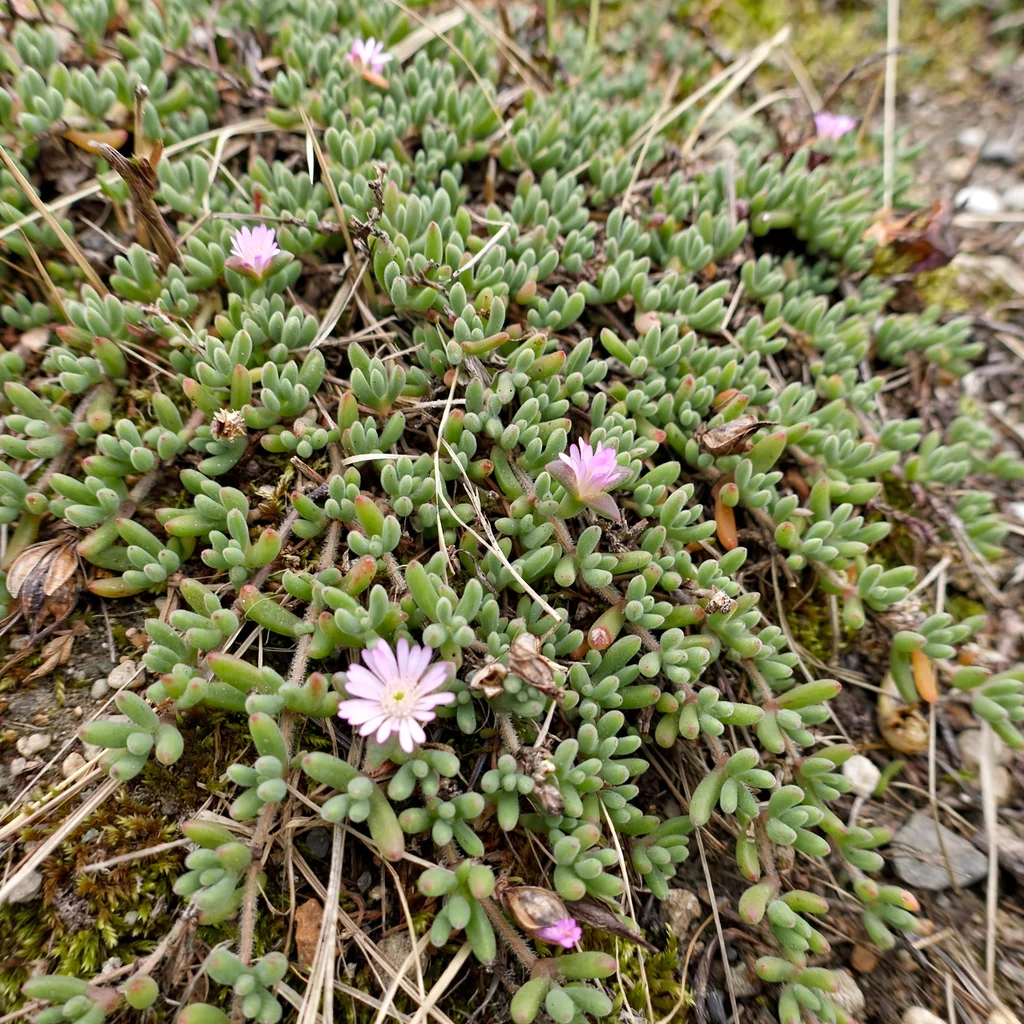
3 species of Drosanthemum
Each one is a parent of the varieties above.
Track your Drosanthemum in Sow
Save the Drosanthemum you grow and get care reminders timed to your zone.
How to grow Drosanthemum
Whats common across all Drosanthemum varieties in our catalog — drawn from the care records of the 3 most-grown of them.
The Drosanthemum year
- PruneJuly100% of varieties
Lightly shear trailing stems after the main summer flowering flush to maintain a compact habit.
- Winter PrepNovember100% of varieties
Protect plants from prolonged freezing temperatures or move containers indoors.
- Check for PestsJune67% of varieties
Inspect tender new growth for aphids and mealybugs.


Do
- Plant in sandy, rocky, or gritty soils that drain rapidly.
- Ensure the site receives full, unobstructed sun all day.
- Allow the soil to dry out completely before watering again.
- Grow in full sun to light shade
- Use sharply drained soil on a slope or raised bed
Avoid
- Do not plant in heavy, poorly draining clay soils.
- Do not overwater or allow the roots to sit in waterlogged soil.
- Do not prune aggressively into old, leafless woody stems.
- Do not plant where water stands after rain
What goes wrong with Drosanthemum
| Problem | What you'll see | What to do |
|---|---|---|
| Mealybugs | White, cottony pests in leaf axils and on stems. | Dab with an alcohol-soaked cotton swab or apply horticultural oil. |
| Aphids | Occasional colonizers of tender new growth, causing distorted leaves. | Wash off with a strong spray of water or apply insecticidal soap. |
| Spider mites | Fine webbing and dusty foliage in hot, dry conditions. | Increase air circulation and spray with water or miticide. |
| Root rot | Soft, rotting stems and yellowing leaf margins. | Improve soil drainage, reduce watering drastically, and remove affected tissue. |
| Fungal leaf spot | Blights on foliage linked to poor air circulation and damp conditions. | Ensure plants are spaced well and foliage remains dry. |
Making more Drosanthemum
Stem Cuttings
- Cut a 3- to 4-inch healthy stem section during the active growing season.
- Allow the cut end to callus in a dry, shaded area for two to three days.
- Insert the callused end into a moist, sandy propagation mix.
- Keep in bright, indirect light and water sparingly until roots establish.
Stem cuttings
- Take firm tip cuttings from healthy stems in spring.
- Let cut ends callus in shade for 2 to 3 days.
- Insert in gritty, fast-draining mix and water lightly.
- Hold barely moist in bright light until roots form, then transplant.
Drosanthemum questions
How many types of Drosanthemum are there?
The Sow catalog tracks 3 distinct Drosanthemum varieties. The most popular — ranked by 19 real gardeners — are shown first above.
What zones does Drosanthemum grow in?
Across its varieties, Drosanthemum covers USDA Zones 6–10. Individual varieties differ — each plant page lists its exact range, and Sow filters the catalog to your zone automatically.
When does Drosanthemum bloom?
Most Drosanthemum varieties bloom from late spring to late summer.
Which Drosanthemum should I choose?
Start from the most-saved varieties above — popularity across thousands of gardens is a strong signal of reliability — then filter by your zone and sun. In the Sow app you can preview any of them in a photo of your actual yard before you buy.