

The Story
Plant Bio
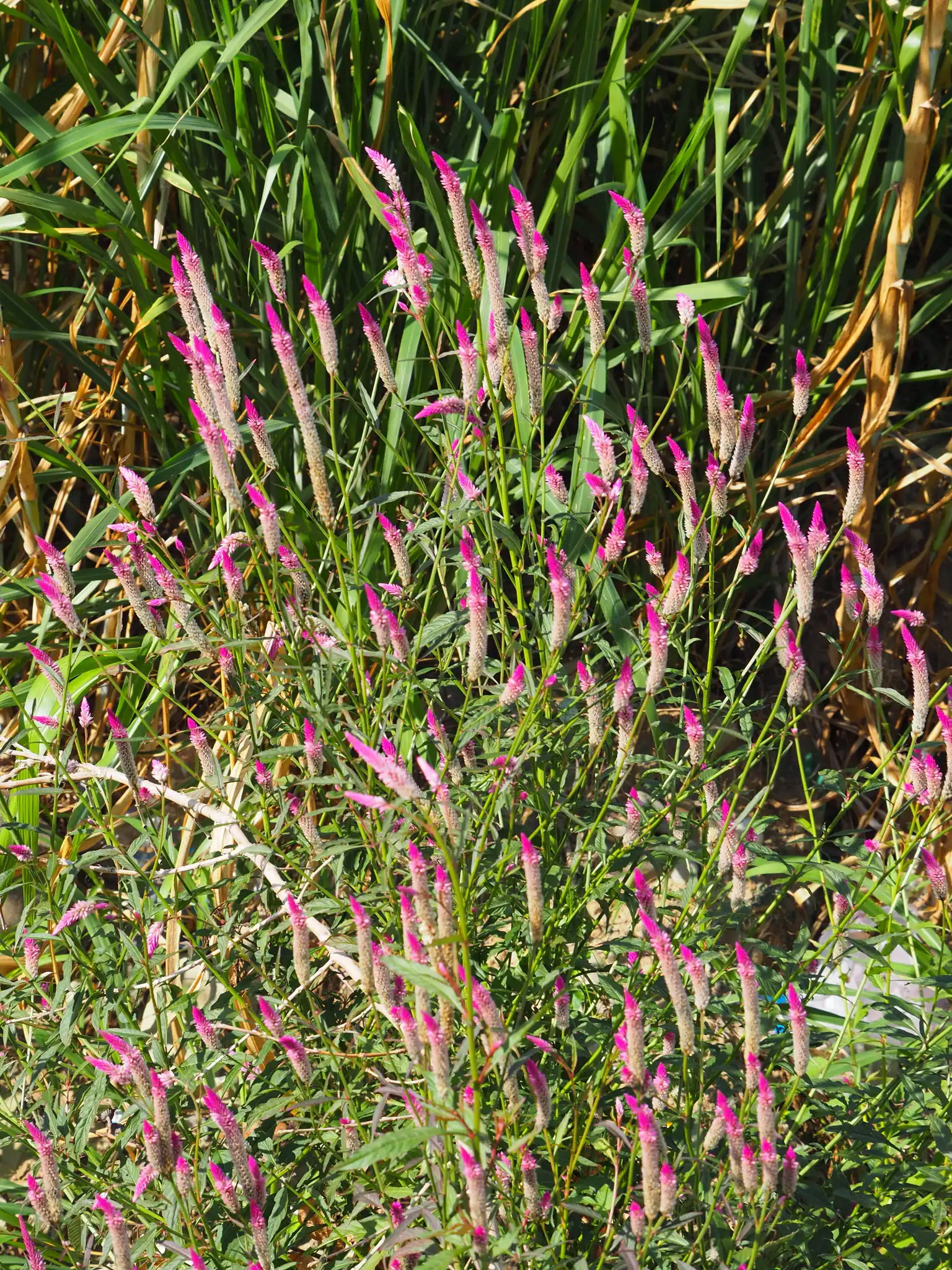
Celosia argentea is an upright annual from tropical Africa, grown for flower heads of extraordinary density and colour. Depending on the group it produces feathery plumes, wheat-like spikes or the convoluted velvet crests of cockscomb, in crimson, orange, gold, pink and purple, on branching stems nine to eighteen inches high above light green lance-shaped leaves.
It thrives on exactly what defeats most summer bedding, being resistant to heat, humidity, drought and dry soil all at once. The flower heads hold their colour almost perfectly when dried, so stems cut before the seed sets and hung upside down in the dark keep their shade for years. Leaves and young shoots are also cooked as a vegetable across much of Africa.
Uses & Benefits:
Essentials
At a Glance
Plant Type
Annual
Height
14"
Width
12"
Light
Full Sun, Partial Sun
Zones
10
Water
Low
Humidity
Moderate to high
Lifespan
Annual
Native To
Tropical Africa
Toxicity
Non-toxic; leaves and shoots are edible cooked
Planting
How to Grow
- Sow or plant out only once the soil is warm.
- Give it full sun and free-draining soil.
- Water at the base; it dislikes wet foliage.
- Avoid rich feeding, which softens the stems.
- Cut stems for drying before seed sets.
- Deadhead to keep new heads coming until frost.
Pro Tip
Cut for drying just before the seed sets and hang the stems upside down in the dark — the colour holds for years.
Keep It Thriving
Care Guide
Do
- Plant into warm soil in full sun ☀️
- Water at the base of the plant 💧
- Cut stems early for drying ✂️
- Deadhead to extend the season 🌸
Don't
- Plant out into cold soil ❌
- Overwater or wet the foliage ❌
- Feed heavily — stems go soft ❌
Seasonal Care Calendar
| Task | Jan | Feb | Mar | Apr | May | Jun | Jul | Aug | Sep | Oct | Nov | Dec |
|---|---|---|---|---|---|---|---|---|---|---|---|---|
| Cut | ||||||||||||
| Sow |
Watch Out For
Pests & Diseases
Common Pests
Common Diseases
In the Garden
Landscape Uses & Companions
Landscape Uses
Companion Plants
Multiply
Propagation Methods
Good to Know
Common Questions
Plumed Cockscomb questions
What zones can Plumed Cockscomb grow in?
Plumed Cockscomb is hardy in USDA Zone 10. Inside that range it survives winter in the ground; outside it, grow it as an annual or a container plant you protect.
Is Plumed Cockscomb deer resistant?
Yes — Plumed Cockscomb is rated deer-resistant. Deer typically pass it over, though extreme hunger can override any plant's defenses.
When does Plumed Cockscomb bloom?
Plumed Cockscomb typically blooms in summer to frost through late summer. Exact timing shifts a week or two with your zone — Sow's bloom calendar maps it to your garden.
Does Plumed Cockscomb need full sun?
Plumed Cockscomb does best in full sun to part shade. In hot climates, afternoon shade keeps blooms fresher longer.
Is Plumed Cockscomb drought tolerant?
Yes — once established (usually after the first full season), Plumed Cockscomb handles dry spells with minimal watering. Water deeply its first year to build the root system that makes that possible.
More Celosia to compare
Keep exploring
Explore the genus
Hardy in your zone?
Grow Plumed Cockscomb with confidence
See it in a design of your actual yard, get zone-matched care reminders, and track it season by season in your garden journal.