1 named cultivar

The Story
Plant Bio
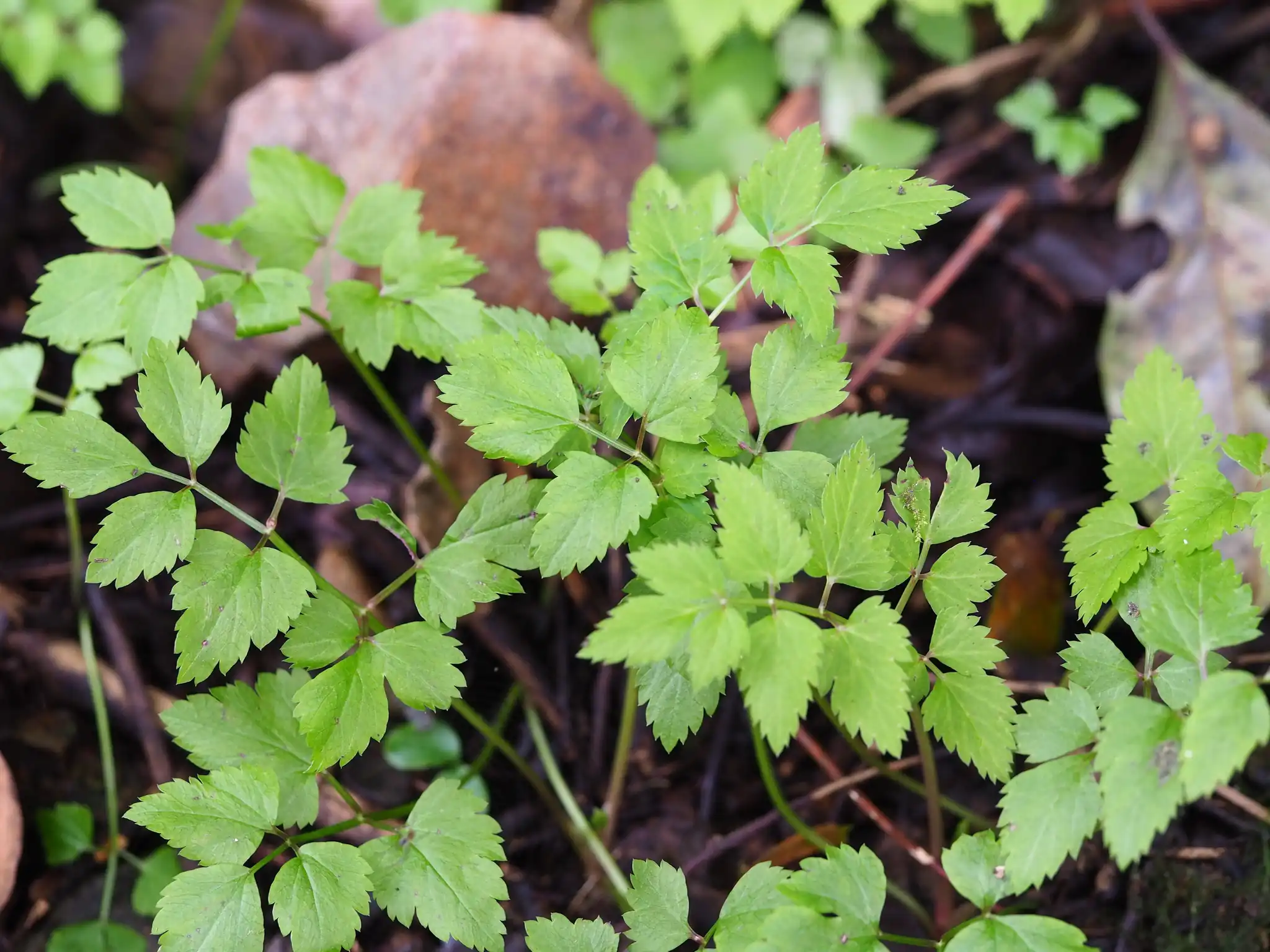
Oenanthe javanica, Java water dropwort, is a stoloniferous perennial from Asia growing nine inches to two and a half feet high and spreading one to three feet. Divided celery-like leaves are carried on sprawling stems that root at every node, and flat white umbels open from July to September. The variegated form is the one usually grown.
It spreads rapidly by rooting stolons and by seed, and is treated as invasive in parts of the United States, where it colonises wetland margins. Keep it in a container or a lined bog bed rather than open pond mud, and note that other Oenanthe species are among the most poisonous plants in Europe, so never treat the genus as a casual edible.
Uses & Benefits:
Essentials
At a Glance
Plant Type
Perennial
Height
18"
Width
24"
Light
Full Sun, Partial Sun
Zones
5, 6, 7, 8, 9, 10
Water
High
Humidity
High
Lifespan
Perennial
Native To
Asia
Toxicity
Do not treat as edible; the genus includes highly poisonous species
Planting
How to Grow
- Check local invasive listings before planting.
- Plant in spring in medium to wet soil.
- Contain it in a pot or lined bed rather than open ground.
- Site in full sun for the most flower, or part shade.
- Keep the soil wet at all times.
- Cut back and remove escaping stolons each spring.
Pro Tip
Every node roots where it touches wet ground, so containment has to be physical; cutting it back alone will not hold it.
Keep It Thriving
Care Guide
Do
- Grow it in a container or lined bed 🪣
- Keep the soil wet 💧
- Cut back escaping stolons each spring ✂️
- Check local invasive listings first 📋
Don't
- Plant it loose at a pond margin ❌
- Let it seed into surrounding wet ground ❌
- Treat any Oenanthe as a casual edible ❌
Seasonal Care Calendar
| Task | Jan | Feb | Mar | Apr | May | Jun | Jul | Aug | Sep | Oct | Nov | Dec |
|---|---|---|---|---|---|---|---|---|---|---|---|---|
| Contain | ||||||||||||
| Cut Back |
Watch Out For
Pests & Diseases
Common Pests
Common Diseases
In the Garden
Landscape Uses & Companions
Landscape Uses
Companion Plants
Multiply
Propagation Methods
Good to Know
Common Questions
Variegated Water Celery questions
What zones can Variegated Water Celery grow in?
Variegated Water Celery is hardy in USDA Zones 5–10. Inside that range it survives winter in the ground; outside it, grow it as an annual or a container plant you protect.
Is Variegated Water Celery deer resistant?
Yes — Variegated Water Celery is rated deer-resistant. Deer typically pass it over, though extreme hunger can override any plant's defenses.
When does Variegated Water Celery bloom?
Variegated Water Celery typically blooms in midsummer to early fall through late summer. Exact timing shifts a week or two with your zone — Sow's bloom calendar maps it to your garden.
Does Variegated Water Celery need full sun?
Variegated Water Celery does best in full sun to part shade. In hot climates, afternoon shade keeps blooms fresher longer.
Keep exploring
Explore the genus
Grow Variegated Water Celery with confidence
See it in a design of your actual yard, get zone-matched care reminders, and track it season by season in your garden journal.