The Story
Plant Bio
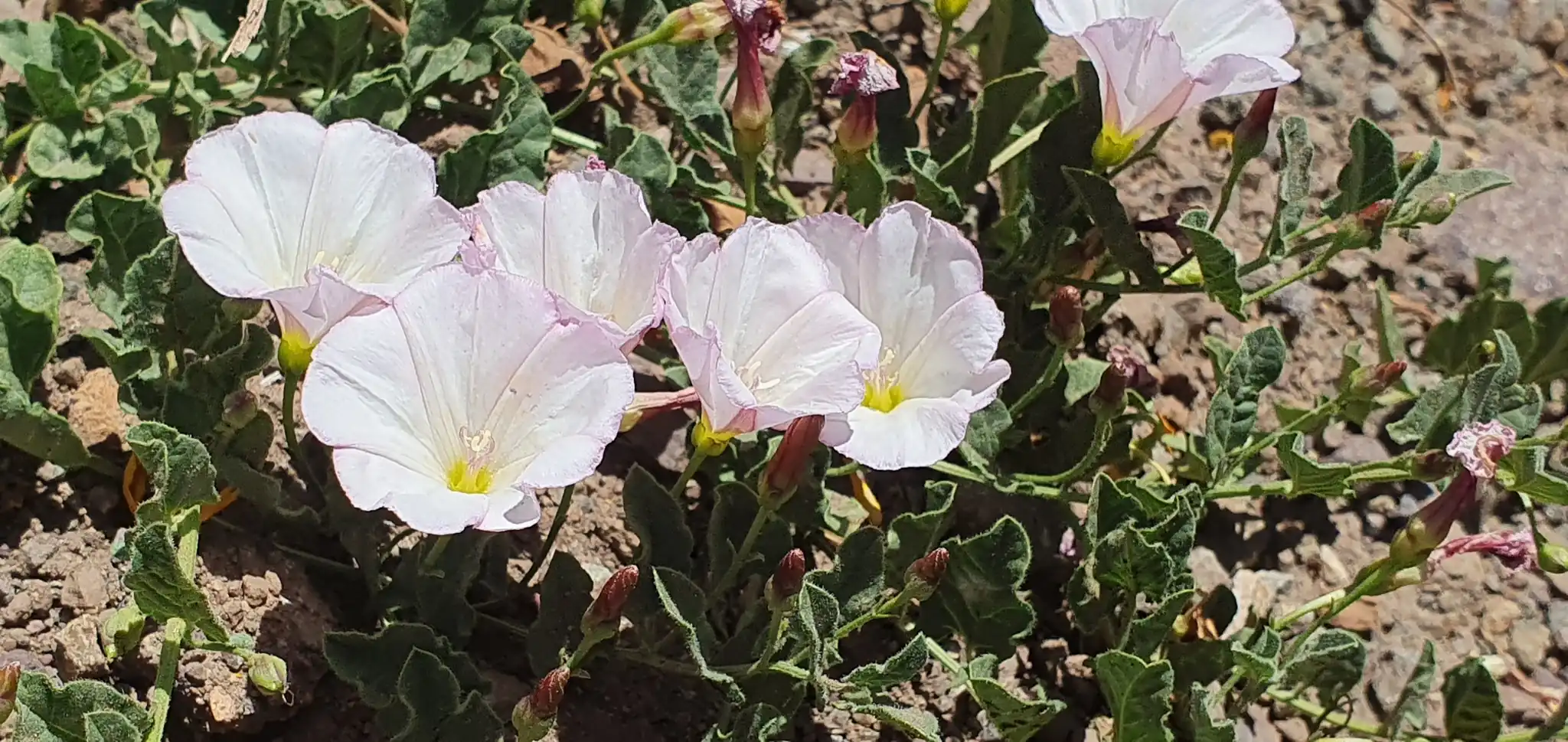
Convolvulus arvensis is a highly resilient, trailing or climbing herbaceous perennial native to Europe and Asia that has naturalized widely across North America. It spreads via an extensive network of deep vertical taproots and creeping lateral rhizomes, producing simple, alternate leaves with characteristic arrowhead-shaped bases.
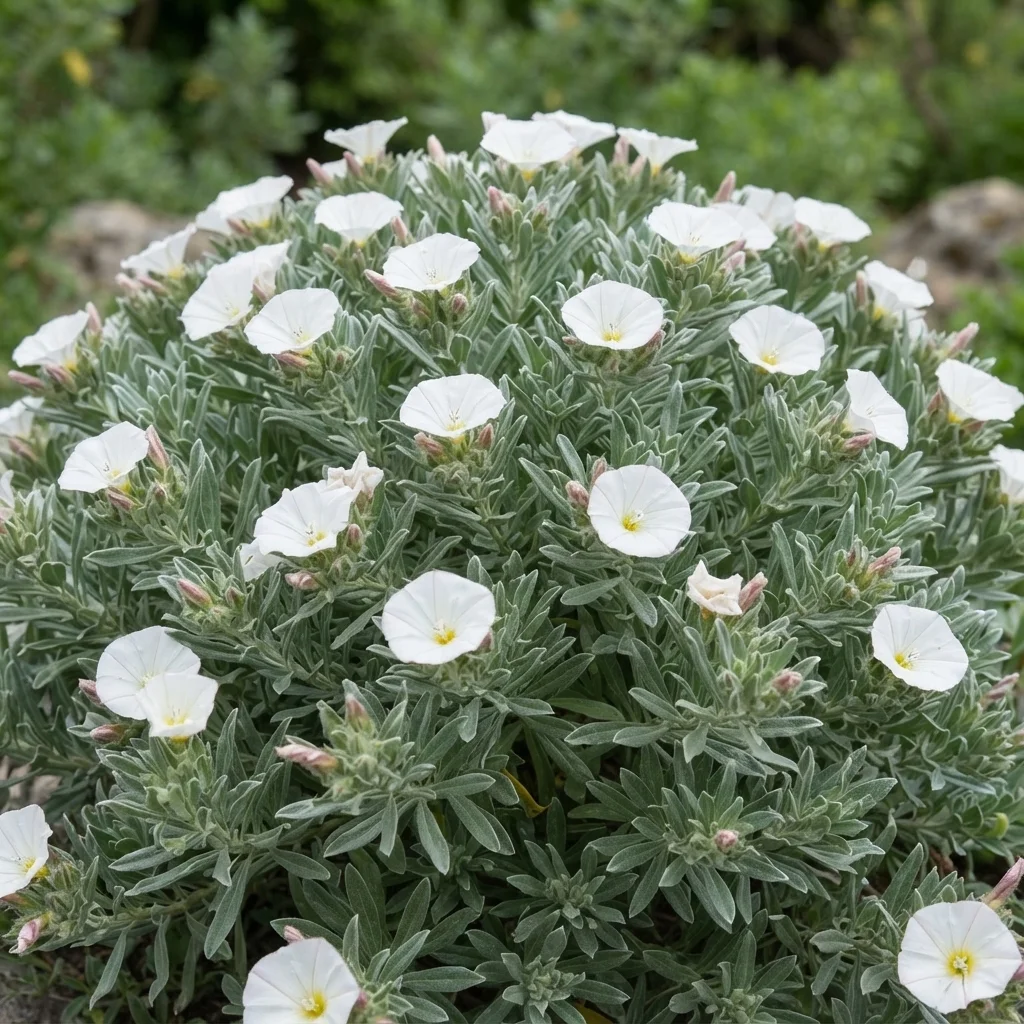
The species is distinguished by its funnel-shaped white to pale pink flowers that open during the day and close in cloudy weather or by afternoon. Its capacity to regenerate from minuscule root fragments makes it one of the most persistent and difficult-to-eradicate agricultural weeds.
Uses & Benefits:
Essentials
At a Glance
Plant Type
Vine
Height
48"
Width
120"
Light
Full Sun, Partial Sun
Zones
4, 5, 6, 7, 8, 9
Water
Low
Humidity
Wide Range
Lifespan
Perennial
Native To
Europe and Asia
Toxicity
Toxic to Livestock
Bloom period
Spring – Fall
In flower about 9 months of the year
Planting
How to Grow
- Identify emerging shoots early in spring, noting their light green, arrowhead-shaped leaves.
- Sever the shoots at or just below the soil line using a sharp hoe to prevent photosynthesis.
- Repeat this cutting process every ten to fourteen days throughout the growing season to deplete underground root reserves.
- Apply a systemic herbicide directly to the foliage of mature stems during the flowering phase for deep root penetration.
Pro Tip
Never attempt to control this plant by rototilling or pulling, as severing the roots triggers rapid regeneration from every fragment. Instead, exhaust the root system by continuously severing new green shoots at the soil surface before they can photosynthesize, or apply systemic herbicides during the bud-to-bloom stage.
Keep It Thriving
Care Guide
Do
- Cut back trailing stems regularly before they can set and disperse seeds.
- Clean all gardening tools and machinery thoroughly after working in infested soil to prevent spreading root fragments.
- Establish dense, competitive cover crops or native groundcovers to shade out emerging seedlings.
Don't
- Do not rototill or deeply cultivate soil containing root systems, as this multiplies the infestation.
- Do not add pulled plants with mature seed pods or root fragments to home compost piles.
- Do not apply fertilizers to areas infested with this plant, as nutrient enrichment accelerates its growth.
Seasonal Care Calendar
| Task | Jan | Feb | Mar | Apr | May | Jun | Jul | Aug | Sep | Oct | Nov | Dec |
|---|---|---|---|---|---|---|---|---|---|---|---|---|
| Pest Check | ||||||||||||
| Prune | ||||||||||||
| Spring Cleanup | ||||||||||||
| Winter Prep |
Watch Out For
Pests & Diseases
Common Pests
Common Diseases
In the Garden
Landscape Uses & Companions
Landscape Uses
Multiply
Propagation Methods
Good to Know
Common Questions
Field Bindweed questions
What zones can Field Bindweed grow in?
Field Bindweed is hardy in USDA Zones 4–9. Inside that range it survives winter in the ground; outside it, grow it as an annual or a container plant you protect.
Is Field Bindweed deer resistant?
Not reliably. Deer may browse Field Bindweed, especially tender spring growth — plan on repellents or fencing where pressure is high.
When does Field Bindweed bloom?
Field Bindweed typically blooms in spring through fall. Exact timing shifts a week or two with your zone — Sow's bloom calendar maps it to your garden.
Does Field Bindweed need full sun?
Field Bindweed does best in full sun to part shade. In hot climates, afternoon shade keeps blooms fresher longer.
Is Field Bindweed drought tolerant?
Yes — once established (usually after the first full season), Field Bindweed handles dry spells with minimal watering. Water deeply its first year to build the root system that makes that possible.
More Convolvulus to compare
Keep exploring
Explore the genus
Grow Field Bindweed with confidence
See it in a design of your actual yard, get zone-matched care reminders, and track it season by season in your garden journal.