The Story
Plant Bio
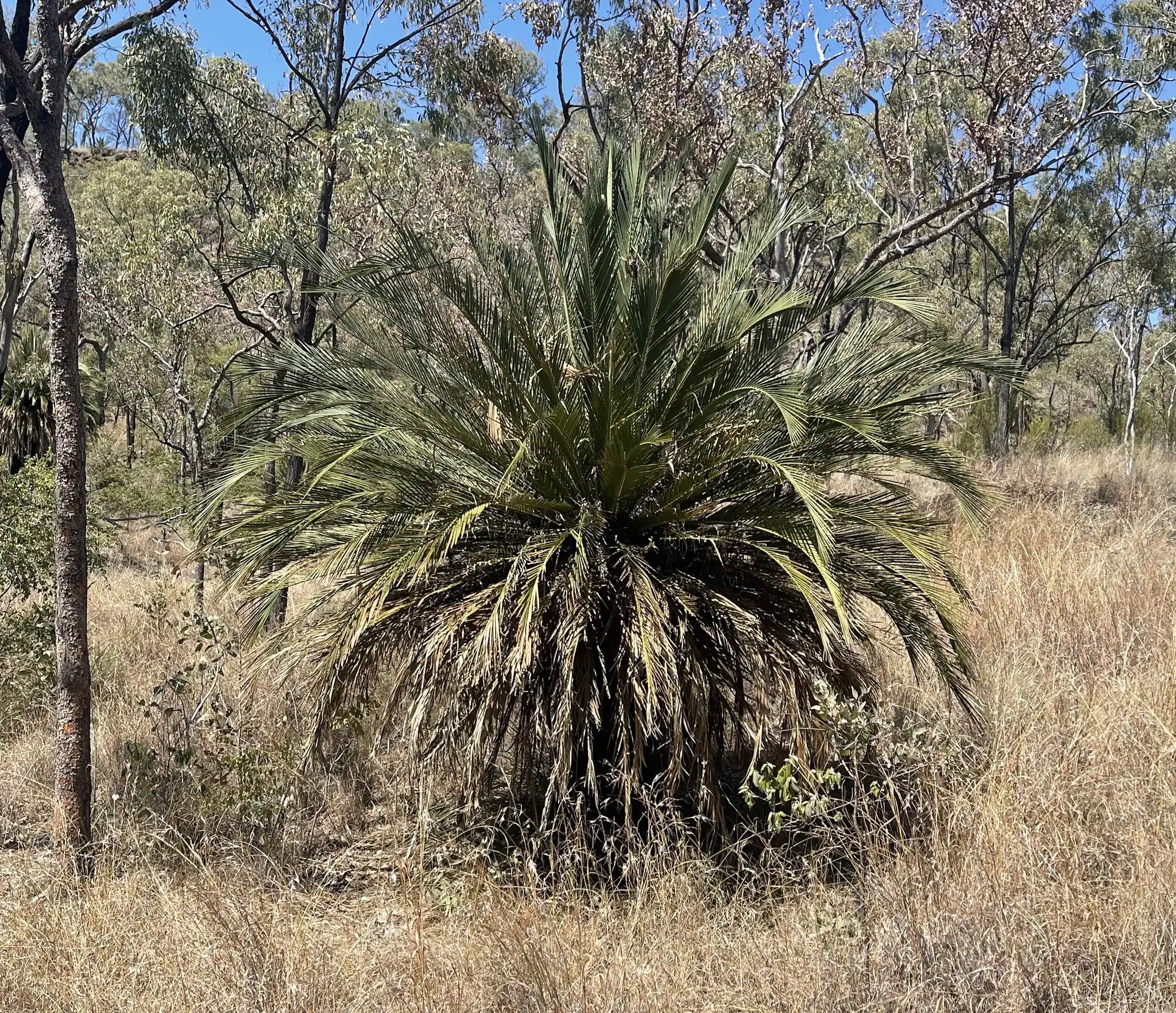
Macrozamia moorei, the Moore's cycad, is a slow-growing, arborescent gymnosperm native to Queensland, developing a massive columnar trunk topped by a dense, symmetrical crown of arching fronds. This long-lived species brings a bold, architectural presence to warm-climate landscapes, tolerating high drought and light frosts once established.
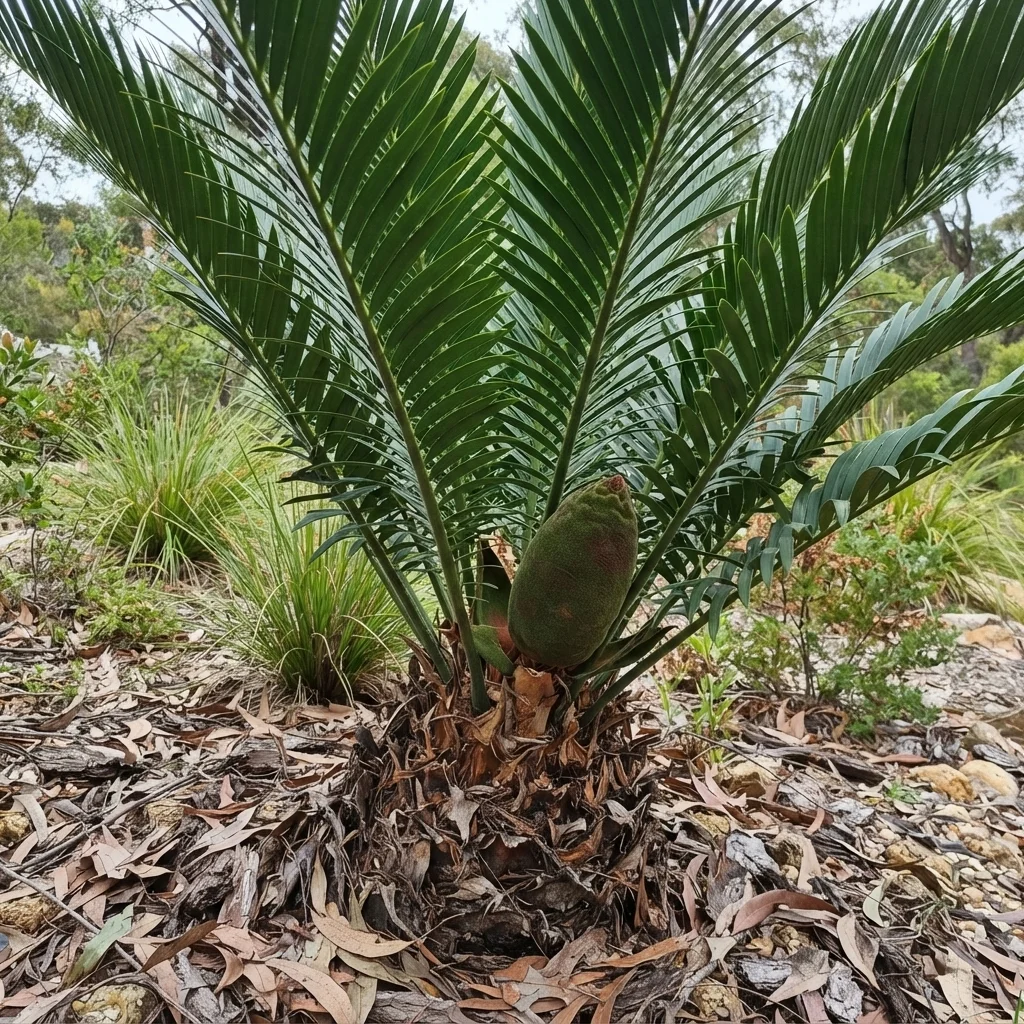
The stiff, keeled fronds reach up to eight feet in length, displaying over a hundred forward-facing, dark bluish-green leaflets that taper into sharp spines at the base. While it does not produce true flowers, mature specimens bear large, woody, barrel-shaped cones containing bright orange-red seeds.
Uses & Benefits:
Essentials
At a Glance
Plant Type
Tropical
Height
120"
Width
80"
Light
Full Sun, Partial Sun
Zones
8, 9, 10
Water
Low
Humidity
Moderate
Lifespan
Long
Native To
Australia
Toxicity
Highly toxic to humans and pets
Bloom period
Spring – Summer
In flower about 6 months of the year
Planting
How to Grow
- Select a planting site in full sun to light, dappled shade with exceptionally sharp drainage, such as sandy loam or a raised bed.
- Dig a hole twice as wide as the root ball but no deeper, ensuring the woody trunk base sits slightly above the surrounding soil level to prevent rot.
- Water deeply but infrequently during the first growing season, allowing the soil to dry out completely between waterings.
- Apply a balanced, slow-release low-phosphorus fertilizer once a year in early spring to support slow, steady growth.
Pro Tip
Never cut into the old, woody trunk tissue or shear off healthy green fronds, as this permanently disfigures the crown and severely stresses the plant; only remove entirely dead, brown fronds at the base.
Keep It Thriving
Care Guide
Do
- Ensure the soil drains rapidly to prevent fatal root rot.
- Wear thick gloves when handling the plant to protect against the sharp, spiny leaflet tips.
- Protect young, newly planted specimens with light shade until they are established.
Don't
- Do not overwater or allow the plant to sit in stagnant, waterlogged soil.
- Never prune healthy green fronds or cut into the old trunk tissue.
- Do not ingest any part of the plant, as all parts contain potent neurotoxins.
Seasonal Care Calendar
| Task | Jan | Feb | Mar | Apr | May | Jun | Jul | Aug | Sep | Oct | Nov | Dec |
|---|---|---|---|---|---|---|---|---|---|---|---|---|
| Fertilize | ||||||||||||
| Pest Check | ||||||||||||
| Prune | ||||||||||||
| Winter Prep |
Watch Out For
Pests & Diseases
Common Pests
Common Diseases
In the Garden
Landscape Uses & Companions
Landscape Uses
Companion Plants
Multiply
Propagation Methods
Good to Know
Common Questions
Moore's Cycad questions
What zones can Moore's Cycad grow in?
Moore's Cycad is hardy in USDA Zones 8–10. Inside that range it survives winter in the ground; outside it, grow it as an annual or a container plant you protect.
Is Moore's Cycad deer resistant?
Not reliably. Deer may browse Moore's Cycad, especially tender spring growth — plan on repellents or fencing where pressure is high.
When does Moore's Cycad bloom?
Moore's Cycad typically blooms in spring through summer. Exact timing shifts a week or two with your zone — Sow's bloom calendar maps it to your garden.
Does Moore's Cycad need full sun?
Moore's Cycad does best in full sun to part shade. In hot climates, afternoon shade keeps blooms fresher longer.
Is Moore's Cycad drought tolerant?
Yes — once established (usually after the first full season), Moore's Cycad handles dry spells with minimal watering. Water deeply its first year to build the root system that makes that possible.
More Macrozamia to compare
Keep exploring
Explore the genus
Hardy in your zone?
Grow Moore's Cycad with confidence
See it in a design of your actual yard, get zone-matched care reminders, and track it season by season in your garden journal.