The Story
Plant Bio
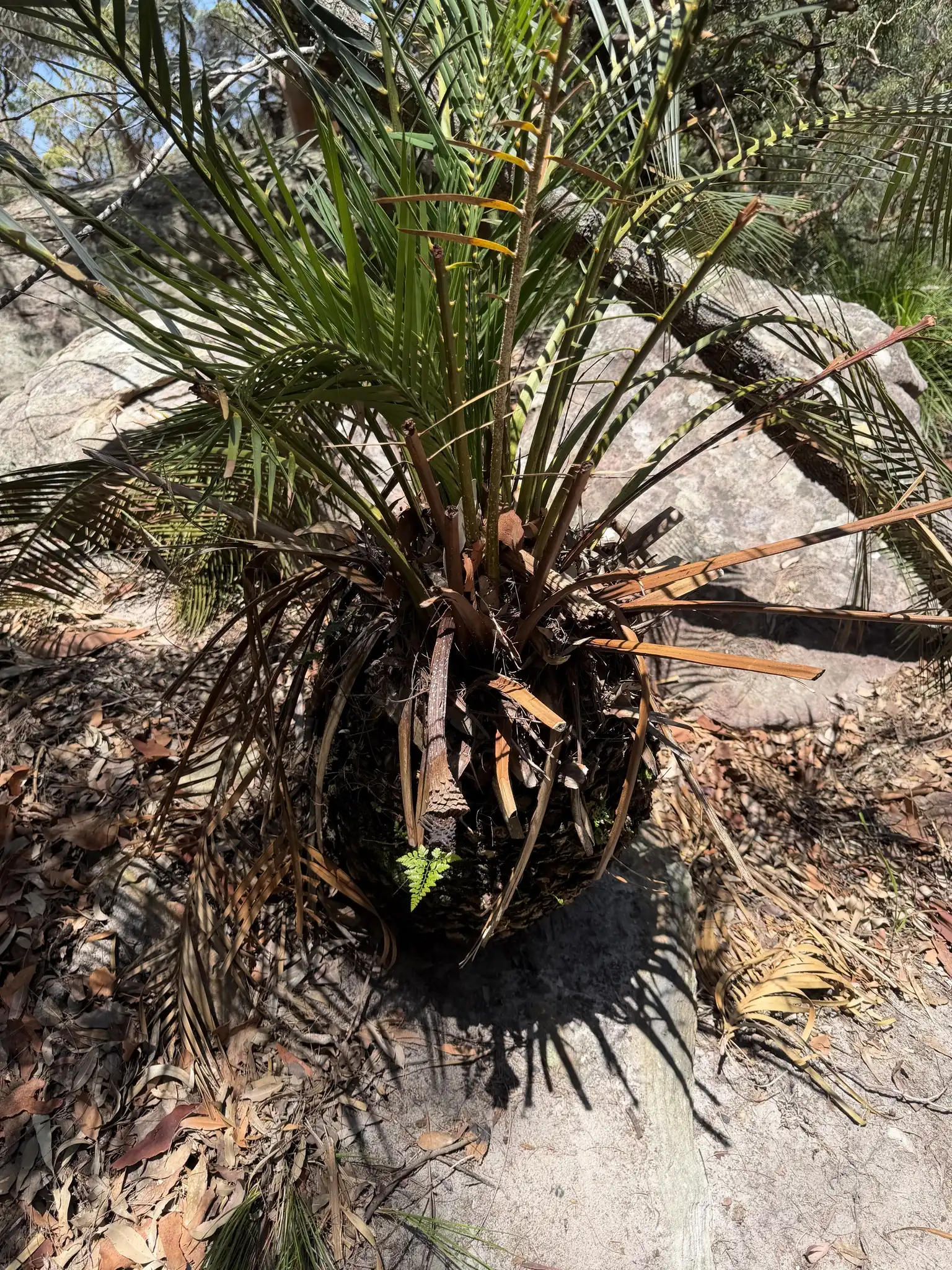
Macrozamia communis, commonly known as the burrawang, is a slow-growing, palm-like evergreen cycad native to eastern Australia. It forms a dense crown of rigid, arching, dark green fronds that radiate from a central woody trunk, which remains mostly subterranean or semi-emergent.
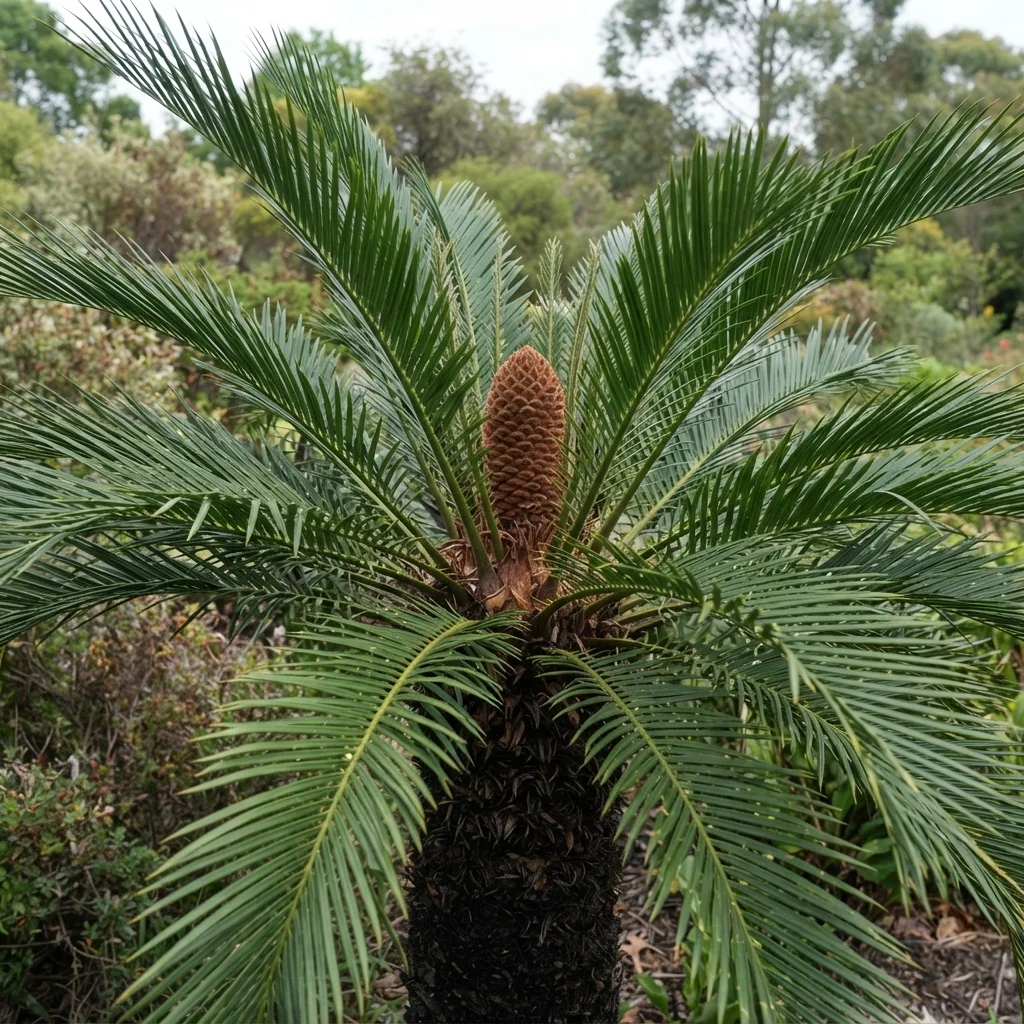
This species is distinguished by its massive starch-storing caudex and pinnately compound leaves featuring leaflets with distinct yellowish bases. As a dioecious gymnosperm, it produces large, woody male or female cones rather than flowers, with female plants bearing heavy cones filled with large, brightly colored seeds.
Uses & Benefits:
Essentials
At a Glance
Plant Type
Shrub
Height
78"
Width
78"
Light
Full Sun, Partial Sun, Shade
Zones
8, 9, 10
Water
Low
Humidity
Medium
Lifespan
Long-lived (over 100 years)
Native To
Australia
Toxicity
Highly Toxic
Bloom period
Spring – Summer
In flower about 6 months of the year
Planting
How to Grow
- Select a planting site with excellent, sharp drainage, such as a sandy slope or a raised bed filled with gravelly loam.
- Dig a hole twice as wide as the root ball but no deeper, ensuring the crown sits slightly above the surrounding soil level to prevent rot.
- Gently settle the plant into the hole without breaking or disturbing the delicate, nitrogen-fixing coralloid roots.
- Water thoroughly immediately after planting, then allow the soil to dry out completely between subsequent waterings.
Pro Tip
Never prune healthy green fronds to clean up the plant, as cycads rely on their full battery of leaves to fuel their exceptionally slow growth.
Keep It Thriving
Care Guide
Do
- Plant in highly porous, sandy, or gravelly soil to ensure rapid drainage.
- Wear gloves when handling raw seeds to avoid mild skin irritation.
- Water sparingly once established, relying on the plant's natural drought tolerance.
- Apply a balanced, slow-release palm and cycad fertilizer sparingly in spring.
Don't
- Do not plant in heavy, compacted clay soils that retain stagnant water.
- Never prune into the old, woody trunk tissue.
- Do not overwater or allow the root zone to sit in waterlogged conditions.
- Do not ingest any part of the plant, as all parts are highly toxic to humans and pets.
Seasonal Care Calendar
| Task | Jan | Feb | Mar | Apr | May | Jun | Jul | Aug | Sep | Oct | Nov | Dec |
|---|---|---|---|---|---|---|---|---|---|---|---|---|
| Fertilize | ||||||||||||
| Pest Check | ||||||||||||
| Prune | ||||||||||||
| Winter Prep |
Watch Out For
Pests & Diseases
Common Pests
Common Diseases
In the Garden
Landscape Uses & Companions
Landscape Uses
Companion Plants
Multiply
Propagation Methods
Good to Know
Common Questions
Burrawang questions
What zones can Burrawang grow in?
Burrawang is hardy in USDA Zones 8–10. Inside that range it survives winter in the ground; outside it, grow it as an annual or a container plant you protect.
Is Burrawang deer resistant?
Yes — Burrawang is rated deer-resistant. Deer typically pass it over, though extreme hunger can override any plant's defenses.
When does Burrawang bloom?
Burrawang typically blooms in spring through summer. Exact timing shifts a week or two with your zone — Sow's bloom calendar maps it to your garden.
Does Burrawang need full sun?
Burrawang does best in full sun to part shade. In hot climates, afternoon shade keeps blooms fresher longer.
Is Burrawang drought tolerant?
Yes — once established (usually after the first full season), Burrawang handles dry spells with minimal watering. Water deeply its first year to build the root system that makes that possible.
More Macrozamia to compare
Keep exploring
Explore the genus
Hardy in your zone?
Grow Burrawang with confidence
See it in a design of your actual yard, get zone-matched care reminders, and track it season by season in your garden journal.