The Story
Plant Bio
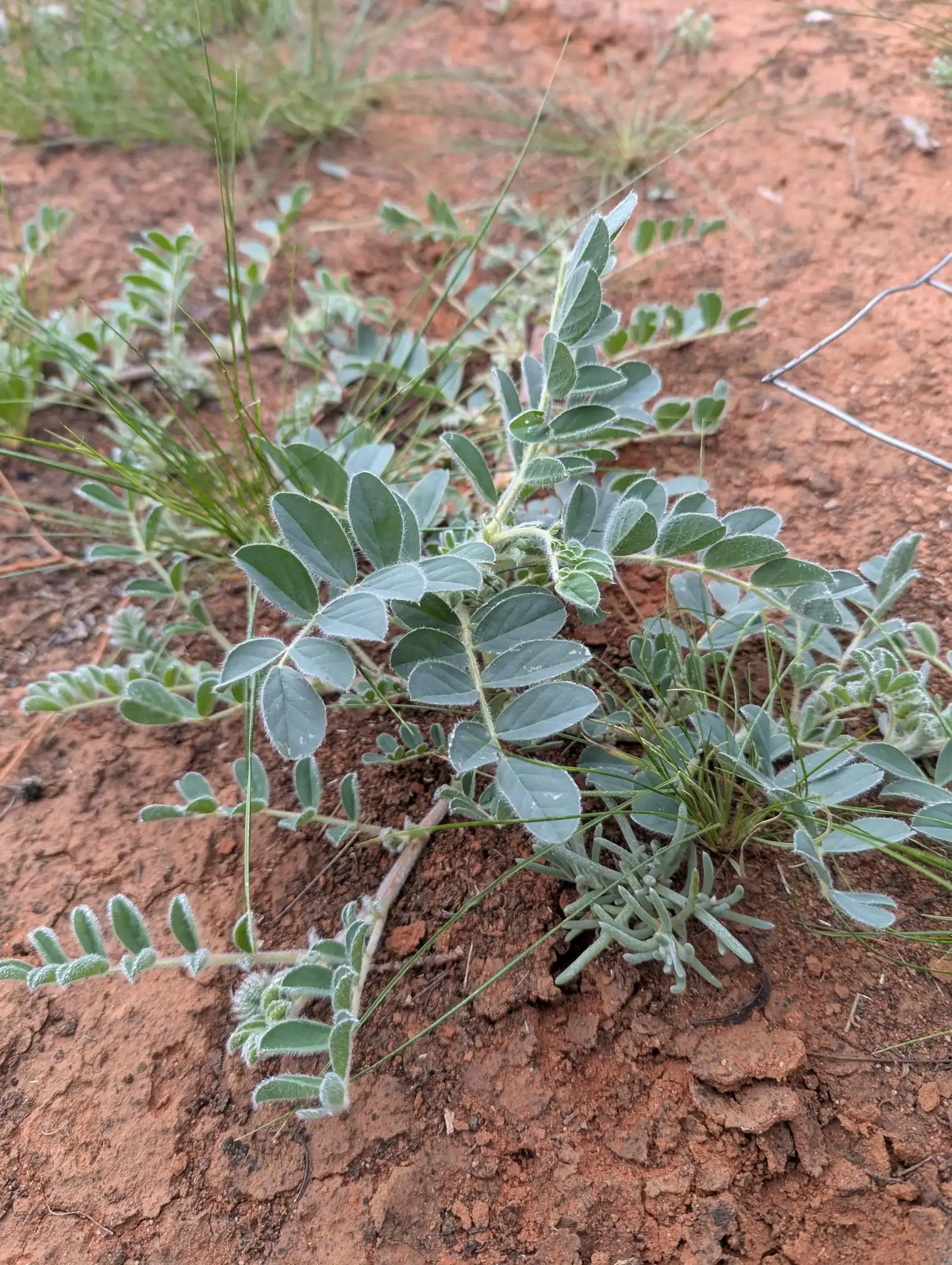
Swainsona formosa is a prostrate, sprawling annual or short-lived perennial herb with trailing stems and densely pubescent, grey-green pinnate foliage. The distinctive pea-like flowers are bright scarlet with a prominent, glossy black or dark red-brown central boss, held in upright clusters of five to six blooms per stalk.
This species is highly sensitive to excess moisture, requiring absolute sharp drainage to prevent root rot. Naturally occurring color variations include pink, cream, and solid red forms that lack the characteristic dark central boss.
Uses & Benefits:
Essentials
At a Glance
Plant Type
Annual
Height
30"
Width
118"
Light
Full Sun
Zones
9, 10
Water
Low
Humidity
Low
Lifespan
Annual or short-lived perennial
Native To
Australia
Toxicity
Non-toxic
Bloom period
Spring – Summer
In flower about 6 months of the year
Planting
How to Grow
- Scarify the hard seed coat by lightly rubbing with sandpaper or nicking the outer shell away from the seed eye.
- Pre-soak the scarified seeds in warm water until they swell before sowing.
- Sow directly into deep, highly free-draining sandy loam or a sterile soil-less potting mix to avoid transplant shock.
- Place the container in a warm, full-sun position and water strictly from the bottom to keep the foliage dry.
Pro Tip
Never prune back into old, leafless woody stems, as the plant lacks the capacity to regenerate from old wood.
Keep It Thriving
Care Guide
Do
- Provide absolute sharp drainage using coarse sand or gravel-rich media.
- Water sparingly and only when the growing medium has dried out completely.
- Apply a balanced, low-phosphorus fertilizer during active growth phases.
- Use sterile potting media to prevent soil-borne fungal pathogens.
Don't
- Do not use overhead sprinklers or allow water to sit on the foliage.
- Do not prune into old, bare woody stems.
- Do not overwater or allow the roots to sit in waterlogged soil.
- Do not transplant mature specimens, as the root system is highly sensitive to disturbance.
Seasonal Care Calendar
| Task | Jan | Feb | Mar | Apr | May | Jun | Jul | Aug | Sep | Oct | Nov | Dec |
|---|---|---|---|---|---|---|---|---|---|---|---|---|
| Fertilize | ||||||||||||
| Pest Check | ||||||||||||
| Plant | ||||||||||||
| Prune |
Watch Out For
Pests & Diseases
Common Pests
Common Diseases
In the Garden
Landscape Uses & Companions
Landscape Uses
Companion Plants
Multiply
Propagation Methods
Good to Know
Common Questions
Sturt's Desert Pea questions
What zones can Sturt's Desert Pea grow in?
Sturt's Desert Pea is hardy in USDA Zones 9–10. Inside that range it survives winter in the ground; outside it, grow it as an annual or a container plant you protect.
Is Sturt's Desert Pea deer resistant?
Not reliably. Deer may browse Sturt's Desert Pea, especially tender spring growth — plan on repellents or fencing where pressure is high.
When does Sturt's Desert Pea bloom?
Sturt's Desert Pea typically blooms in spring through summer. Exact timing shifts a week or two with your zone — Sow's bloom calendar maps it to your garden.
Does Sturt's Desert Pea need full sun?
Sturt's Desert Pea does best in full sun (6+ hours).
Is Sturt's Desert Pea drought tolerant?
Yes — once established (usually after the first full season), Sturt's Desert Pea handles dry spells with minimal watering. Water deeply its first year to build the root system that makes that possible.
Keep exploring
Explore the genus
Hardy in your zone?
Grow Sturt's Desert Pea with confidence
See it in a design of your actual yard, get zone-matched care reminders, and track it season by season in your garden journal.