The Story
Plant Bio
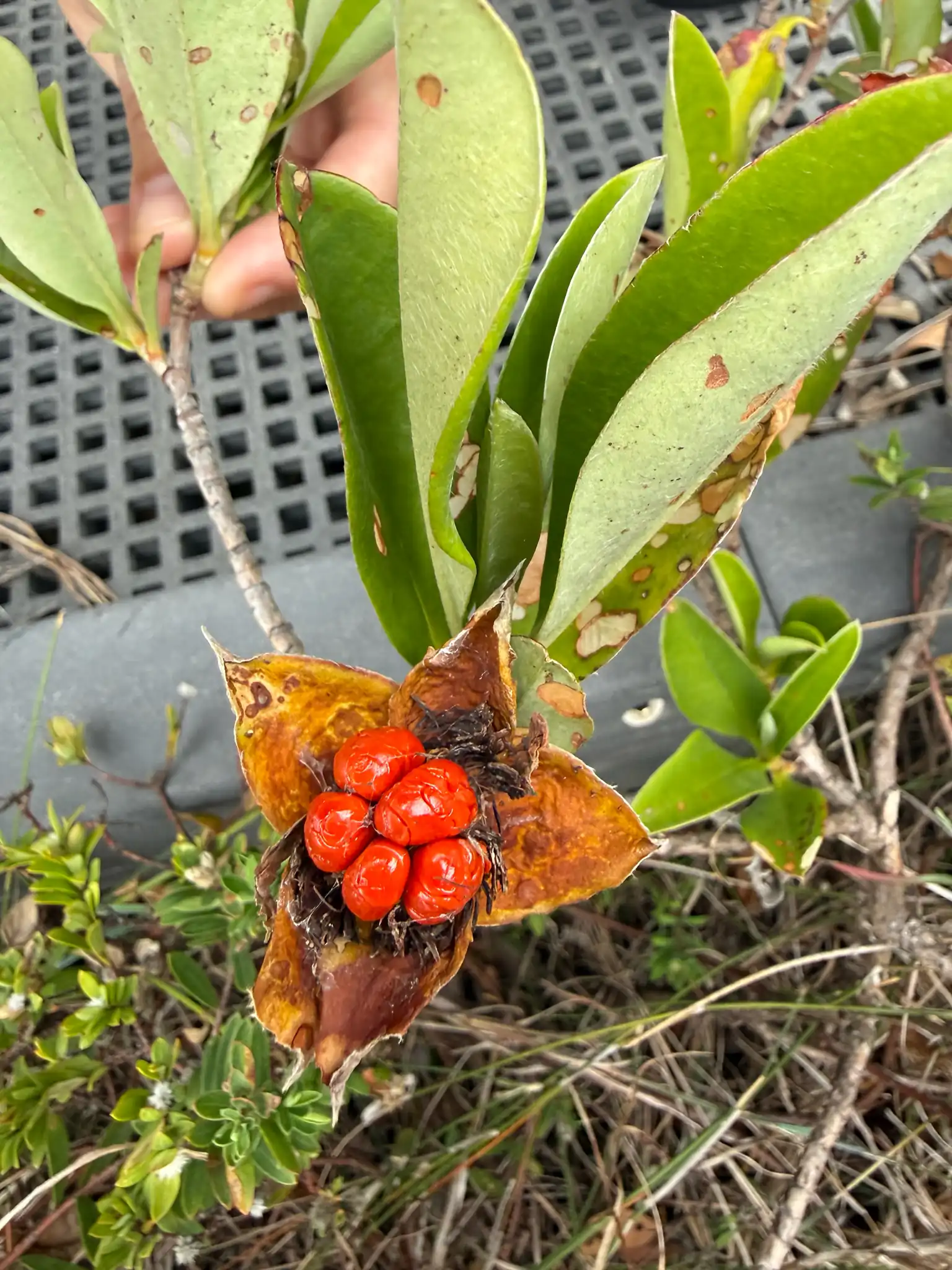
Hibbertia scandens, the climbing guinea flower, is a vigorous evergreen vine or scrambling shrub native to coastal eastern Australia. It features alternate, deep green leaves with silky-pubescent undersides and produces large, five-petaled yellow flowers from spring through summer.
The species adapts readily as a dense groundcover or a climbing screen, clinging to supports with its twining stems. The bright yellow blossoms span up to three inches across and open terminally on short lateral shoots, contrasting sharply with the dark foliage.
Uses & Benefits:
Essentials
At a Glance
Plant Type
Vine
Height
118"
Width
118"
Light
Full Sun, Partial Sun
Zones
9, 10
Water
Low to moderate
Humidity
High
Lifespan
Perennial
Native To
Eastern Australia
Toxicity
Mildly toxic if ingested
Bloom period
Spring – Summer
In flower about 6 months of the year
Planting
How to Grow
- Select a planting site with full sun to partial shade and exceptionally well-draining, sandy or loamy soil.
- Dig a hole twice as wide as the root ball and set the plant at the same depth as it was in the container.
- Provide a sturdy trellis, fence, or support structure if training the plant to climb rather than spread as a groundcover.
- Water regularly during the first growing season to establish a deep root system, then reduce frequency to allow the soil to dry between waterings.
Pro Tip
Prune immediately after the main flowering flush to maintain shape; cutting back into old, leafless brown wood results in slow, patchy regrowth as buds fail to regenerate.
Keep It Thriving
Care Guide
Do
- Plant in highly permeable, sandy or loamy soils to prevent root rot.
- Tip-prune young plants regularly to encourage dense, bushy branching.
- Apply a low-phosphorus native fertilizer sparingly in spring if growth slows.
Don't
- Do not plant in heavy clay soils or low-lying areas prone to standing water.
- Do not prune deeply into old, bare wood that lacks green leaves.
- Do not plant in dense, deep shade, which causes leggy growth and prevents flowering.
Seasonal Care Calendar
| Task | Jan | Feb | Mar | Apr | May | Jun | Jul | Aug | Sep | Oct | Nov | Dec |
|---|---|---|---|---|---|---|---|---|---|---|---|---|
| Fertilize | ||||||||||||
| Pest Check | ||||||||||||
| Propagate | ||||||||||||
| Prune |
Watch Out For
Pests & Diseases
Common Pests
Common Diseases
In the Garden
Landscape Uses & Companions
Landscape Uses
Companion Plants
Multiply
Propagation Methods
Good to Know
Common Questions
Climbing Guinea Flower questions
What zones can Climbing Guinea Flower grow in?
Climbing Guinea Flower is hardy in USDA Zones 9–10. Inside that range it survives winter in the ground; outside it, grow it as an annual or a container plant you protect.
When does Climbing Guinea Flower bloom?
Climbing Guinea Flower typically blooms in spring through summer. Exact timing shifts a week or two with your zone — Sow's bloom calendar maps it to your garden.
Does Climbing Guinea Flower need full sun?
Climbing Guinea Flower does best in full sun to part shade. In hot climates, afternoon shade keeps blooms fresher longer.
Is Climbing Guinea Flower drought tolerant?
Yes — once established (usually after the first full season), Climbing Guinea Flower handles dry spells with minimal watering. Water deeply its first year to build the root system that makes that possible.
More Hibbertia to compare
Keep exploring
Explore the genus
Hardy in your zone?
Grow Climbing Guinea Flower with confidence
See it in a design of your actual yard, get zone-matched care reminders, and track it season by season in your garden journal.