The Story
Plant Bio
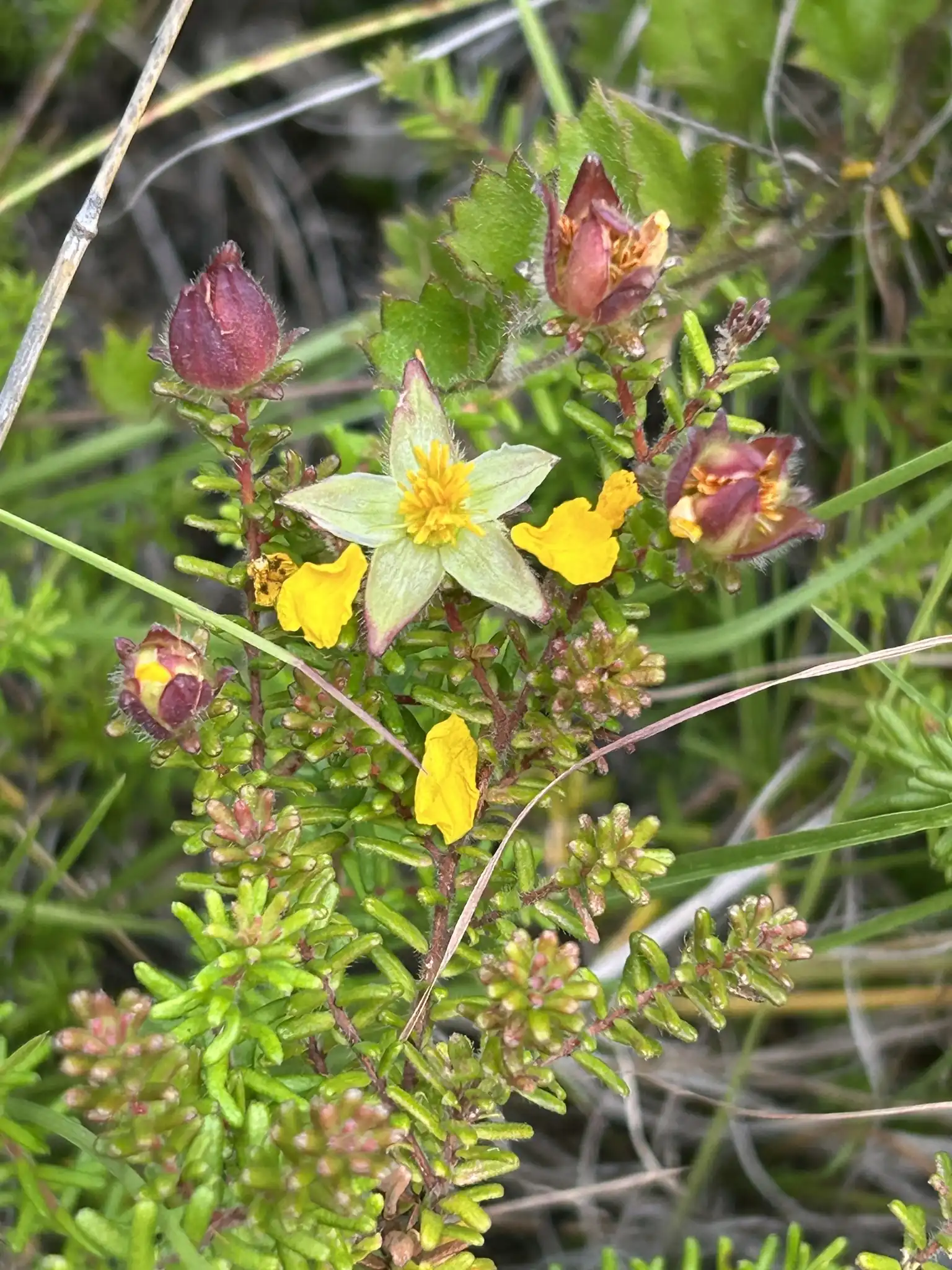
Hibbertia vestita, the hairy guinea-flower, is a low-spreading evergreen shrub native to eastern Australia that forms a dense, prostrate mat of trailing branchlets. The small, linear leaves feature recurved margins and a fine covering of minute hairs, providing a textured backdrop for five-petaled, bright yellow flowers that open from late winter through summer.
This species is distinguished by its highly compact, prostrate growth habit and the prominent, simple hairs coating its new stems and foliage. The bright yellow blossoms feature crinkled, bi-lobed petals surrounding a central cluster of up to 43 stamens.
Uses & Benefits:
Essentials
At a Glance
Plant Type
Shrub
Height
12"
Width
39"
Light
Full Sun, Partial Sun
Zones
9, 10
Water
Low
Humidity
Moderate
Lifespan
Perennial
Native To
Eastern Australia
Toxicity
Non-toxic
Bloom period
Winter – Summer
In flower about 9 months of the year
Planting
How to Grow
- Select a planting site with sharp, excellent drainage, such as a sandy loam or a dedicated container mix.
- Position the plant in full sun to maximize flower production, though it tolerates partial shade in hotter climates.
- Water sparingly once established, allowing the soil to dry out completely between waterings to prevent root rot.
- Apply a low-phosphorus, native-formulated slow-release fertilizer at a fraction of the standard rate during the spring establishment phase.
Pro Tip
Prune lightly immediately after the main flowering flush; cutting back into old, leafless wood prevents the plant from reshooting and will kill the stem.
Keep It Thriving
Care Guide
Do
- Provide sharp, rapid drainage to protect the root system from fungal pathogens.
- Grow in containers or pots in regions that experience hard winter freezes.
- Trim lightly after the summer flowering period to maintain a compact, bushy shape.
Don't
- Do not prune hard into old, bare wood, as the plant lacks dormant buds to regenerate from old stems.
- Do not overwater or plant in heavy clay soils that retain moisture.
- Do not apply standard high-phosphorus fertilizers, which can damage the root system.
Seasonal Care Calendar
| Task | Jan | Feb | Mar | Apr | May | Jun | Jul | Aug | Sep | Oct | Nov | Dec |
|---|---|---|---|---|---|---|---|---|---|---|---|---|
| Fertilize | ||||||||||||
| Pest Check | ||||||||||||
| Prune | ||||||||||||
| Winter Prep |
Watch Out For
Pests & Diseases
Common Pests
Common Diseases
In the Garden
Landscape Uses & Companions
Landscape Uses
Companion Plants
Multiply
Propagation Methods
Good to Know
Common Questions
Hairy Guinea-Flower questions
What zones can Hairy Guinea-Flower grow in?
Hairy Guinea-Flower is hardy in USDA Zones 9–10. Inside that range it survives winter in the ground; outside it, grow it as an annual or a container plant you protect.
When does Hairy Guinea-Flower bloom?
Hairy Guinea-Flower typically blooms in winter through summer. Exact timing shifts a week or two with your zone — Sow's bloom calendar maps it to your garden.
Does Hairy Guinea-Flower need full sun?
Hairy Guinea-Flower does best in full sun to part shade. In hot climates, afternoon shade keeps blooms fresher longer.
Is Hairy Guinea-Flower drought tolerant?
Yes — once established (usually after the first full season), Hairy Guinea-Flower handles dry spells with minimal watering. Water deeply its first year to build the root system that makes that possible.
More Hibbertia to compare
Keep exploring
Explore the genus
Hardy in your zone?
Grow Hairy Guinea-Flower with confidence
See it in a design of your actual yard, get zone-matched care reminders, and track it season by season in your garden journal.