The Story
Plant Bio
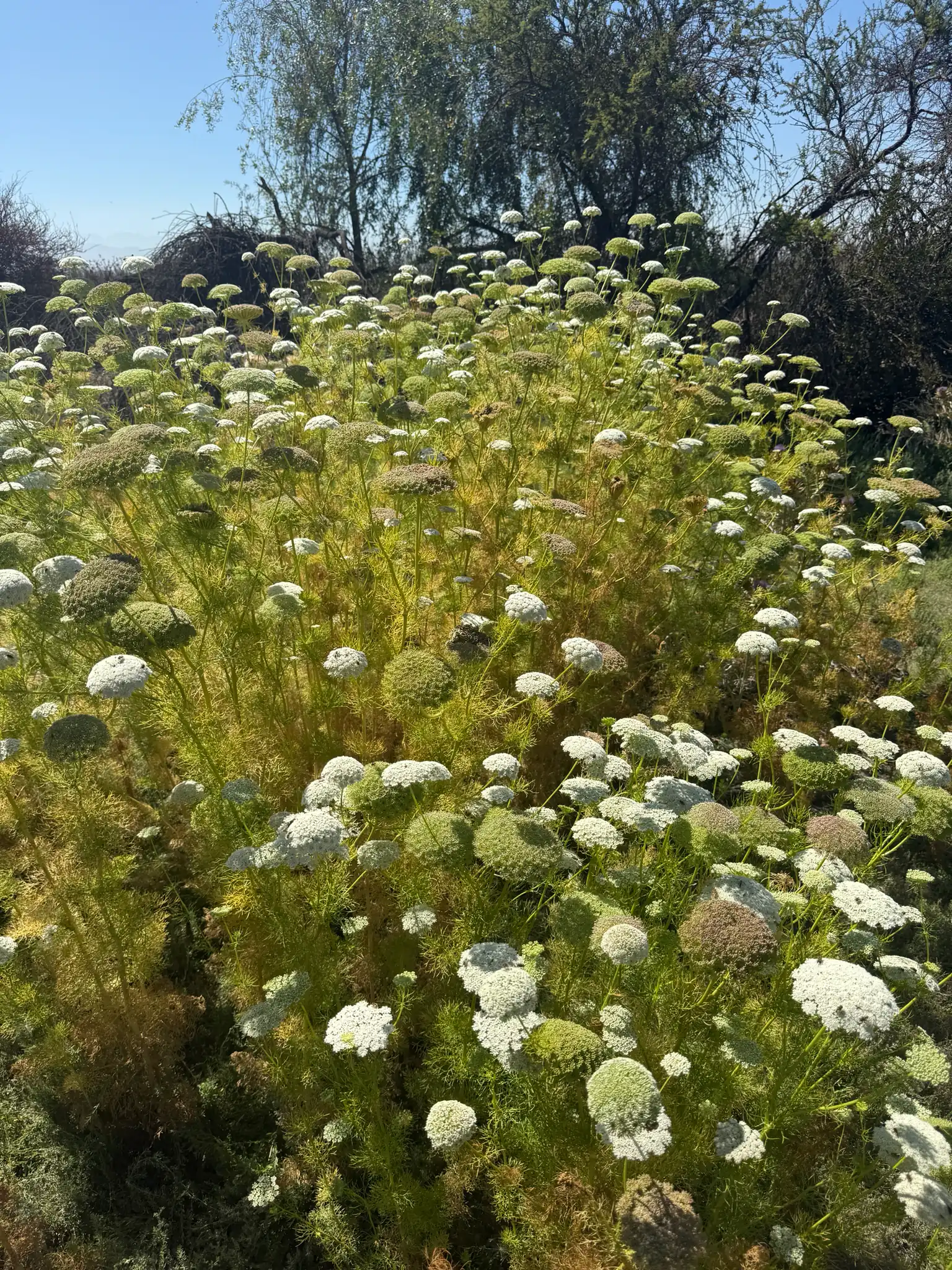
Visnaga daucoides, commonly known as the toothpick-plant, is an erect annual or biennial herb reaching two to three feet in height, with deeply dissected, thread-like green leaves. The tiny white flowers are held in dense, flat-topped compound umbels that span up to six inches across, blooming from summer through fall.
This species is distinguished by its highly rigid, spine-like rays that stiffen and dry into a robust, umbrella-like framework. These durable dried structures were historically harvested for use as toothpicks, setting it apart from the more delicate Queen Anne's lace.
Uses & Benefits:
Essentials
At a Glance
Plant Type
Annual
Height
36"
Width
18"
Light
Full Sun, Partial Sun
Zones
4, 5, 6, 7, 8, 9, 10
Water
Moderate
Humidity
Moderate
Lifespan
Annual or biennial
Native To
Macaronesia, Mediterranean, Iran, East Ethiopia
Toxicity
Toxic if ingested; skin irritant
Bloom period
Summer – Fall
In flower about 6 months of the year
Planting
How to Grow
- Select a site in full sun with well-drained soil, as plants do not tolerate waterlogged conditions.
- Sow seeds directly onto the soil surface in spring or fall, pressing them lightly into the medium without covering them.
- Keep the soil consistently moist until seedlings establish, then reduce watering to match moderate drought tolerance.
- Thin seedlings to stand twelve to twenty inches apart to allow adequate air circulation and prevent fungal issues.
Pro Tip
Sow seeds directly on the soil surface without covering them; they require direct light exposure to trigger germination.
Keep It Thriving
Care Guide
Do
- Wear gloves when handling the plant to avoid skin irritation from the sap.
- Deadhead spent flower heads selectively if self-seeding is undesirable.
- Provide an open, airy position to minimize the risk of powdery mildew.
Don't
- Do not overwater or plant in heavy, poorly drained soils where root rot can develop.
- Do not prune back into old, leafless wood, as this kills the stems.
- Do not apply heavy applications of nitrogen fertilizer, which causes weak, floppy growth.
Seasonal Care Calendar
| Task | Jan | Feb | Mar | Apr | May | Jun | Jul | Aug | Sep | Oct | Nov | Dec |
|---|---|---|---|---|---|---|---|---|---|---|---|---|
| Deadhead | ||||||||||||
| Fertilize | ||||||||||||
| Pest Check | ||||||||||||
| Plant |
Watch Out For
Pests & Diseases
Common Pests
Common Diseases
In the Garden
Landscape Uses & Companions
Landscape Uses
Companion Plants
Multiply
Propagation Methods
Good to Know
Common Questions
Toothpick-plant questions
What zones can Toothpick-plant grow in?
Toothpick-plant is hardy in USDA Zones 4–10. Inside that range it survives winter in the ground; outside it, grow it as an annual or a container plant you protect.
When does Toothpick-plant bloom?
Toothpick-plant typically blooms in summer through fall. Exact timing shifts a week or two with your zone — Sow's bloom calendar maps it to your garden.
Does Toothpick-plant need full sun?
Toothpick-plant does best in full sun to part shade. In hot climates, afternoon shade keeps blooms fresher longer.
Is Toothpick-plant drought tolerant?
Yes — once established (usually after the first full season), Toothpick-plant handles dry spells with minimal watering. Water deeply its first year to build the root system that makes that possible.
Keep exploring
Explore the genus
Grow Toothpick-plant with confidence
See it in a design of your actual yard, get zone-matched care reminders, and track it season by season in your garden journal.