The Story
Plant Bio
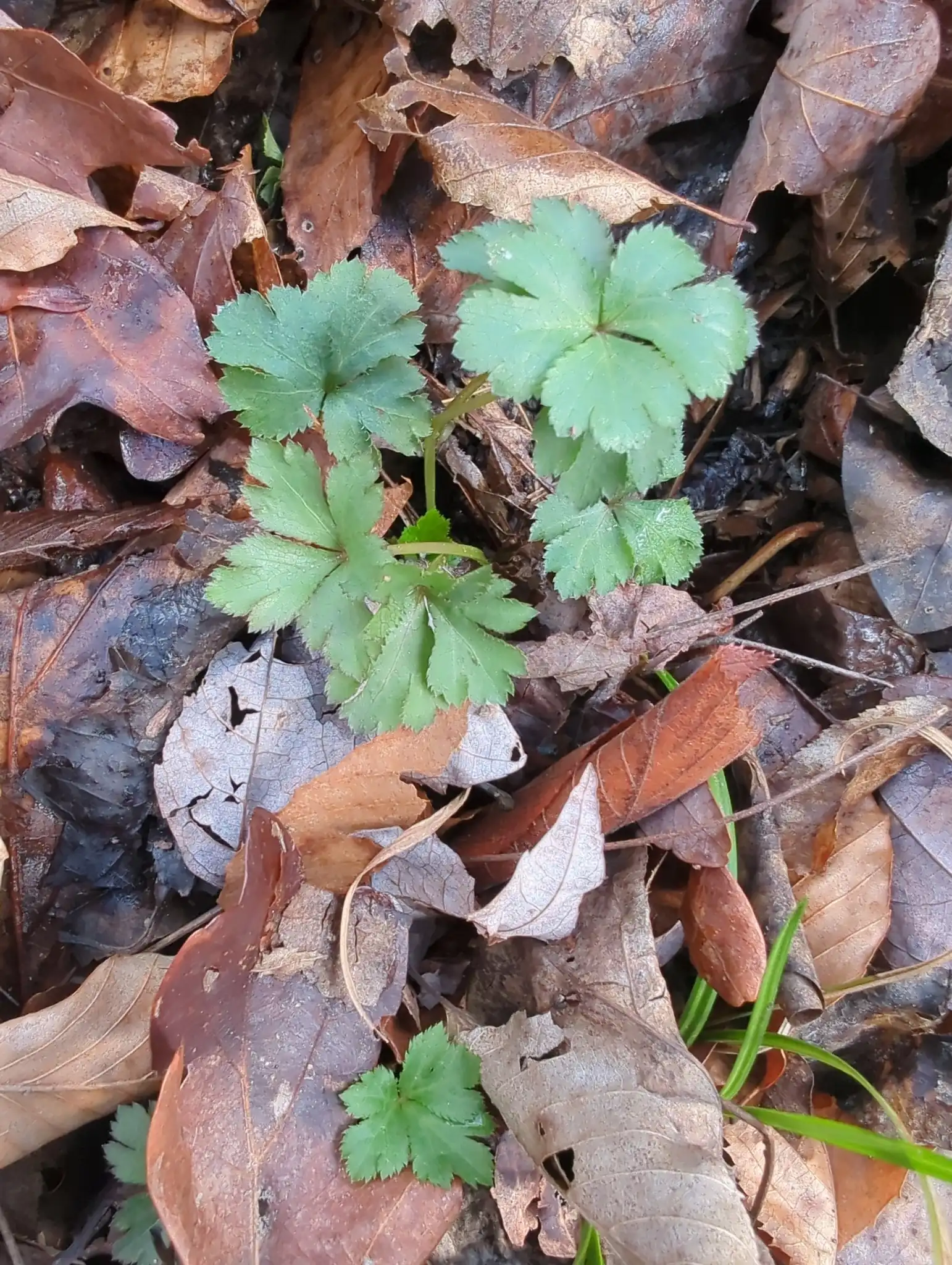
Sanicula canadensis, commonly known as black snakeroot, is an erect, branching biennial or short-lived perennial native to the deciduous woodlands of eastern and central North America. The species features alternate, palmately compound leaves with three to five deeply toothed leaflets and thrives in the deep shade of forest canopies.
Unlike ornamental members of the carrot family, this wild-type species produces inconspicuous, tiny greenish-white flowers in small, uneven compound umbels from spring through summer. The resulting dry fruits are covered in hooked bristles that facilitate seed dispersal by clinging to passing animals and clothing.
Uses & Benefits:
Essentials
At a Glance
Plant Type
Perennial
Height
39"
Width
18"
Light
Partial Sun, Shade
Zones
4, 5, 6, 7, 8, 9
Water
Moderate
Humidity
Moderate to High
Lifespan
Biennial or short-lived perennial
Native To
North America
Toxicity
Mildly toxic if ingested; seeds cling to fur
Bloom period
Spring – Summer
In flower about 6 months of the year
Planting
How to Grow
- Select a planting site in partial to full shade with moist, organic-rich, well-drained soil.
- Incorporate leaf mold or compost into the planting hole to mimic a natural forest floor environment.
- Space plugs or container plants 12 to 18 inches apart and water thoroughly to settle the soil.
- Maintain consistent soil moisture during the first growing season until the root system is established.
Pro Tip
Sow fresh seed directly in fall to allow natural cold stratification, as dried commercial seed exhibits low germination rates without a prolonged cold period.
Keep It Thriving
Care Guide
Do
- Leave fallen leaves in place around the base of the plant to preserve soil moisture and organic matter.
- Cut back spent seed stalks before the dry fruits mature if you want to prevent the sticky burs from spreading.
- Sow seeds immediately after collection in late summer or fall for the highest germination success.
Don't
- Do not apply synthetic chemical fertilizers, as this woodland native thrives in low-nutrient, organic soils.
- Do not plant in low-lying, poorly drained areas where standing water will trigger root rot.
- Do not shear or prune the plant into formal shapes, which destroys its natural branching habit.
Seasonal Care Calendar
| Task | Jan | Feb | Mar | Apr | May | Jun | Jul | Aug | Sep | Oct | Nov | Dec |
|---|---|---|---|---|---|---|---|---|---|---|---|---|
| Pest Check | ||||||||||||
| Plant | ||||||||||||
| Propagate | ||||||||||||
| Prune |
Watch Out For
Pests & Diseases
Common Pests
Common Diseases
In the Garden
Landscape Uses & Companions
Landscape Uses
Companion Plants
Multiply
Propagation Methods
Good to Know
Common Questions
Black Snakeroot questions
What zones can Black Snakeroot grow in?
Black Snakeroot is hardy in USDA Zones 4–9. Inside that range it survives winter in the ground; outside it, grow it as an annual or a container plant you protect.
Is Black Snakeroot deer resistant?
Not reliably. Deer may browse Black Snakeroot, especially tender spring growth — plan on repellents or fencing where pressure is high.
When does Black Snakeroot bloom?
Black Snakeroot typically blooms in spring through summer. Exact timing shifts a week or two with your zone — Sow's bloom calendar maps it to your garden.
Does Black Snakeroot need full sun?
Black Snakeroot does best in part shade.
Is Black Snakeroot drought tolerant?
Yes — once established (usually after the first full season), Black Snakeroot handles dry spells with minimal watering. Water deeply its first year to build the root system that makes that possible.
Keep exploring
Explore the genus
Grow Black Snakeroot with confidence
See it in a design of your actual yard, get zone-matched care reminders, and track it season by season in your garden journal.