The Story
Plant Bio
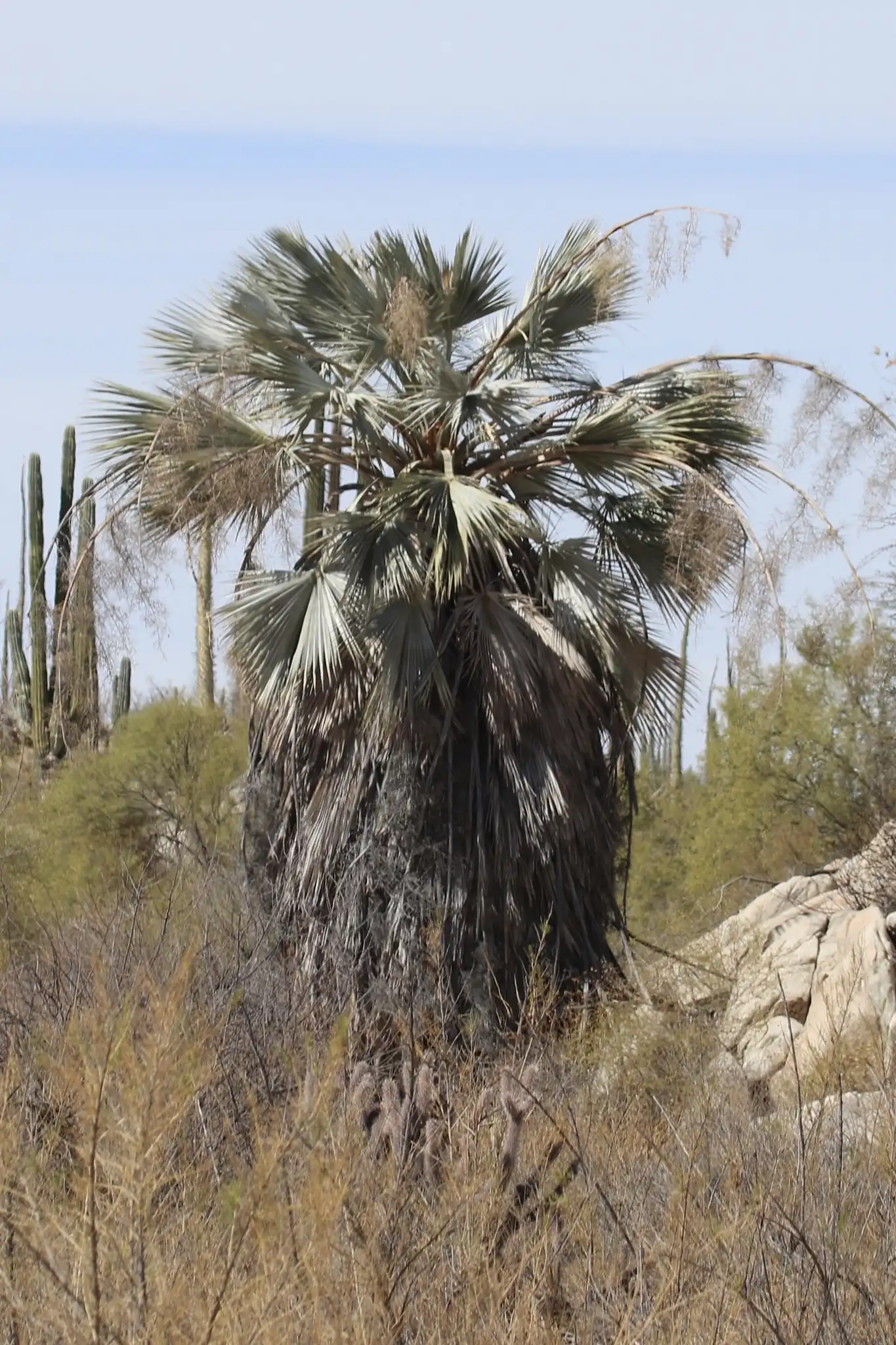
Brahea armata, the blue Hesper palm, is a slow-growing, solitary evergreen palm native to the arid desert canyons and rocky slopes of northwestern Mexico. It develops a stout, gray trunk topped by a rounded, symmetrical crown of stiff, powdery blue-green fan leaves.
This species is distinguished by its silvery-blue foliage coated in a thick, waxy indumentum and its long, arching flower panicles that extend up to 16 feet beyond the leaf crown. The hermaphroditic yellow flowers bloom from winter to spring, eventually producing small, fleshy fruits.
Uses & Benefits:
Essentials
At a Glance
Plant Type
Tree
Height
590"
Width
141"
Light
Full Sun
Zones
9, 10
Water
Low
Humidity
Low
Lifespan
Long-lived
Native To
Northwestern Mexico
Toxicity
Non-toxic (sharp spines)
Bloom period
Winter – Spring
In flower about 6 months of the year
Planting
How to Grow
- Select a planting site in full sun with exceptionally well-draining sandy, gravelly, or rocky soil.
- Dig a hole twice as wide as the root ball but no deeper, ensuring the palm is not planted below its original soil line.
- Water deeply immediately after planting to settle the soil around the roots, then withhold frequent watering.
- Protect young specimens from extreme cold during their first few winters until the root system is fully established.
Pro Tip
To preserve the intense powdery-blue epicuticular wax on the fronds, grow this palm in lean, gravelly mineral soils under intense sun and withhold supplemental water once established. Excessive irrigation and organic-rich loam destroy the protective wax coating and invite fatal fungal root rot.
Keep It Thriving
Care Guide
Do
- Wear thick leather gloves when handling the plant to avoid lacerations from the sharp petiole spines.
- Remove only completely dead, brown fronds close to the trunk base.
- Apply a light, slow-release palm fertilizer with micronutrients once in spring.
Don't
- Do not prune green or slightly downward-pointing leaves, as this weakens the crown.
- Do not overwater or plant in heavy clay soils that retain standing water.
- Do not apply heavy organic fertilizers or rich loam, which slow down cold hardiness development.
Seasonal Care Calendar
| Task | Jan | Feb | Mar | Apr | May | Jun | Jul | Aug | Sep | Oct | Nov | Dec |
|---|---|---|---|---|---|---|---|---|---|---|---|---|
| Fertilize | ||||||||||||
| Pest Check | ||||||||||||
| Prune | ||||||||||||
| Winter Prep |
Watch Out For
Pests & Diseases
Common Pests
Common Diseases
In the Garden
Landscape Uses & Companions
Landscape Uses
Multiply
Propagation Methods
Good to Know
Common Questions
Blue Hesper Palm questions
What zones can Blue Hesper Palm grow in?
Blue Hesper Palm is hardy in USDA Zones 9–10. Inside that range it survives winter in the ground; outside it, grow it as an annual or a container plant you protect.
Is Blue Hesper Palm deer resistant?
Yes — Blue Hesper Palm is rated deer-resistant. Deer typically pass it over, though extreme hunger can override any plant's defenses.
When does Blue Hesper Palm bloom?
Blue Hesper Palm typically blooms in winter through spring. Exact timing shifts a week or two with your zone — Sow's bloom calendar maps it to your garden.
Does Blue Hesper Palm need full sun?
Blue Hesper Palm does best in full sun (6+ hours).
Is Blue Hesper Palm drought tolerant?
Yes — once established (usually after the first full season), Blue Hesper Palm handles dry spells with minimal watering. Water deeply its first year to build the root system that makes that possible.
Keep exploring
Explore the genus
Hardy in your zone?
Grow Blue Hesper Palm with confidence
See it in a design of your actual yard, get zone-matched care reminders, and track it season by season in your garden journal.