The Story
Plant Bio
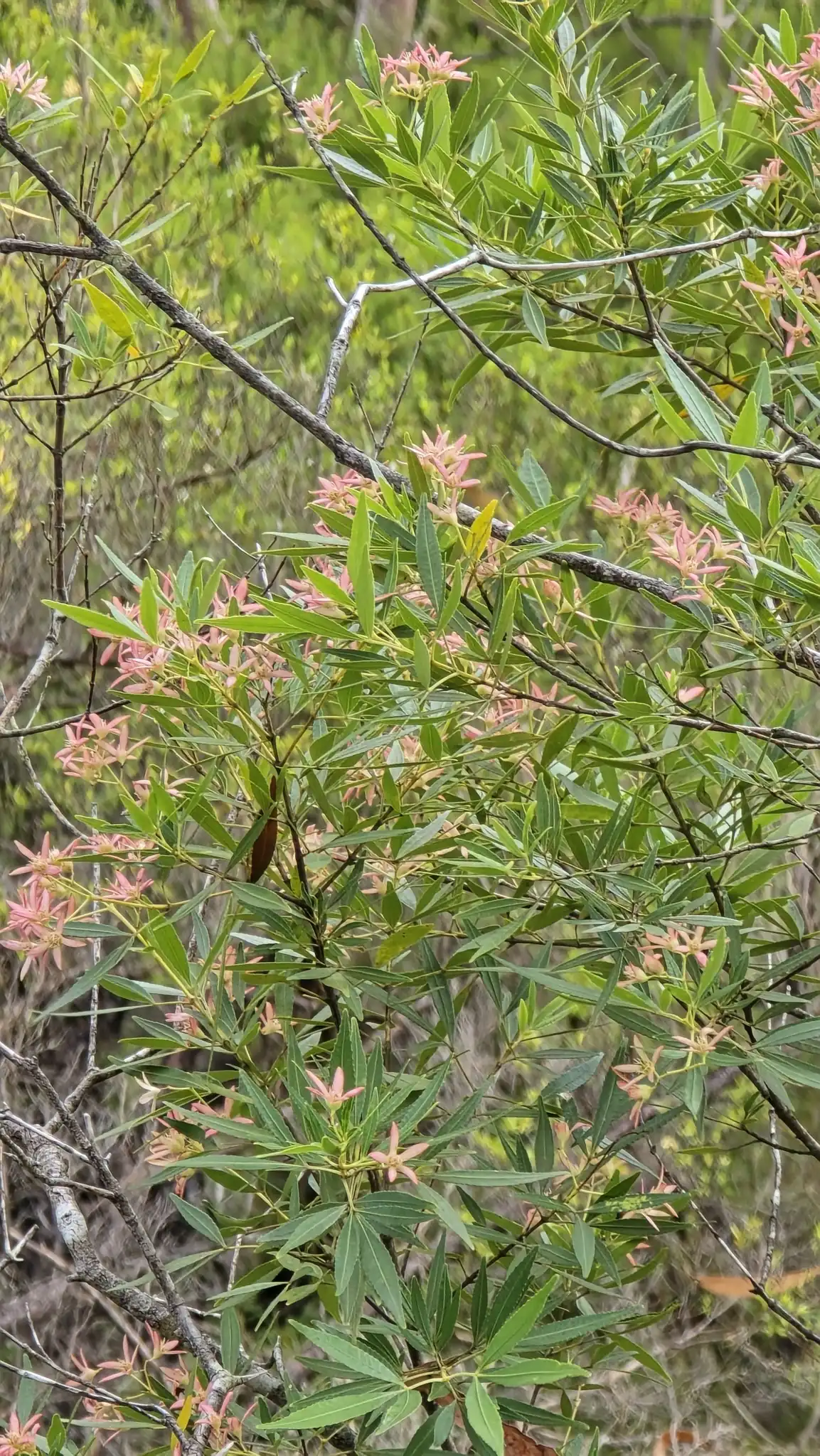
Ceratopetalum gummiferum is an evergreen Australian shrub or small pyramidal tree, reaching ten to twenty feet in cultivation, with glossy, trifoliolate leaves that emerge with bronze or pink highlights. The true creamy-white flowers are tiny and insignificant, but they are followed by calyxes that swell and turn a vibrant salmon-pink to bright red through summer and fall.
The species is highly prized for this post-flowering display, where the expanding sepals mimic a profuse crop of red blossoms. The rough, light grey bark exudes a sticky gum when cut, giving the plant its botanical name.
Uses & Benefits:
Essentials
At a Glance
Plant Type
Shrub
Height
180"
Width
96"
Light
Full Sun, Partial Sun
Zones
9, 10
Water
Medium
Humidity
Moderate to high
Lifespan
Perennial
Native To
Australia
Toxicity
Non-toxic
Bloom period
Summer – Autumn
In flower about 6 months of the year
Planting
How to Grow
- Select a site in full sun to maximize the intensity of the red calyx coloration.
- Incorporate organic matter into sandy or loamy soil to ensure moisture retention without compromising drainage.
- Water regularly from spring through autumn, keeping the soil consistently damp but never waterlogged.
- Apply a low-phosphorus, slow-release native fertilizer in early spring to avoid root and leaf burn.
Pro Tip
Plant in sandy, highly permeable soil on a slope or raised bed; absolute drainage is critical to prevent fatal root rot, yet the roots must never dry out completely during summer.
Keep It Thriving
Care Guide
Do
- Provide full sun to ensure the brightest red color on the developing calyxes.
- Prune lightly immediately after the colorful calyx display fades to maintain a dense, bushy habit.
- Water deeply during dry summer spells to prevent leaf drop and stress.
Don't
- Do not plant in heavy clay or poorly drained soils where water can pool around the roots.
- Do not use standard high-phosphorus commercial fertilizers, which can burn the sensitive root system.
- Do not cut back hard into old, leafless wood, as buds will fail to regenerate.
Seasonal Care Calendar
| Task | Jan | Feb | Mar | Apr | May | Jun | Jul | Aug | Sep | Oct | Nov | Dec |
|---|---|---|---|---|---|---|---|---|---|---|---|---|
| Fertilize | ||||||||||||
| Mulch | ||||||||||||
| Pest Check | ||||||||||||
| Prune |
Watch Out For
Pests & Diseases
Common Pests
Common Diseases
In the Garden
Landscape Uses & Companions
Landscape Uses
Companion Plants
Multiply
Propagation Methods
Good to Know
Common Questions
New South Wales Christmas Bush questions
What zones can New South Wales Christmas Bush grow in?
New South Wales Christmas Bush is hardy in USDA Zones 9–10. Inside that range it survives winter in the ground; outside it, grow it as an annual or a container plant you protect.
Is New South Wales Christmas Bush deer resistant?
Not reliably. Deer may browse New South Wales Christmas Bush, especially tender spring growth — plan on repellents or fencing where pressure is high.
When does New South Wales Christmas Bush bloom?
New South Wales Christmas Bush typically blooms in summer through autumn. Exact timing shifts a week or two with your zone — Sow's bloom calendar maps it to your garden.
Does New South Wales Christmas Bush need full sun?
New South Wales Christmas Bush does best in full sun to part shade. In hot climates, afternoon shade keeps blooms fresher longer.
Keep exploring
Explore the genus
Hardy in your zone?
Grow New South Wales Christmas Bush with confidence
See it in a design of your actual yard, get zone-matched care reminders, and track it season by season in your garden journal.