The Story
Plant Bio
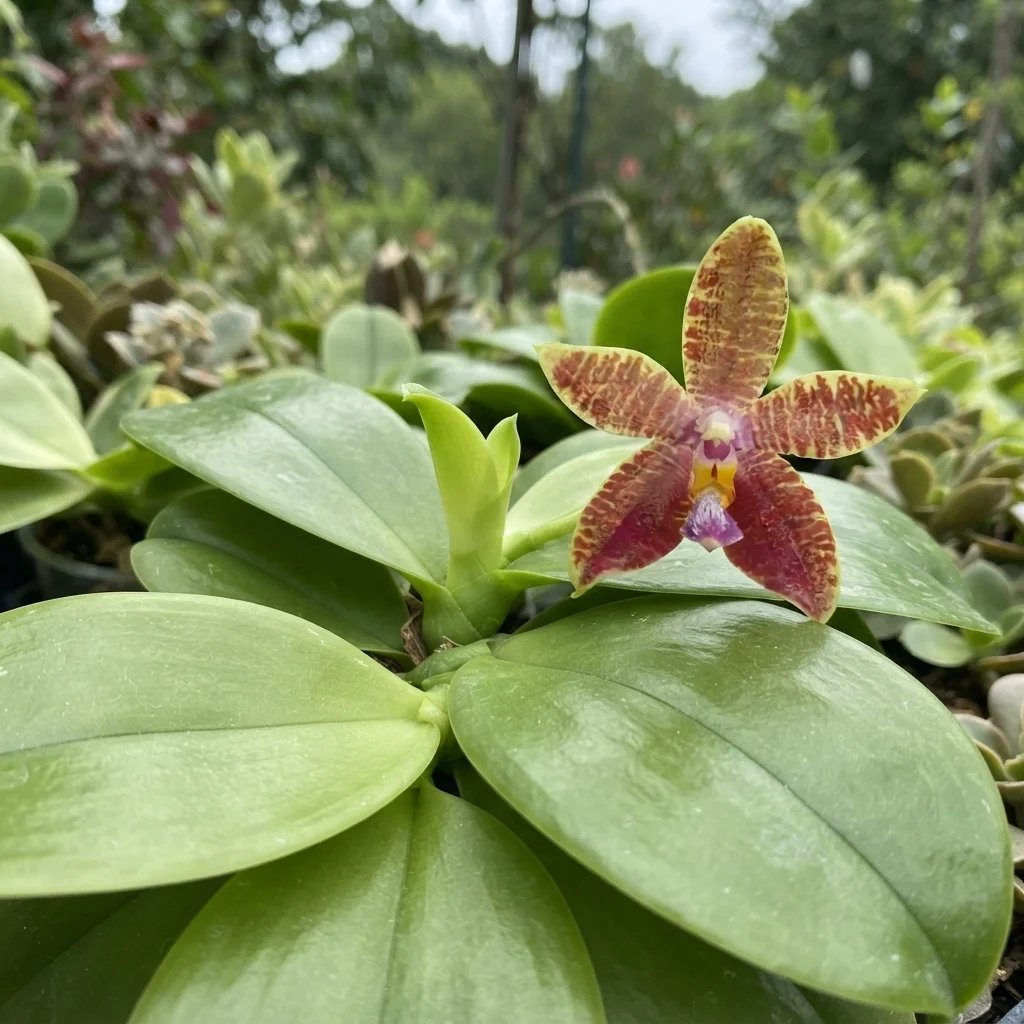
Phalaenopsis × singuliflora is a natural hybrid orchid native to the tropical wet forests of Borneo, where it grows as a monopodial epiphyte on tree branches. It forms a compact basal rosette of fleshy, glossy, mid- to dark green leaves, with bright light green new growth emerging from a short stem.
This orchid is distinguished by its short, arching flower spikes that produce highly fragrant blossoms successively, meaning only one or two flowers open at any given time. The flowers feature a yellowish-green background heavily patterned with deep purple-brown or magenta markings and a contrasting white and purple-violet lip.
Uses & Benefits:
Essentials
At a Glance
Plant Type
Tropical
Height
8"
Width
12"
Light
Shade
Water
Consistent moisture
Humidity
High (60-80%)
Lifespan
Long-lived
Native To
Borneo
Toxicity
Non-toxic
Bloom period
Summer – Fall
In flower about 6 months of the year
Planting
How to Grow
- Select a small, well-draining orchid pot with ample side slots and fill it with coarse orchid bark, sphagnum moss, or charcoal.
- Position the plant in a location that receives bright indirect light or full shade, ensuring it is completely shielded from direct sunlight to prevent leaf scorch.
- Water consistently to keep the media damp but never soggy, allowing the roots to dry slightly between waterings while maintaining high relative humidity.
- Maintain warm indoor temperatures above 59 degrees Fahrenheit year-round, protecting the plant from drafts and sudden temperature drops.
Pro Tip
Keep this epiphyte in a tight, highly aerated pot with chunky orchid bark rather than a large container; oversized pots retain excess moisture that suffocates the roots and triggers fatal root rot.
Keep It Thriving
Care Guide
Do
- Water with tepid, low-mineral water to avoid shocking the sensitive root system.
- Provide active air circulation around the foliage to prevent fungal and bacterial leaf spots.
- Repot every one to two years into fresh bark media just as new root tips begin to emerge.
Don't
- Never cut green, live flower spikes, as they can continue to bloom or produce new plantlets called keikis.
- Do not allow the roots to sit in stagnant water or use standard potting soil.
- Avoid fertilizing during the winter when active growth slows down.
Seasonal Care Calendar
| Task | Jan | Feb | Mar | Apr | May | Jun | Jul | Aug | Sep | Oct | Nov | Dec |
|---|---|---|---|---|---|---|---|---|---|---|---|---|
| Fertilize | ||||||||||||
| Pest Check | ||||||||||||
| Propagate | ||||||||||||
| Prune |
Watch Out For
Pests & Diseases
Common Pests
Common Diseases
In the Garden
Landscape Uses & Companions
Landscape Uses
Companion Plants
Multiply
Propagation Methods
Good to Know
Common Questions
Single-Flowered Phalaenopsis questions
When does Single-Flowered Phalaenopsis bloom?
Single-Flowered Phalaenopsis typically blooms in summer through fall. Exact timing shifts a week or two with your zone — Sow's bloom calendar maps it to your garden.
More Phalaenopsis to compare
Keep exploring
Explore the genus
Grow Single-Flowered Phalaenopsis with confidence
See it in a design of your actual yard, get zone-matched care reminders, and track it season by season in your garden journal.