The Story
Plant Bio
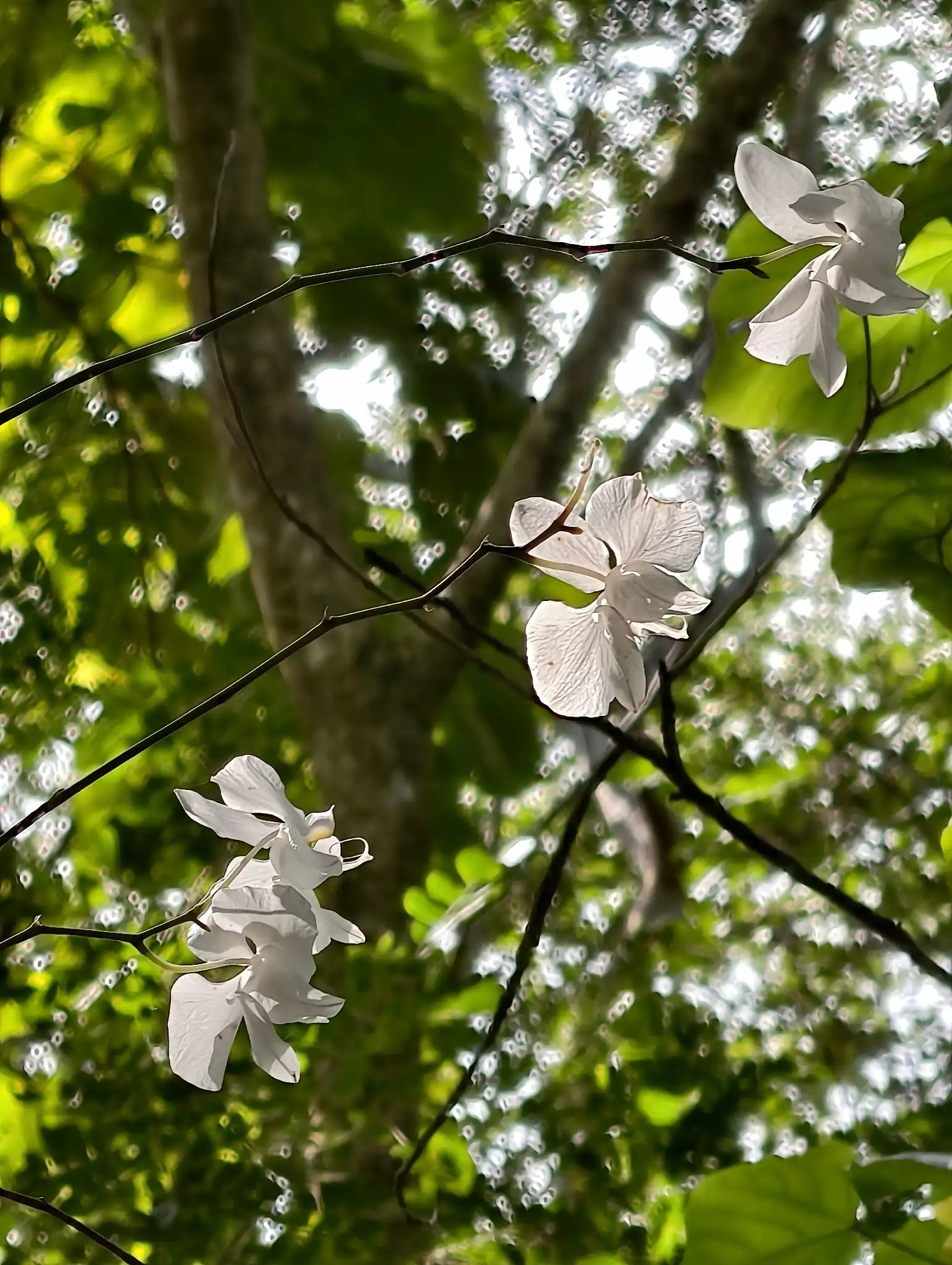
Phalaenopsis amabilis, the moth orchid, is an evergreen monopodial epiphyte native to the warm lowland rainforests of Asia and northern Australia. It produces thick, leathery, oblong leaves from a highly compressed stem, anchored by fleshy, silvery-grey aerial roots that absorb moisture and nutrients from the air.
The species is distinguished by its long, arching flower spikes that carry ten to over thirty pristine white, flat-faced flowers with a yellow- and red-marked lip. These long-lasting blooms open sequentially from late fall through early spring, triggered by the natural drop in nighttime temperatures.
Uses & Benefits:
Essentials
At a Glance
Plant Type
Tropical
Height
40"
Width
18"
Light
Partial Sun, Shade
Zones
10
Water
Low to moderate
Humidity
High (50%-70%)
Lifespan
Long-lived
Native To
Asia and Oceania
Toxicity
Non-toxic
Bloom period
Late fall – Early spring
In flower about 5 months of the year
Planting
How to Grow
- Select a clear plastic pot with ample drainage holes and fill it with a coarse, well-aerated orchid bark or sphagnum moss mix.
- Position the orchid in a location receiving bright, indirect or filtered light, strictly avoiding direct midday sun which scorches the foliage.
- Water thoroughly only when the potting medium has dried out and the aerial roots have transitioned from green to a silvery-grey color.
- Maintain high humidity levels between 50% and 70% with active air circulation to prevent stagnant moisture and fungal pathogens.
Pro Tip
Water only when the aerial roots turn a silvery-grey color; green roots indicate the potting medium still holds sufficient moisture. Avoid getting water trapped in the central crown where new leaves emerge, as stagnant moisture quickly triggers fatal crown rot.
Keep It Thriving
Care Guide
Do
- Water based on root color and medium dryness rather than a rigid calendar schedule.
- Flush the potting medium with pure water monthly to wash away accumulated fertilizer salts.
- Keep the plant in a room with good air movement to prevent bacterial and fungal rots.
- Maintain temperatures above 10°C (50°F) at all times to prevent immediate tissue damage.
Don't
- Do not allow water to pool or sit in the central crown where new leaves emerge.
- Do not prune green, spent flower spikes prematurely as they can branch and re-bloom.
- Do not use standard potting soil, which suffocates the aerial root system.
- Do not expose the plant to freezing temperatures, which are immediately fatal.
Seasonal Care Calendar
| Task | Jan | Feb | Mar | Apr | May | Jun | Jul | Aug | Sep | Oct | Nov | Dec |
|---|---|---|---|---|---|---|---|---|---|---|---|---|
| Fertilize | ||||||||||||
| Pest Check | ||||||||||||
| Propagate | ||||||||||||
| Prune |
Watch Out For
Pests & Diseases
Common Pests
Common Diseases
In the Garden
Landscape Uses & Companions
Landscape Uses
Companion Plants
Multiply
Propagation Methods
Good to Know
Common Questions
Moth Orchid questions
What zones can Moth Orchid grow in?
Moth Orchid is hardy in USDA Zone 10. Inside that range it survives winter in the ground; outside it, grow it as an annual or a container plant you protect.
When does Moth Orchid bloom?
Moth Orchid typically blooms in late fall through early spring. Exact timing shifts a week or two with your zone — Sow's bloom calendar maps it to your garden.
Does Moth Orchid need full sun?
Moth Orchid does best in part shade.
More Phalaenopsis to compare
Keep exploring
Explore the genus
Hardy in your zone?
Grow Moth Orchid with confidence
See it in a design of your actual yard, get zone-matched care reminders, and track it season by season in your garden journal.