The Story
Plant Bio
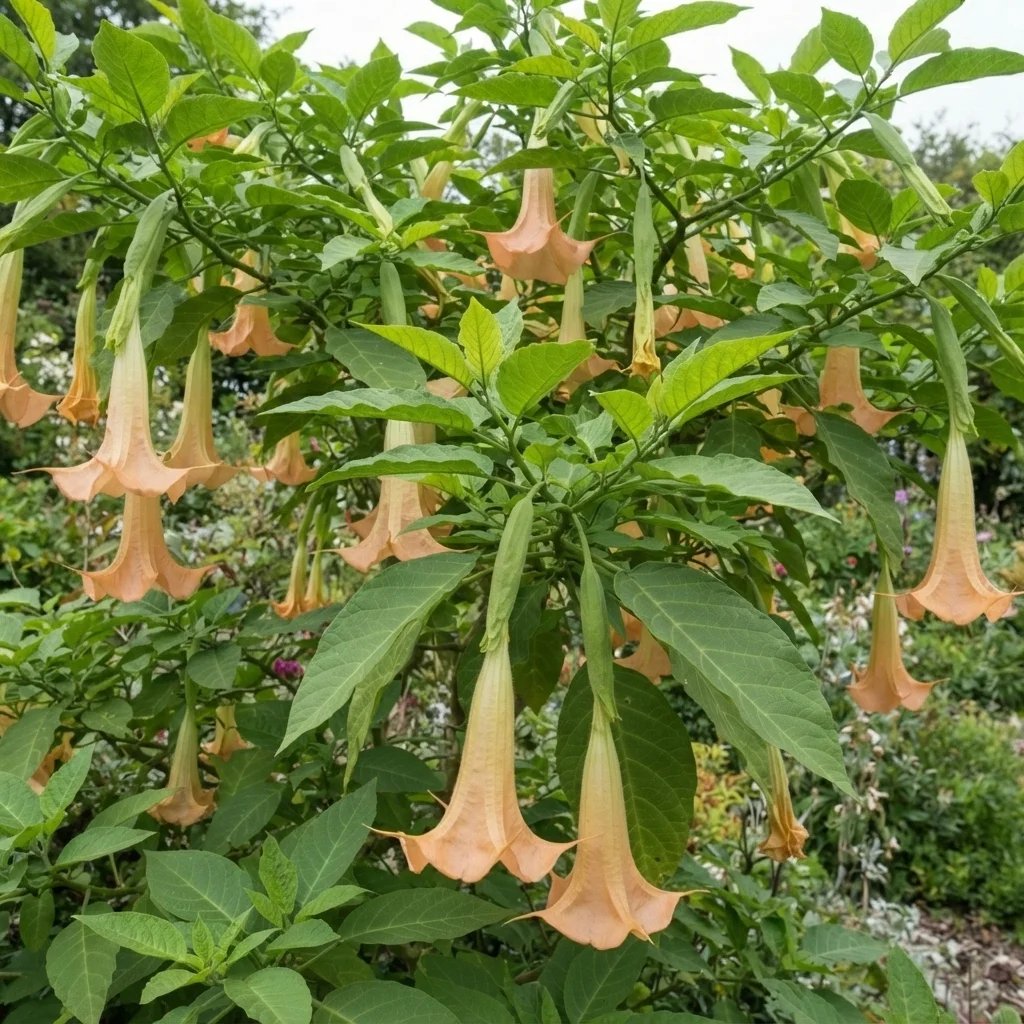
Brugmansia versicolor is a large, woody evergreen shrub or small tree endemic to Ecuador, characterized by an upright, open branching habit that forms a distinct 'V'-fork before flowering. The plant produces alternate, elliptic to oblong leaves with smooth margins, with new growth emerging as a bright green.
This species is distinguished by its massive, pendulous, trumpet-shaped flowers that reach up to 20 inches in length. The solitary blooms open white and frequently transition to shades of peach, apricot, or pink as they age through the summer and fall.
Uses & Benefits:
Essentials
At a Glance
Plant Type
Shrub
Height
193"
Width
118"
Light
Full Sun, Partial Sun
Zones
8, 9, 10
Water
Medium
Humidity
High
Lifespan
Perennial
Native To
Ecuador
Toxicity
Extremely toxic if ingested; sap causes skin and eye irritation
Bloom period
Summer – Fall
In flower about 6 months of the year
Planting
How to Grow
- Select a planting site with full sun to partial shade, prioritizing afternoon shade in hot climates.
- Prepare organically rich, fertile soil with a slightly acidic to neutral pH and excellent drainage.
- Water deeply and regularly during the growing season to prevent wilting from water stress.
- Apply a balanced liquid or slow-release granular fertilizer regularly throughout the spring and summer active growth phase.
Pro Tip
Never prune hard into old, leafless wood below the structural 'V'-fork, as this destroys the plant's flowering framework and delays bloom production by one to two years.
Keep It Thriving
Care Guide
Do
- Water regularly to keep the soil consistently moist during the active growing season.
- Apply balanced fertilizers frequently to support the heavy feeding requirements of this species.
- Move container-grown plants indoors before the first autumn frost in zones colder than USDA Zone 8.
Don't
- Do not allow the soil to become waterlogged, which rapidly induces root rot.
- Do not prune below the critical 'V'-fork, which prevents the plant from flowering.
- Do not handle the plant without gloves, as the sap causes skin and eye irritation.
Seasonal Care Calendar
| Task | Jan | Feb | Mar | Apr | May | Jun | Jul | Aug | Sep | Oct | Nov | Dec |
|---|---|---|---|---|---|---|---|---|---|---|---|---|
| Fertilize | ||||||||||||
| Pest Check | ||||||||||||
| Prune | ||||||||||||
| Winter Prep |
Watch Out For
Pests & Diseases
Common Pests
Common Diseases
In the Garden
Landscape Uses & Companions
Landscape Uses
Multiply
Propagation Methods
Good to Know
Common Questions
Angel's Trumpet questions
What zones can Angel's Trumpet grow in?
Angel's Trumpet is hardy in USDA Zones 8–10. Inside that range it survives winter in the ground; outside it, grow it as an annual or a container plant you protect.
When does Angel's Trumpet bloom?
Angel's Trumpet typically blooms in summer through fall. Exact timing shifts a week or two with your zone — Sow's bloom calendar maps it to your garden.
Does Angel's Trumpet need full sun?
Angel's Trumpet does best in full sun to part shade. In hot climates, afternoon shade keeps blooms fresher longer.
More Brugmansia to compare
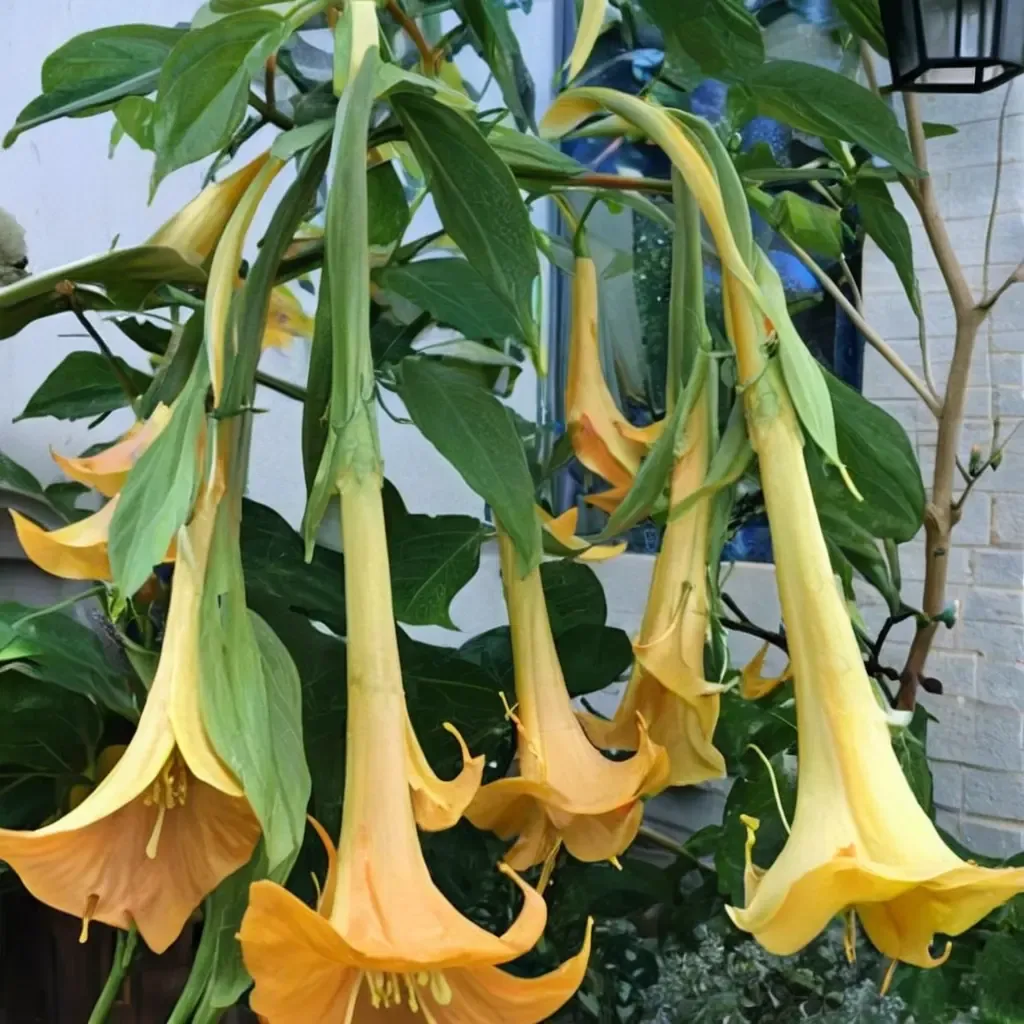
Charles Grimaldi Angel's Trumpet
Brugmansia x candida 'Charles Grimaldi'
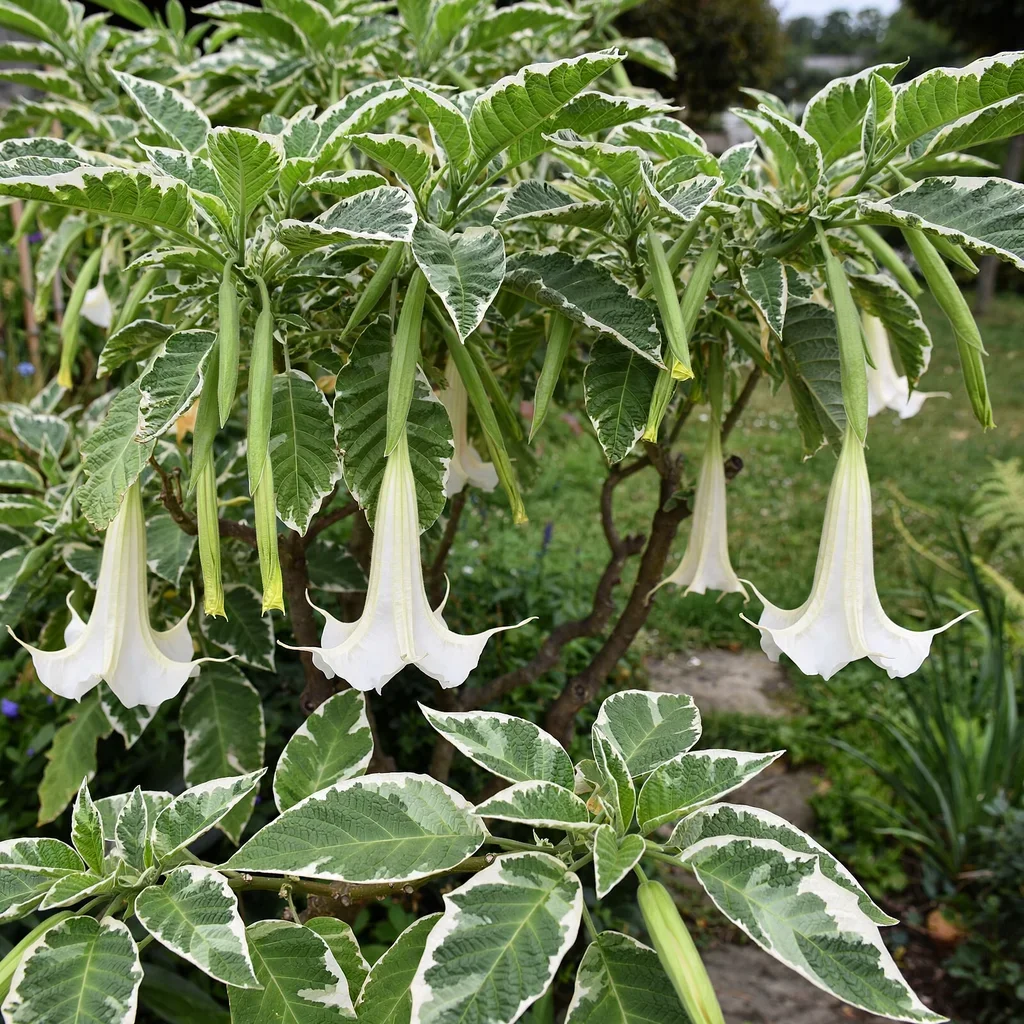
Snowbank Angel Trumpet
Brugmansia x candida 'Snowbank'
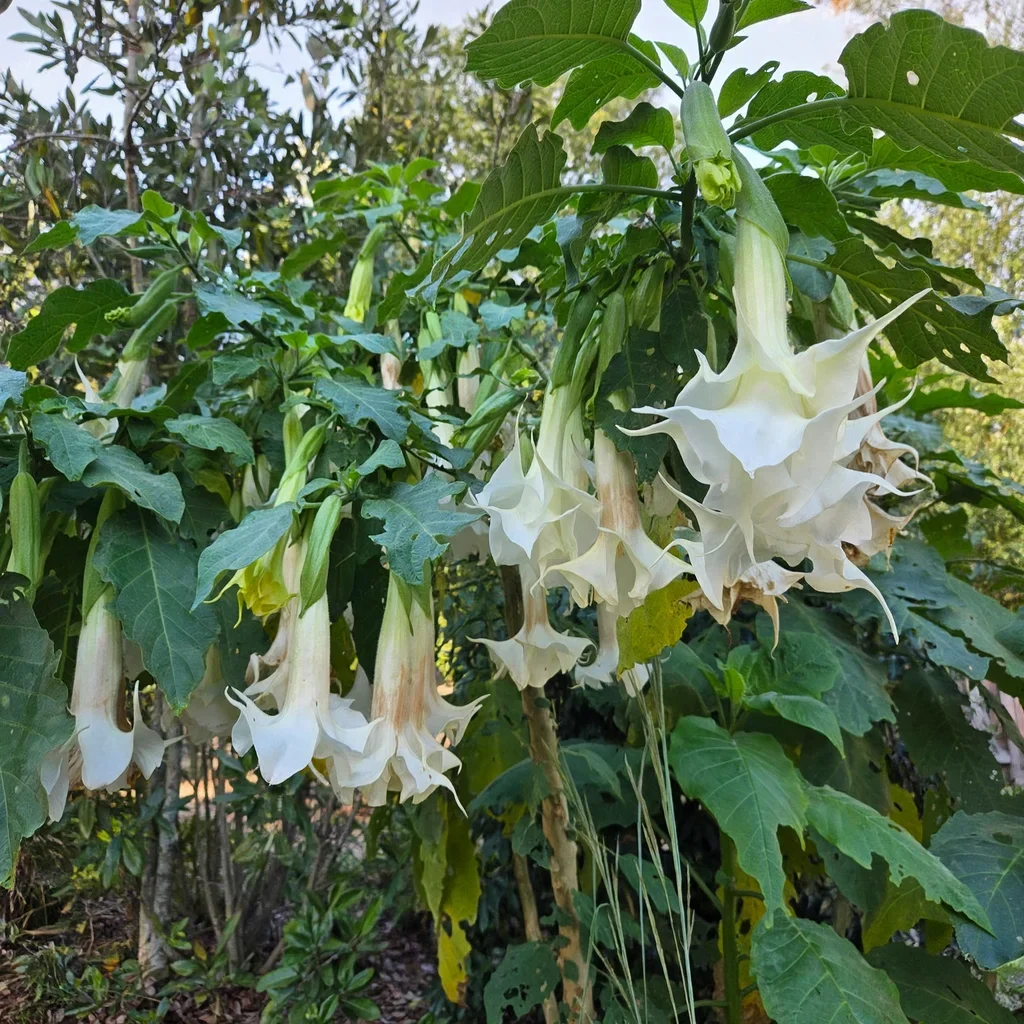
Double White Angel's Trumpet
Brugmansia x candida 'Double White'
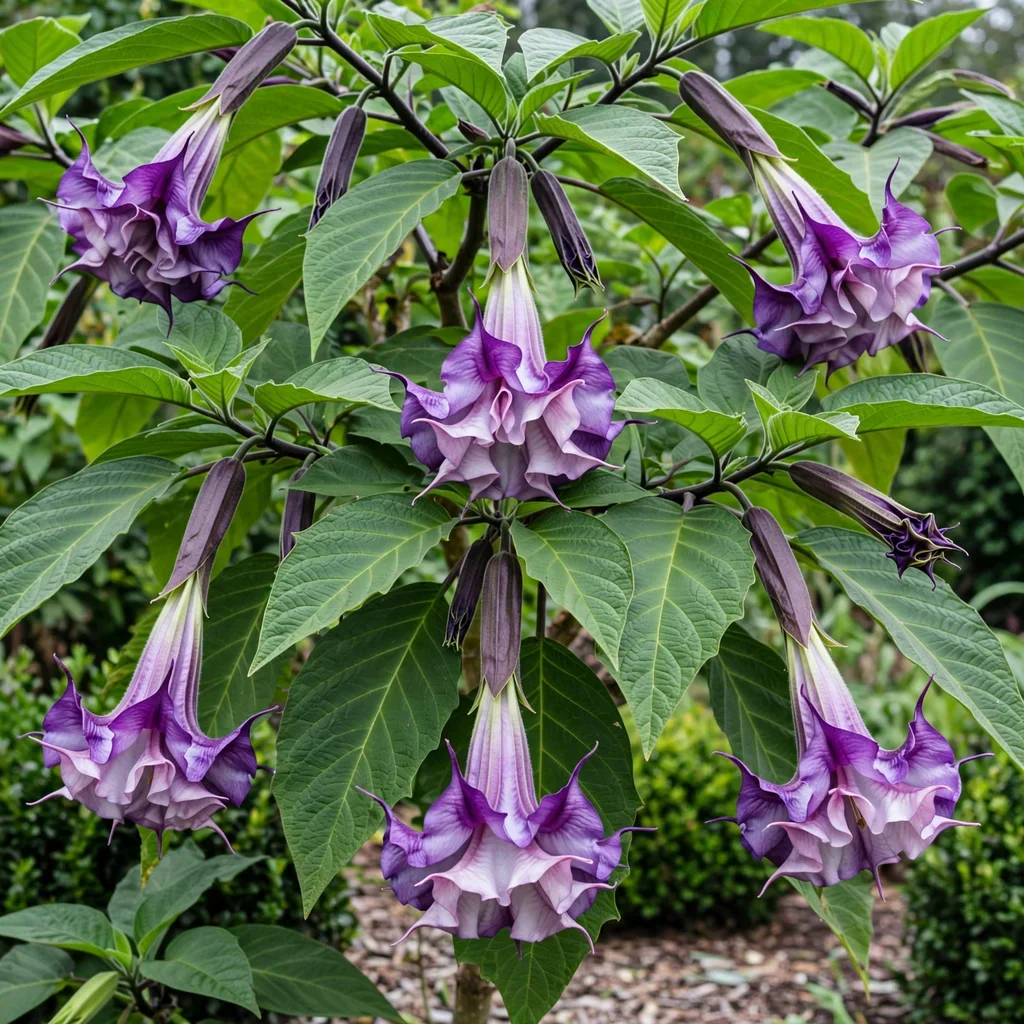
Purple People Eater Angel's Trumpet
Brugmansia x candida 'Purple People Eater'
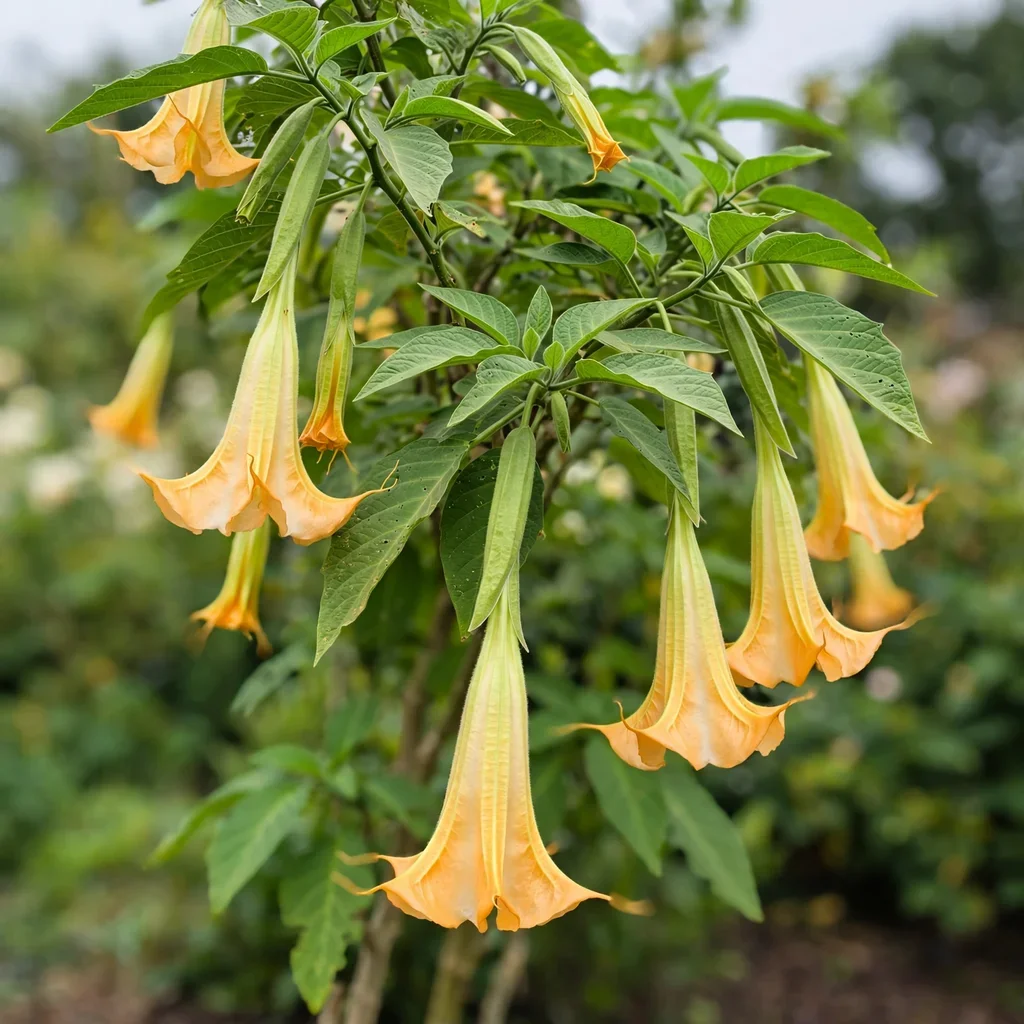
Suncrest Vulsa Angel's Trumpet
Brugmansia vulcanicola 'Suncrest Vulsa'
Keep exploring
Explore the genus
Hardy in your zone?
Grow Angel's Trumpet with confidence
See it in a design of your actual yard, get zone-matched care reminders, and track it season by season in your garden journal.