Also known as Angel's Trumpet · 50 saves
Brugmansia
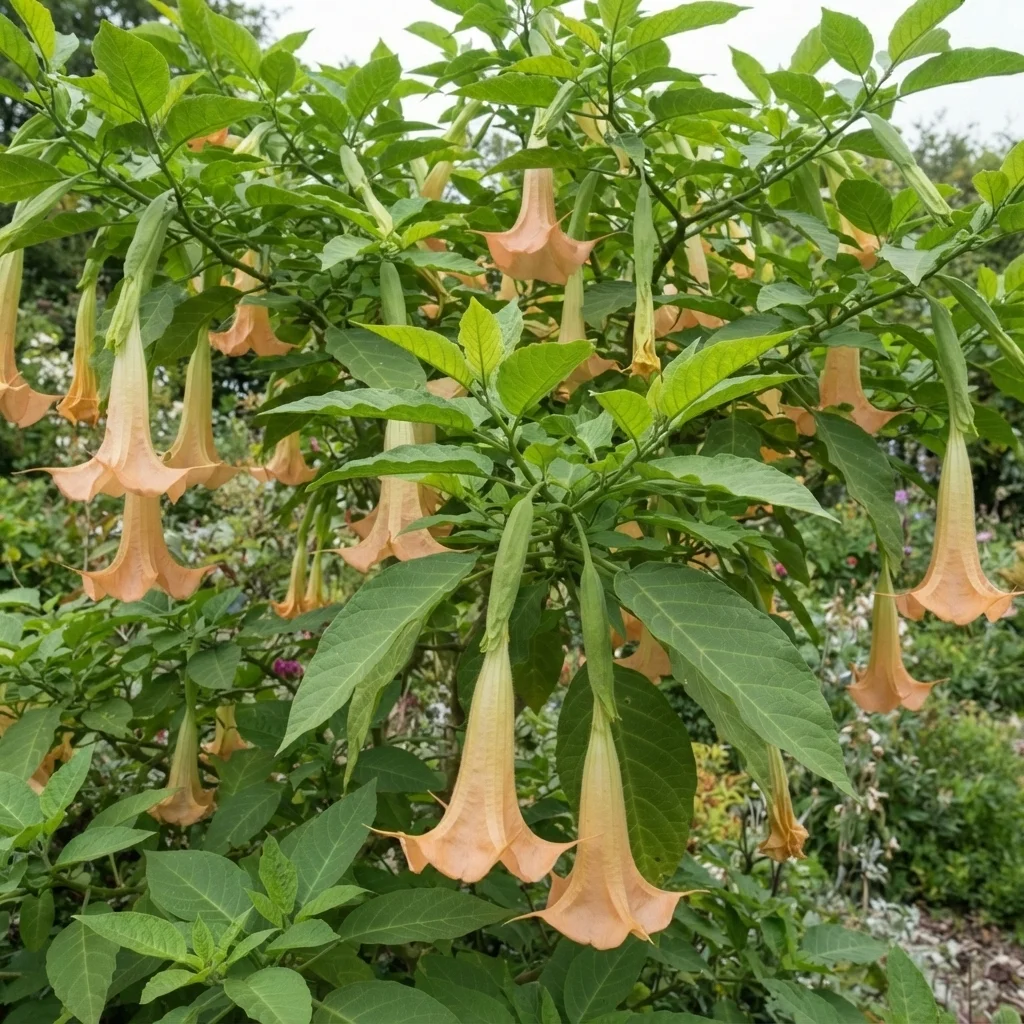
Brugmansia, the genus most gardeners know as angel's trumpet. We track 7 varieties; the ones most used by real gardeners.
The 6 most-saved Brugmansia varieties
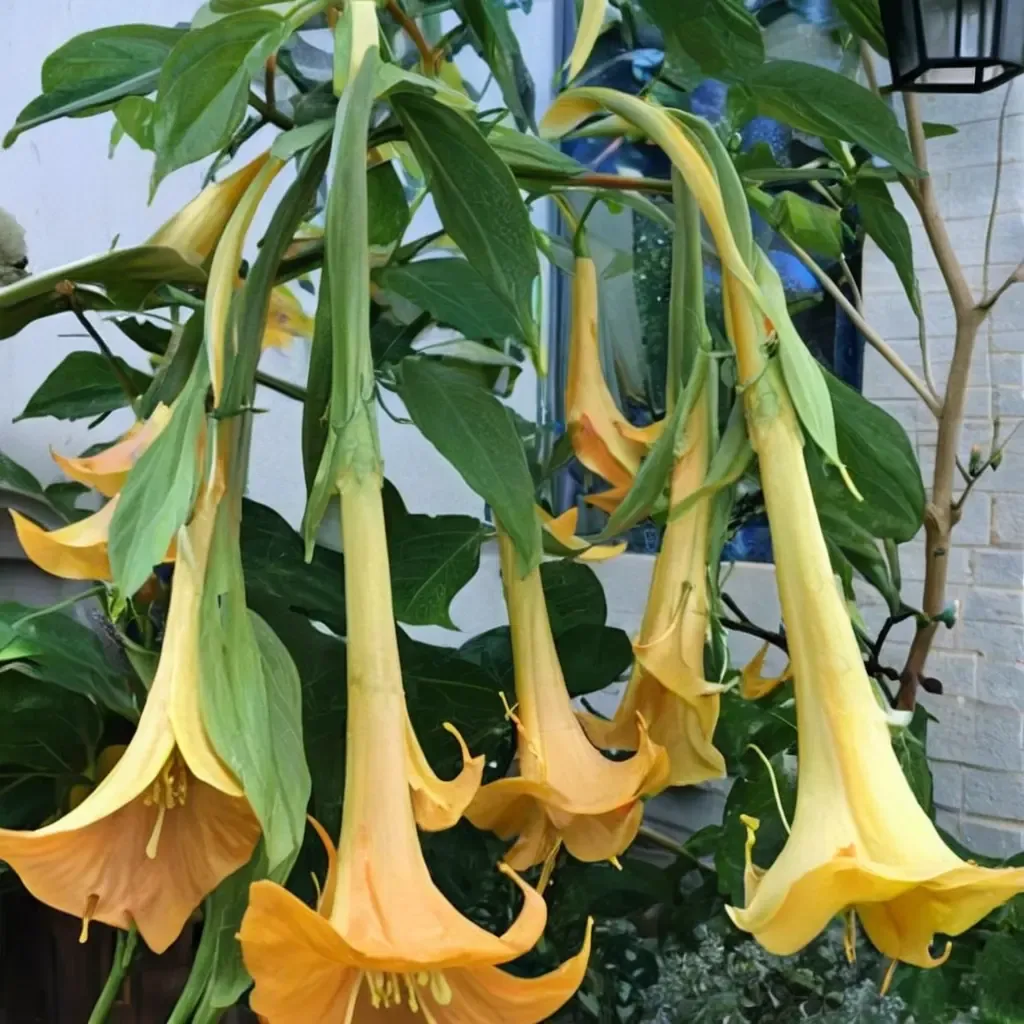
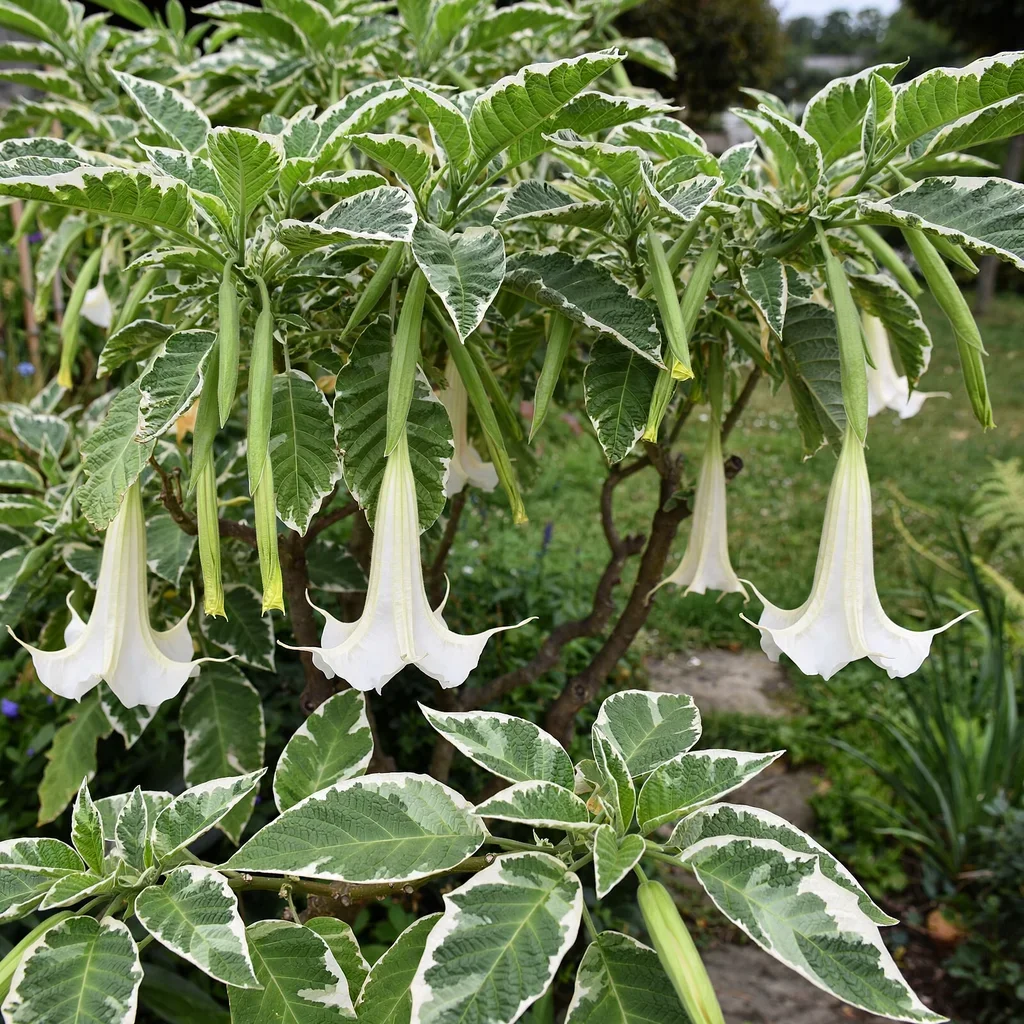
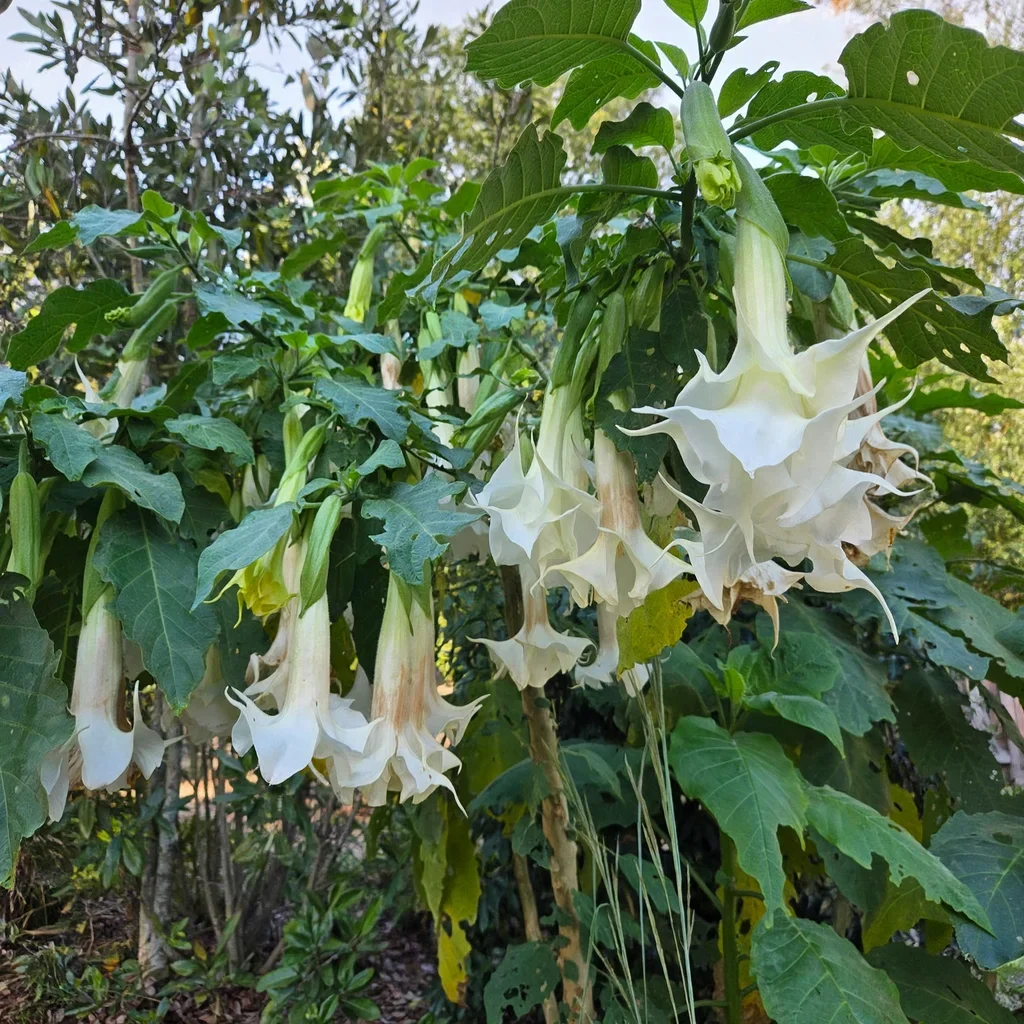
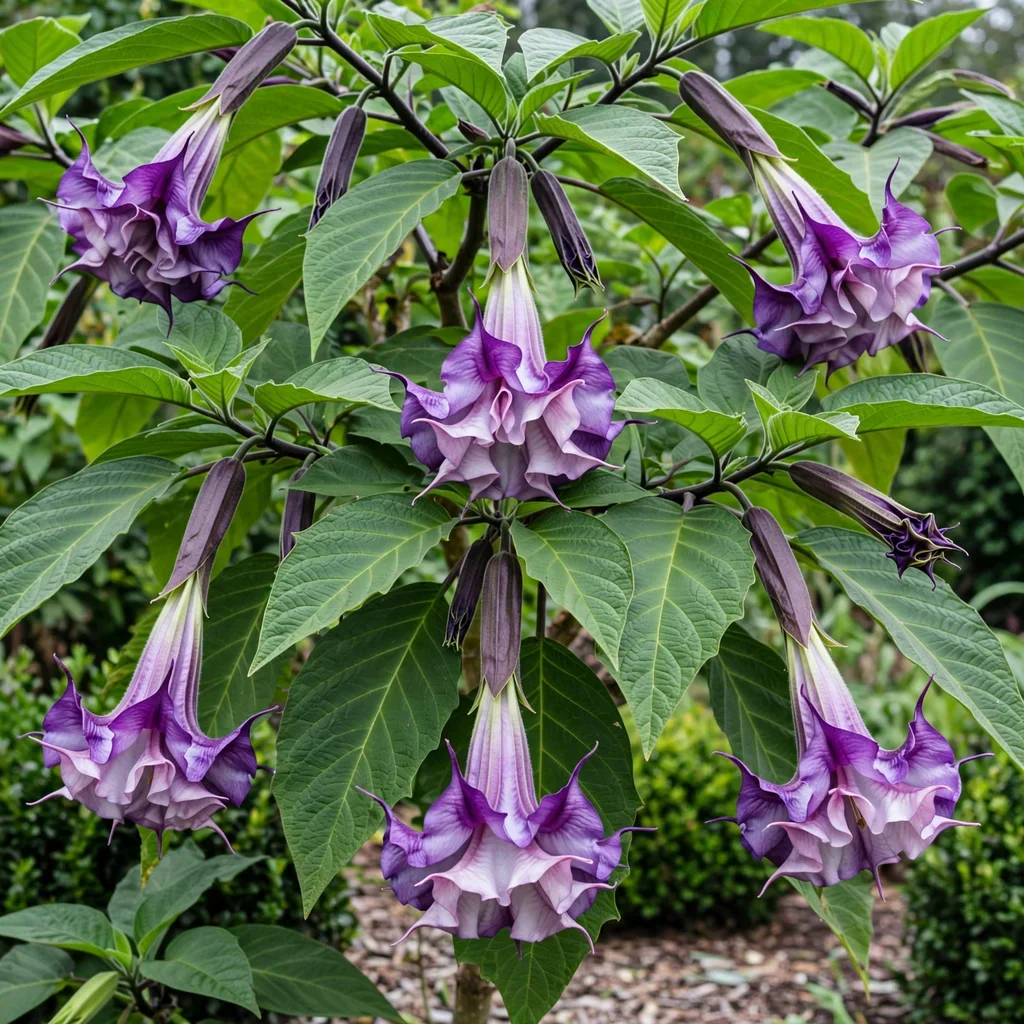
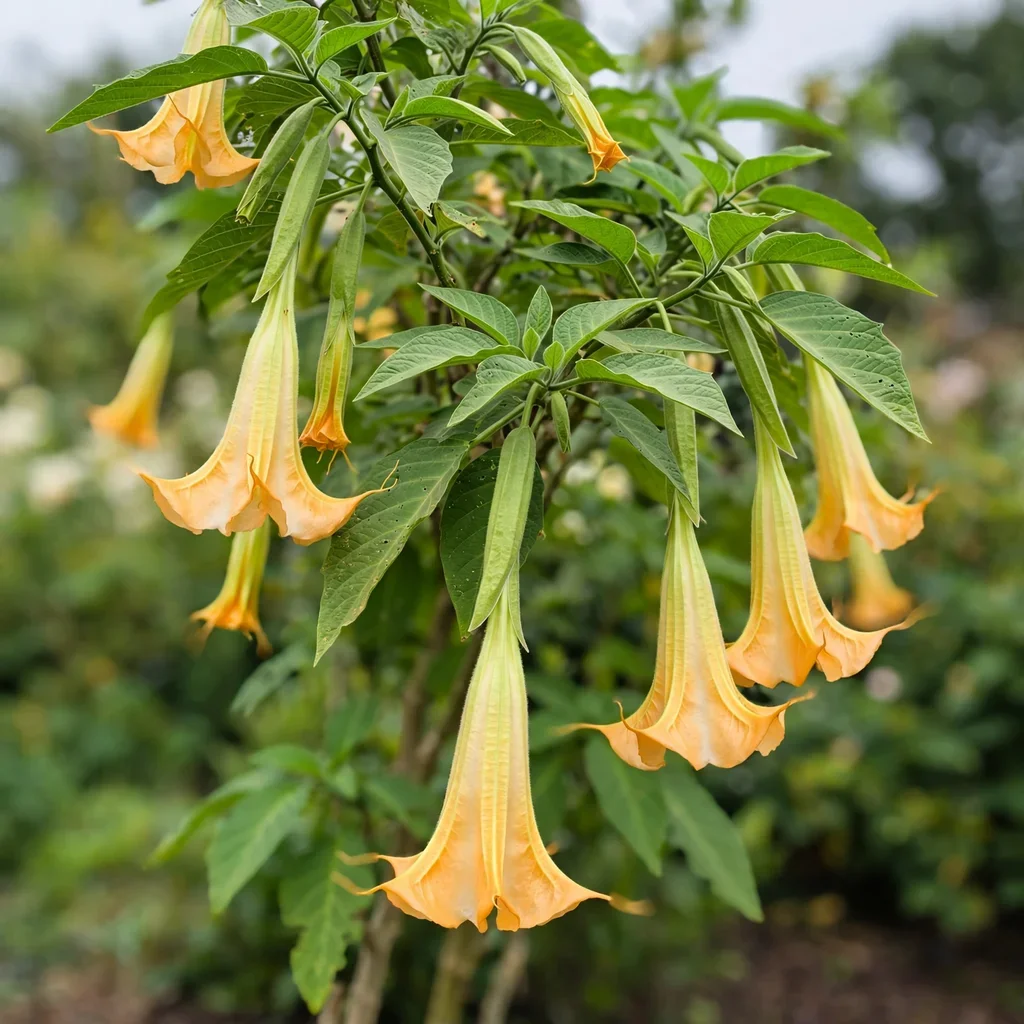
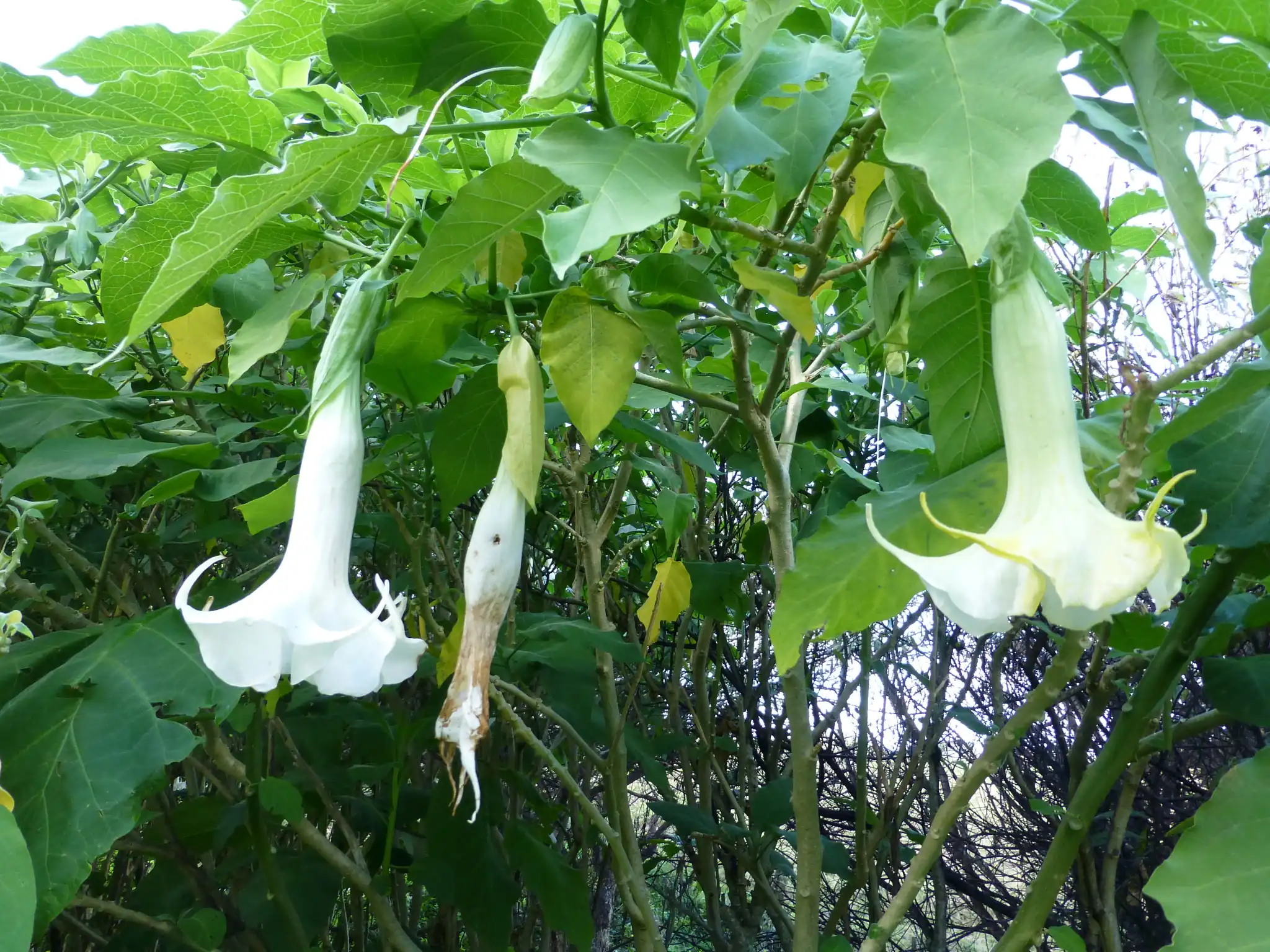
Browse all 7 Brugmansia varieties →
2 species of Brugmansia
Each one is a parent of the varieties above.
Track your Brugmansia in Sow
Save the Brugmansia you grow and get care reminders timed to your zone.
How to grow Brugmansia
Whats common across all Brugmansia varieties in our catalog — drawn from the care records of the 7 most-grown of them.
The Brugmansia year
- FertilizeMay–September86% of varieties
Apply regular, balanced liquid fertilization or slow-release granular fertilizers during active growth.
- Check for PestsJune–September86% of varieties
Monitor foliage for aphids, spider mites, and whiteflies, treating immediately with insecticidal soap.
- PruneMarch and April71% of varieties
Prune lightly in late winter or early spring only after the structural 'V'-fork has formed.
- Winter PrepOctober and November71% of varieties
Lift and move container plants indoors before the first autumn frost in zones colder than Zone 8.


Do
- Water regularly to keep soil evenly moist 🌱
- Water regularly to keep the soil consistently moist during the active growing season.
- Apply balanced fertilizers frequently to support the heavy feeding requirements of this species.
- Move container-grown plants indoors before the first autumn frost in zones colder than USDA Zone 8.
- Water consistently, keeping soil moist but not waterlogged. 💧
Avoid
- Avoid overwatering to prevent root rot ❌
- Do not allow the soil to become waterlogged, which rapidly induces root rot.
- Do not prune below the critical 'V'-fork, which prevents the plant from flowering.
- Do not handle the plant without gloves, as the sap causes skin and eye irritation.
What goes wrong with Brugmansia
| Problem | What you'll see | What to do |
|---|---|---|
| Aphids | Distorted leaf growth and sticky honeydew residue on stems. | Spray with insecticidal soap or apply systemic insecticides. |
| Spider mites | Leaf stippling, fine webbing on foliage, and eventual leaf drop. | Apply horticultural oils, insecticidal soaps, or targeted miticides. |
| Spider Mites | Fine webbing and speckled leaves | Use horticultural oil or insecticidal soap |
| Whiteflies | Tiny white insects fluttering under leaves and yellowing foliage. | Treat with horticultural oils or insecticidal soaps. |
| Root rot | Wilting despite adequate watering. | Improve drainage and reduce watering frequency. |
| Powdery mildew | White powder on leaves. | Use organic fungicide and ensure good air circulation. |
| Root Rot | Wilting and yellowing leaves, soft roots | Improve drainage and reduce watering |
Making more Brugmansia
Cuttings
- Select healthy, semi-hardwood stems in late summer.
- Cut 6‑8 inch sections with clean, sharp scissors.
- Remove lower leaves and dip in rooting hormone.
- Plant in moist, well-draining soil or perlite.
- Keep in warm, humid environment for 6 weeks.
Seeds
- Collect mature seeds from the plant after flowering.
- Sow on the surface of moist seed-starting mix.
- Cover lightly with soil and keep warm and moist.
- Germination occurs within 2‑4 weeks.
Brugmansia questions
How many types of Brugmansia are there?
The Sow catalog tracks 7 distinct Brugmansia varieties. The most popular — ranked by 50 real gardeners — are shown first above.
What zones does Brugmansia grow in?
Across its varieties, Brugmansia covers USDA Zones 8–10. Individual varieties differ — each plant page lists its exact range, and Sow filters the catalog to your zone automatically.
When does Brugmansia bloom?
Most Brugmansia varieties bloom in mid-summer, summer to fall, summer to fall. Staggering early, mid, and late varieties extends the genus's season in one bed.
Which Brugmansia should I choose?
Start from the most-saved varieties above — popularity across thousands of gardens is a strong signal of reliability — then filter by your zone and sun. In the Sow app you can preview any of them in a photo of your actual yard before you buy.