The Story
Plant Bio
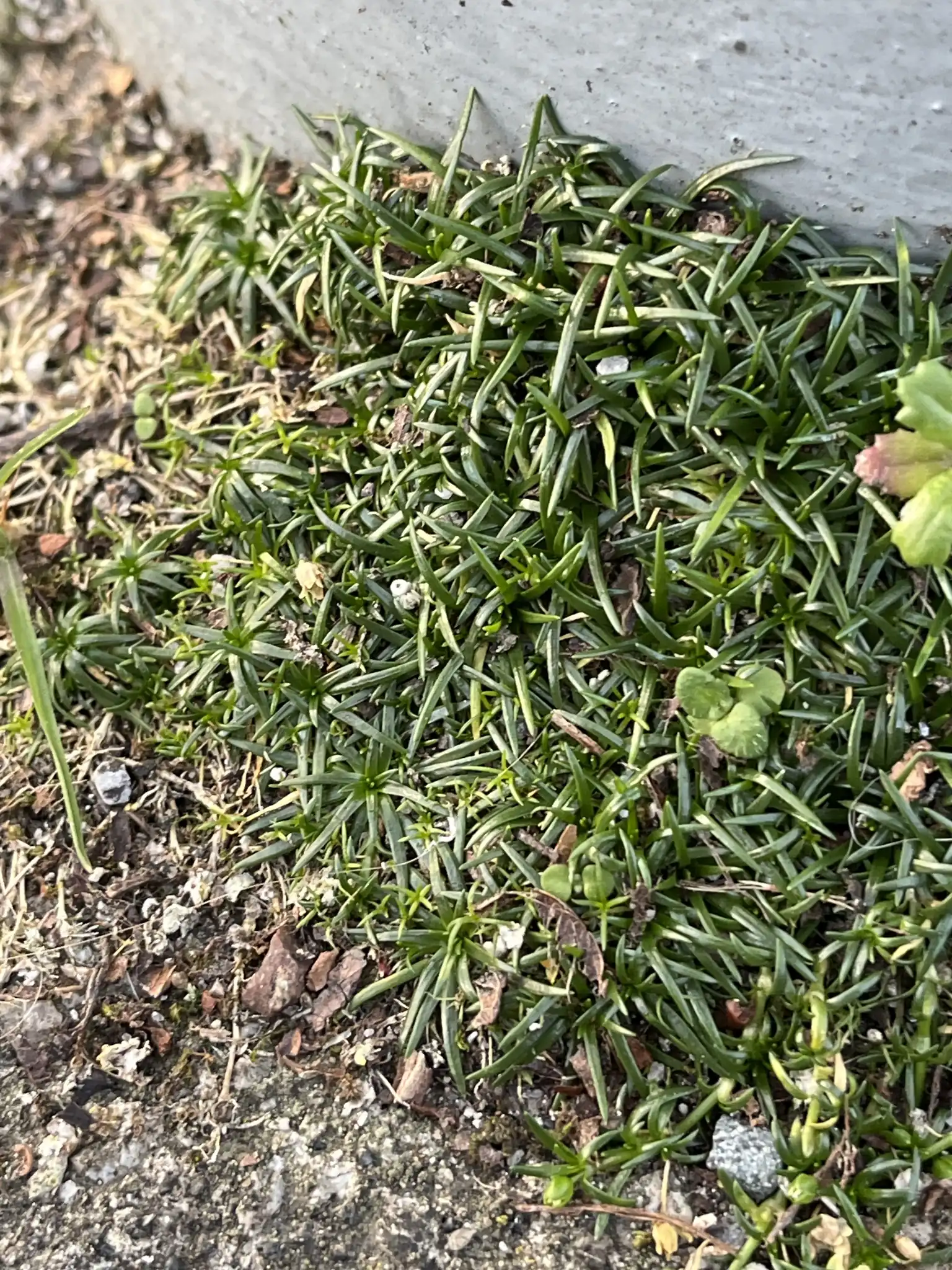
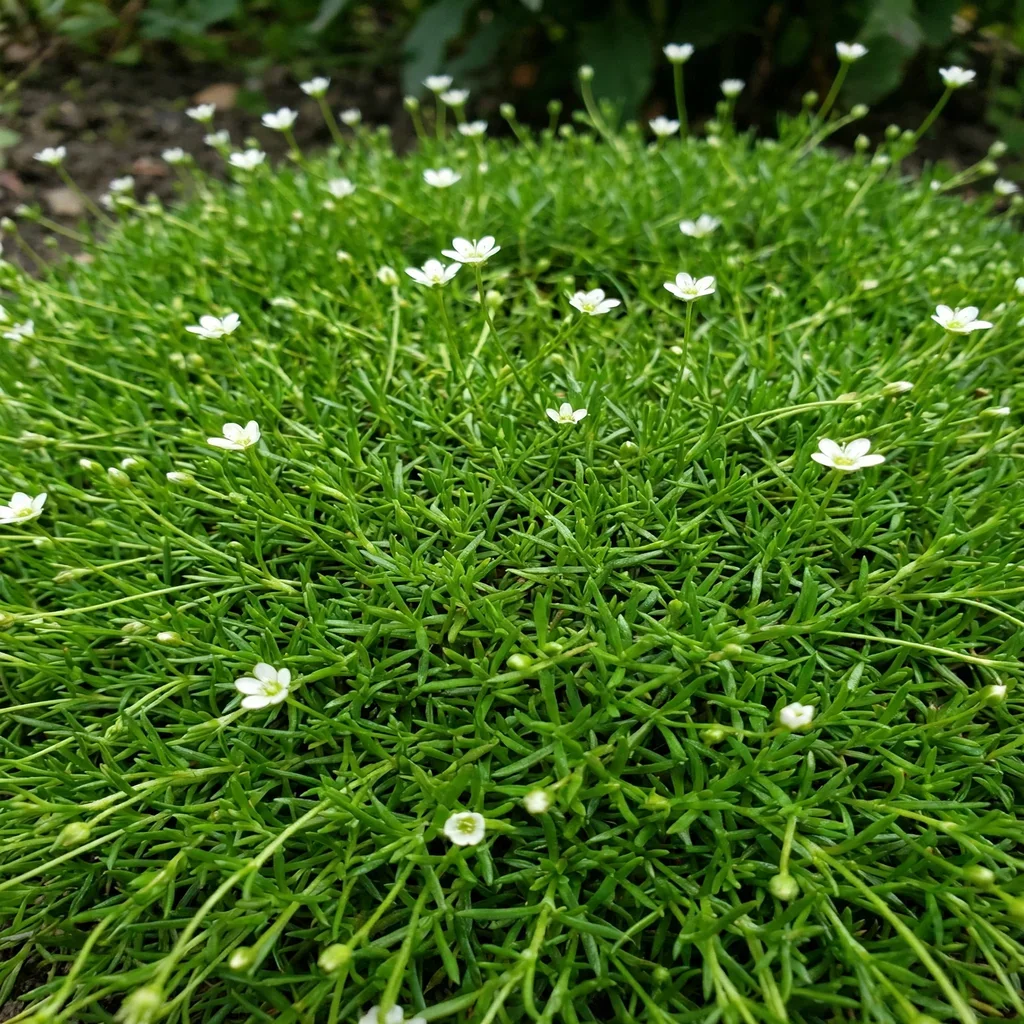
Sagina procumbens, commonly known as procumbent pearlwort, is a low-growing, mat-forming perennial that produces dense, moss-like carpets of bright green foliage. The thread-like, linear leaves are opposite and fused at the base, bearing minute, greenish-white flowers on slender stalks that nod during budding and seed ripening.
This species spreads via trailing stems that branch densely and root at the nodes, allowing it to quickly colonize rocky crevices, sandy soils, and pavement cracks. It is highly tolerant of coastal salt spray and sub-arctic cold, though it requires continuous moisture to prevent the mat from drying out.
Uses & Benefits:
Essentials
At a Glance
Plant Type
Groundcover
Height
6"
Width
24"
Light
Full Sun, Partial Sun
Zones
4, 5, 6, 7, 8, 9
Water
High
Humidity
Moderate
Lifespan
Perennial
Native To
Europe, Asia, North America
Toxicity
Non-toxic
Bloom period
Spring – Fall
In flower about 9 months of the year
Planting
How to Grow
- Select a site with full sun to partial shade and moist, sandy, loamy, or rocky soil.
- Space plugs six to twelve inches apart to allow the trailing stems to spread and root at the nodes.
- Water regularly to maintain continuous soil moisture, especially during hot, dry summer spells.
- Manually edge the mats if they begin to encroach on lawns, garden borders, or paved pathways.
Pro Tip
Plant in a cool, moist environment with sharp surface drainage; while this species tolerates periodic surface wetness, planting it in heavy, waterlogged shade causes the root system to rot and melt out.
Keep It Thriving
Care Guide
Do
- Keep the soil continuously moist to prevent the shallow root system from drying out.
- Provide sharp surface drainage to prevent root rot during periods of heavy rain.
- Manually weed or edge the mats to control their spread into adjacent garden beds.
Don't
- Do not fertilize, as excess nutrients encourage weak, lush growth and invite weed competition.
- Do not cut back hard into old, leafless wood when trimming or edging.
- Do not plant in permanently waterlogged muck or heavy, poorly drained clay.
Seasonal Care Calendar
| Task | Jan | Feb | Mar | Apr | May | Jun | Jul | Aug | Sep | Oct | Nov | Dec |
|---|---|---|---|---|---|---|---|---|---|---|---|---|
| Divide | ||||||||||||
| Pest Check | ||||||||||||
| Propagate | ||||||||||||
| Prune |
Watch Out For
Pests & Diseases
Common Pests
Common Diseases
In the Garden
Landscape Uses & Companions
Landscape Uses
Companion Plants
Multiply
Propagation Methods
Good to Know
Common Questions
Procumbent Pearlwort questions
What zones can Procumbent Pearlwort grow in?
Procumbent Pearlwort is hardy in USDA Zones 4–9. Inside that range it survives winter in the ground; outside it, grow it as an annual or a container plant you protect.
When does Procumbent Pearlwort bloom?
Procumbent Pearlwort typically blooms in spring through fall. Exact timing shifts a week or two with your zone — Sow's bloom calendar maps it to your garden.
Does Procumbent Pearlwort need full sun?
Procumbent Pearlwort does best in full sun to part shade. In hot climates, afternoon shade keeps blooms fresher longer.
More Sagina to compare
Keep exploring
Explore the genus
Grow Procumbent Pearlwort with confidence
See it in a design of your actual yard, get zone-matched care reminders, and track it season by season in your garden journal.