The Story
Plant Bio
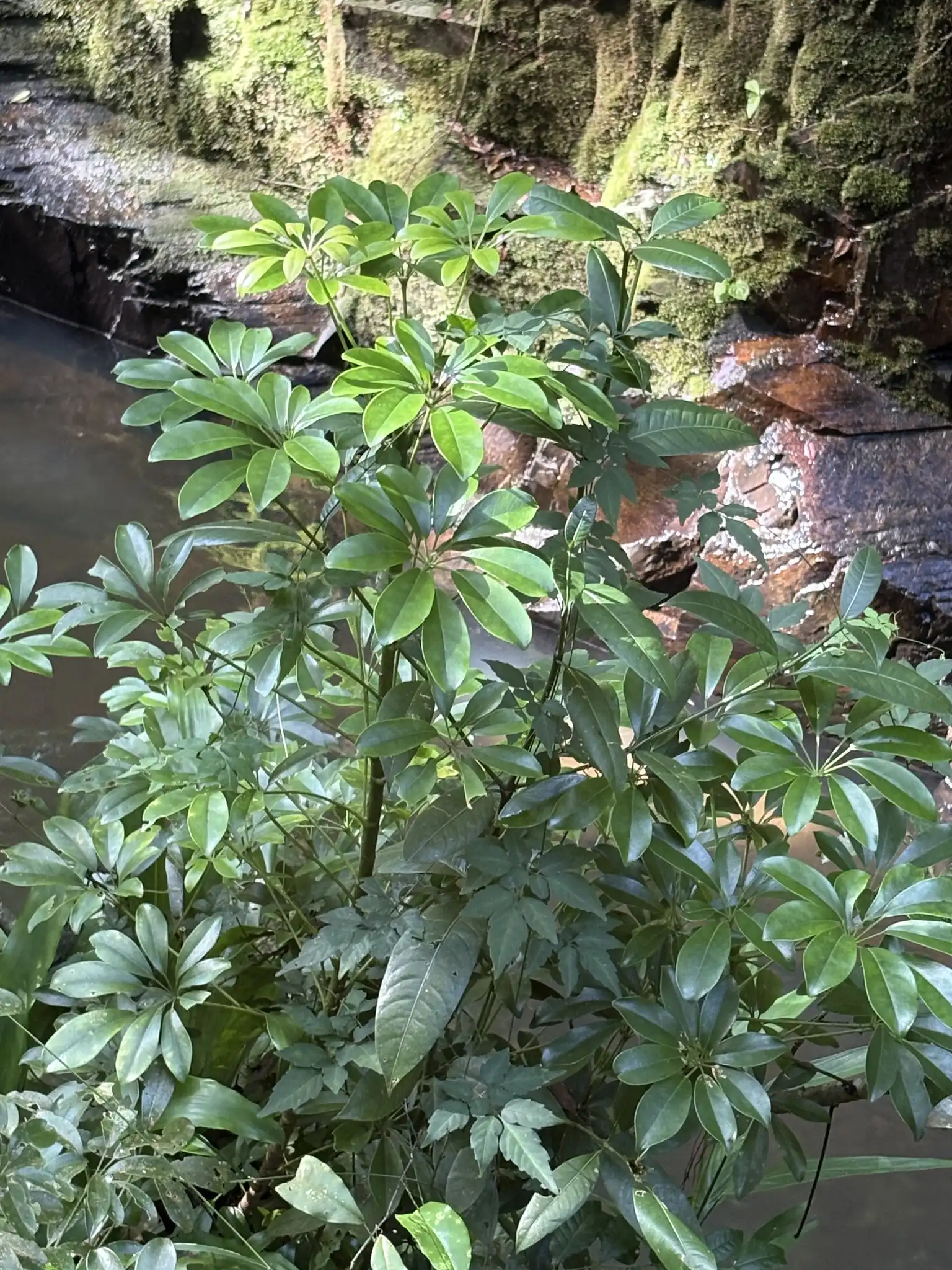
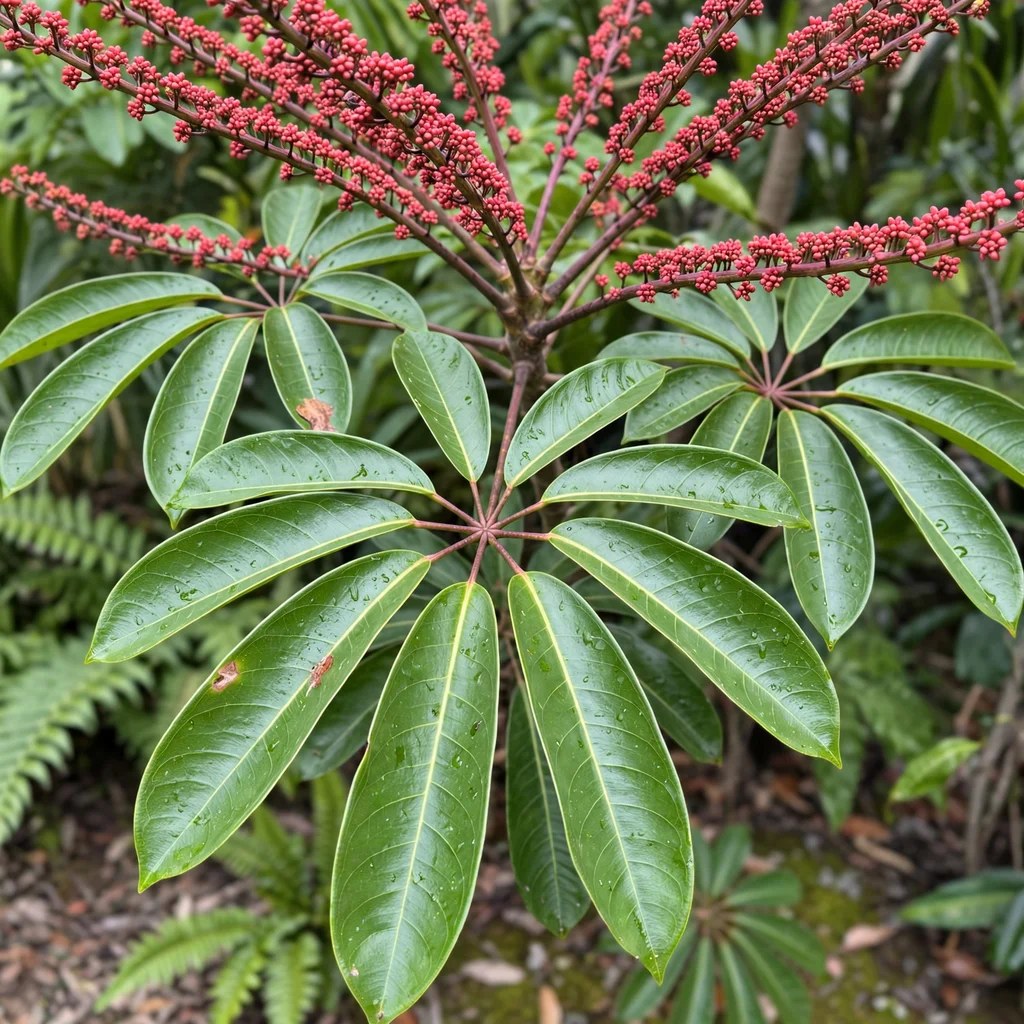
Heptapleurum arboricola, formerly classified as Schefflera arboricola, is an evergreen tropical shrub native to Taiwan and Hainan Island. It develops multiple flexible stems bearing whorls of glossy, palmately compound leaves with seven to nine leaflets.
The species functions as a dense, upright container plant indoors or a scrambling climber in frost-free outdoor landscapes. New foliage emerges in a bright, bronze-tinged green before maturing to a deep, leathery dark green.
Uses & Benefits:
Essentials
At a Glance
Plant Type
Tropical
Height
118"
Width
59"
Light
Full Sun, Partial Sun, Shade
Zones
10
Water
Moderate
Humidity
High
Lifespan
Long-lived
Native To
Taiwan and Hainan Island
Toxicity
Toxic to humans and pets
Bloom period
Summer – Fall
In flower about 6 months of the year
Planting
How to Grow
- Position the plant in bright, indirect light indoors, or in partial shade to full sun in frost-free outdoor landscapes.
- Plant in a rich, loamy, highly organic potting mix that drains rapidly to prevent waterlogging.
- Water thoroughly when the top inch of soil dries, ensuring all excess water drains completely from the pot.
- Apply a balanced liquid fertilizer monthly during the active spring and summer growth periods, withholding nutrients entirely through the winter.
Pro Tip
Sudden leaf drop indicates an abrupt environmental shift, such as a cold draft or overwatering; correct this by stabilizing the light and temperature and allowing the soil to dry slightly before watering again.
Keep It Thriving
Care Guide
Do
- Ensure the growing medium has high drainage capacity to prevent root rot.
- Maintain high humidity levels around the foliage to mimic its native tropical habitat.
- Prune lightly in spring or early summer to shape the plant and control its size.
Don't
- Do not allow the plant to sit in standing water or compacted, heavy clay soils.
- Do not cut back hard into old, leafless brown wood, as it lacks dormant buds to reliably resprout.
- Do not expose the plant to temperatures below 32 degrees Fahrenheit, which will cause severe frost damage.
Seasonal Care Calendar
| Task | Jan | Feb | Mar | Apr | May | Jun | Jul | Aug | Sep | Oct | Nov | Dec |
|---|---|---|---|---|---|---|---|---|---|---|---|---|
| Fertilize | ||||||||||||
| Pest Check | ||||||||||||
| Propagate | ||||||||||||
| Prune |
Watch Out For
Pests & Diseases
Common Pests
Common Diseases
In the Garden
Landscape Uses & Companions
Landscape Uses
Companion Plants
Multiply
Propagation Methods
Good to Know
Common Questions
Dwarf Umbrella Tree questions
What zones can Dwarf Umbrella Tree grow in?
Dwarf Umbrella Tree is hardy in USDA Zone 10. Inside that range it survives winter in the ground; outside it, grow it as an annual or a container plant you protect.
Is Dwarf Umbrella Tree deer resistant?
Yes — Dwarf Umbrella Tree is rated deer-resistant. Deer typically pass it over, though extreme hunger can override any plant's defenses.
When does Dwarf Umbrella Tree bloom?
Dwarf Umbrella Tree typically blooms in summer through fall. Exact timing shifts a week or two with your zone — Sow's bloom calendar maps it to your garden.
Does Dwarf Umbrella Tree need full sun?
Dwarf Umbrella Tree does best in full sun to part shade. In hot climates, afternoon shade keeps blooms fresher longer.
Is Dwarf Umbrella Tree drought tolerant?
Yes — once established (usually after the first full season), Dwarf Umbrella Tree handles dry spells with minimal watering. Water deeply its first year to build the root system that makes that possible.
More Heptapleurum to compare
Keep exploring
Explore the genus
Hardy in your zone?
Grow Dwarf Umbrella Tree with confidence
See it in a design of your actual yard, get zone-matched care reminders, and track it season by season in your garden journal.