The Story
Plant Bio
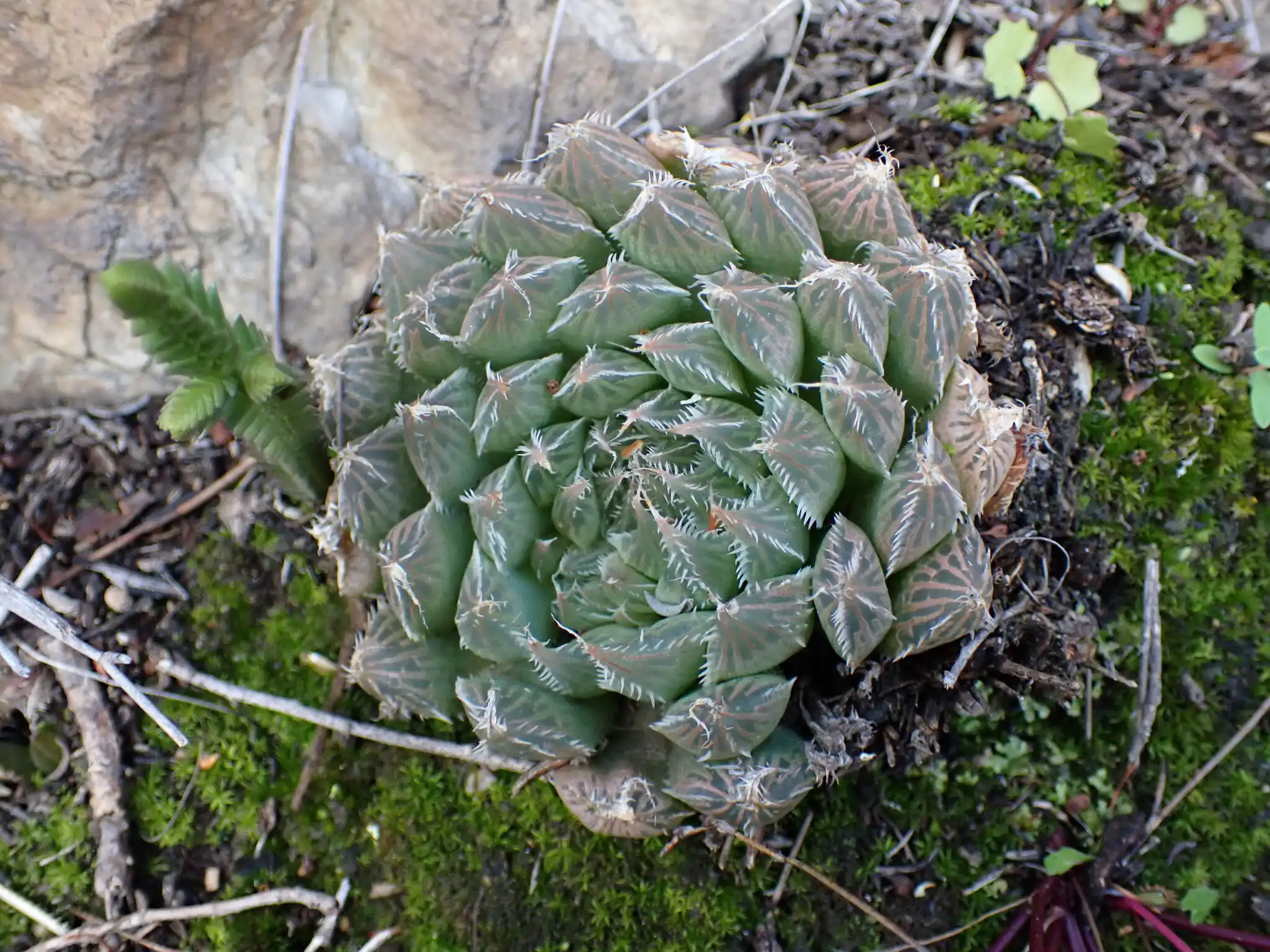
Haworthia cooperi is a small, slow-growing succulent native to the Eastern Cape province of South Africa, where it grows partially embedded in rocky, semi-arid soils. The plant forms low, compact rosettes of fleshy, pale green to bluish-green leaves distinguished by translucent, bulbous tips that allow light to penetrate the leaf interior.
The specialized windowed leaf tips glow when backlit by bright, indirect light, an adaptation that facilitates photosynthesis in its native shaded habitats. Over time, the stemless rosettes freely offset from the base to form dense, low-clumping mats.
Uses & Benefits:
Essentials
At a Glance
Plant Type
Cactus Succulent
Height
4"
Width
6"
Light
Partial Sun, Shade
Zones
10
Water
Low
Humidity
Low to moderate
Lifespan
Perennial
Native To
South Africa
Toxicity
Non-toxic
Bloom period
Spring – Summer
In flower about 6 months of the year
Planting
How to Grow
- Select a container with ample drainage holes and fill it with a gritty, mineral-rich cactus or succulent potting mix.
- Position the rosette so the base sits just above the soil line, ensuring no leaves are buried where moisture can collect.
- Place the container in a location receiving bright, indirect light or filtered morning sun, avoiding harsh afternoon exposure.
- Water thoroughly only when the potting medium has dried out completely, and suspend watering during periods of high winter humidity.
Pro Tip
Avoid using standard peat-heavy potting soils; instead, plant in an ultra-gritty, mineral-dominant substrate of pumice, perlite, and coarse sand to prevent fatal root rot. Keep the plant out of direct, scorching midday summer sun, which causes irreversible bleaching and sunburn on the delicate leaf windows.
Keep It Thriving
Care Guide
Do
- Water deeply but infrequently, allowing the substrate to dry out entirely between waterings.
- Provide bright, filtered light or partial shade to maintain the translucent clarity of the leaf windows.
- Grow in a highly porous, gritty mineral mix to ensure immediate drainage away from the roots.
Don't
- Do not allow standing water to collect in the center of the rosette, which triggers rapid rot.
- Never expose the plant to direct, intense midday summer sun.
- Avoid overwatering during the winter months when the plant is semi-dormant.
Seasonal Care Calendar
| Task | Jan | Feb | Mar | Apr | May | Jun | Jul | Aug | Sep | Oct | Nov | Dec |
|---|---|---|---|---|---|---|---|---|---|---|---|---|
| Fertilize | ||||||||||||
| Pest Check | ||||||||||||
| Propagate | ||||||||||||
| Winter Prep |
Watch Out For
Pests & Diseases
Common Pests
Common Diseases
In the Garden
Landscape Uses & Companions
Landscape Uses
Multiply
Propagation Methods
Good to Know
Common Questions
Cooper's Haworthia questions
What zones can Cooper's Haworthia grow in?
Cooper's Haworthia is hardy in USDA Zone 10. Inside that range it survives winter in the ground; outside it, grow it as an annual or a container plant you protect.
Is Cooper's Haworthia deer resistant?
Yes — Cooper's Haworthia is rated deer-resistant. Deer typically pass it over, though extreme hunger can override any plant's defenses.
When does Cooper's Haworthia bloom?
Cooper's Haworthia typically blooms in spring through summer. Exact timing shifts a week or two with your zone — Sow's bloom calendar maps it to your garden.
Does Cooper's Haworthia need full sun?
Cooper's Haworthia does best in part shade.
Is Cooper's Haworthia drought tolerant?
Yes — once established (usually after the first full season), Cooper's Haworthia handles dry spells with minimal watering. Water deeply its first year to build the root system that makes that possible.
Keep exploring
Explore the genus
Hardy in your zone?
Grow Cooper's Haworthia with confidence
See it in a design of your actual yard, get zone-matched care reminders, and track it season by season in your garden journal.