The Story
Plant Bio
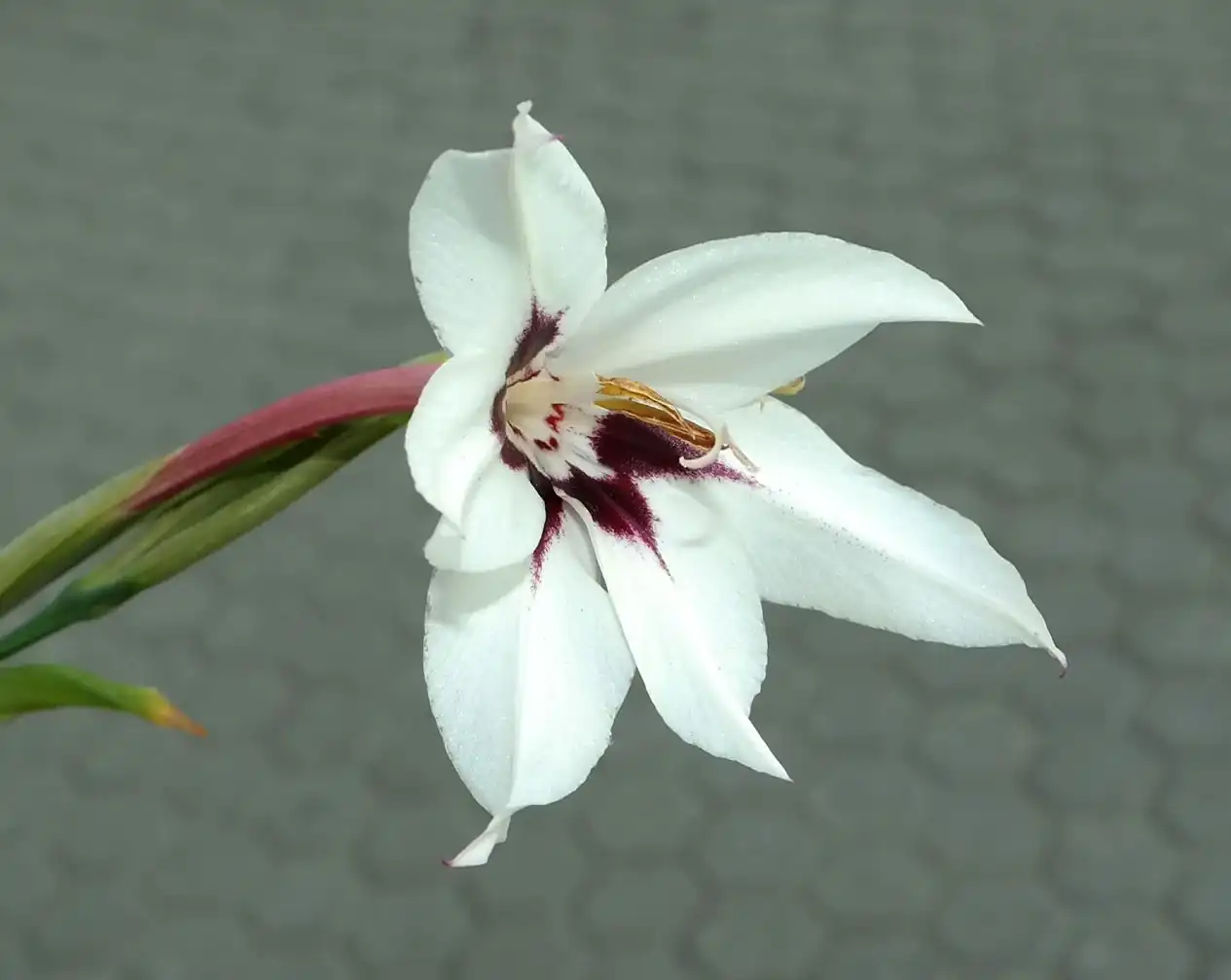
Gladiolus murielae is a cormous perennial herb native to East Africa, producing upright, flattened fans of sword-shaped, medium green leaves. In late summer, slender, slightly nodding stems bear star-shaped, white flowers with a distinct dark purple-maroon throat blotch.
The highly fragrant flowers open sequentially from the bottom of the spike upward, releasing a scent that intensifies in the evening. The elegant, linear foliage remains clean and upright throughout the growing season without requiring staking.
Uses & Benefits:
Essentials
At a Glance
Plant Type
Bulb Corm Tuber
Height
36"
Width
15"
Light
Full Sun
Zones
7, 8, 9, 10
Water
Medium
Humidity
Moderate
Lifespan
Perennial
Native To
East Africa
Toxicity
Low severity (corms are toxic if ingested)
Bloom period
Late summer – Autumn
In flower about 4 months of the year
Marketplace
Where to Buy
Shipping costs Year-round shipping Free shipping
Planting
How to Grow
- Plant corms in spring after all danger of frost has passed, choosing a site in full sun with fertile, exceptionally well-draining soil.
- Set the corms four inches deep and four to six inches apart, with the pointed ends facing upward.
- Water thoroughly after planting to settle the soil, then maintain consistent moisture throughout the active summer growing season.
- In zones colder than 7b, dig up the corms in fall after the first light frost, cut the stems back to two inches, and dry them in a warm place before storing in dry peat moss over winter.
Pro Tip
Leave the foliage intact after flowering until it turns completely yellow in fall; cutting the green leaves early deprives the corm of the energy needed to bloom the following year.
Keep It Thriving
Care Guide
Do
- Plant in a location that receives at least six hours of direct sunlight daily for optimal flowering.
- Lift corms annually in autumn if gardening in USDA Zone 7a or colder to prevent freezing damage.
- Apply a balanced, low-nitrogen fertilizer once new shoots emerge in spring.
Don't
- Do not plant corms in heavy, poorly draining clay soils, which rapidly induces fatal corm rot.
- Do not cut back green, actively photosynthesizing leaves after the flowering period ends.
- Do not store lifted corms in damp conditions or airtight plastic bags where mold can develop.
Seasonal Care Calendar
| Task | Jan | Feb | Mar | Apr | May | Jun | Jul | Aug | Sep | Oct | Nov | Dec |
|---|---|---|---|---|---|---|---|---|---|---|---|---|
| Fertilize | ||||||||||||
| Lift Store | ||||||||||||
| Pest Check | ||||||||||||
| Plant | ||||||||||||
| Prune |
Watch Out For
Pests & Diseases
Common Pests
Common Diseases
In the Garden
Landscape Uses & Companions
Landscape Uses
Companion Plants
Multiply
Propagation Methods
Good to Know
Common Questions
Abyssinian Gladiolus questions
What zones can Abyssinian Gladiolus grow in?
Abyssinian Gladiolus is hardy in USDA Zones 7–10. Inside that range it survives winter in the ground; outside it, grow it as an annual or a container plant you protect.
Is Abyssinian Gladiolus deer resistant?
Not reliably. Deer may browse Abyssinian Gladiolus, especially tender spring growth — plan on repellents or fencing where pressure is high.
When does Abyssinian Gladiolus bloom?
Abyssinian Gladiolus typically blooms in late summer through autumn. Exact timing shifts a week or two with your zone — Sow's bloom calendar maps it to your garden.
Does Abyssinian Gladiolus need full sun?
Abyssinian Gladiolus does best in full sun (6+ hours).
Is Abyssinian Gladiolus drought tolerant?
Yes — once established (usually after the first full season), Abyssinian Gladiolus handles dry spells with minimal watering. Water deeply its first year to build the root system that makes that possible.
More Gladiolus to compare
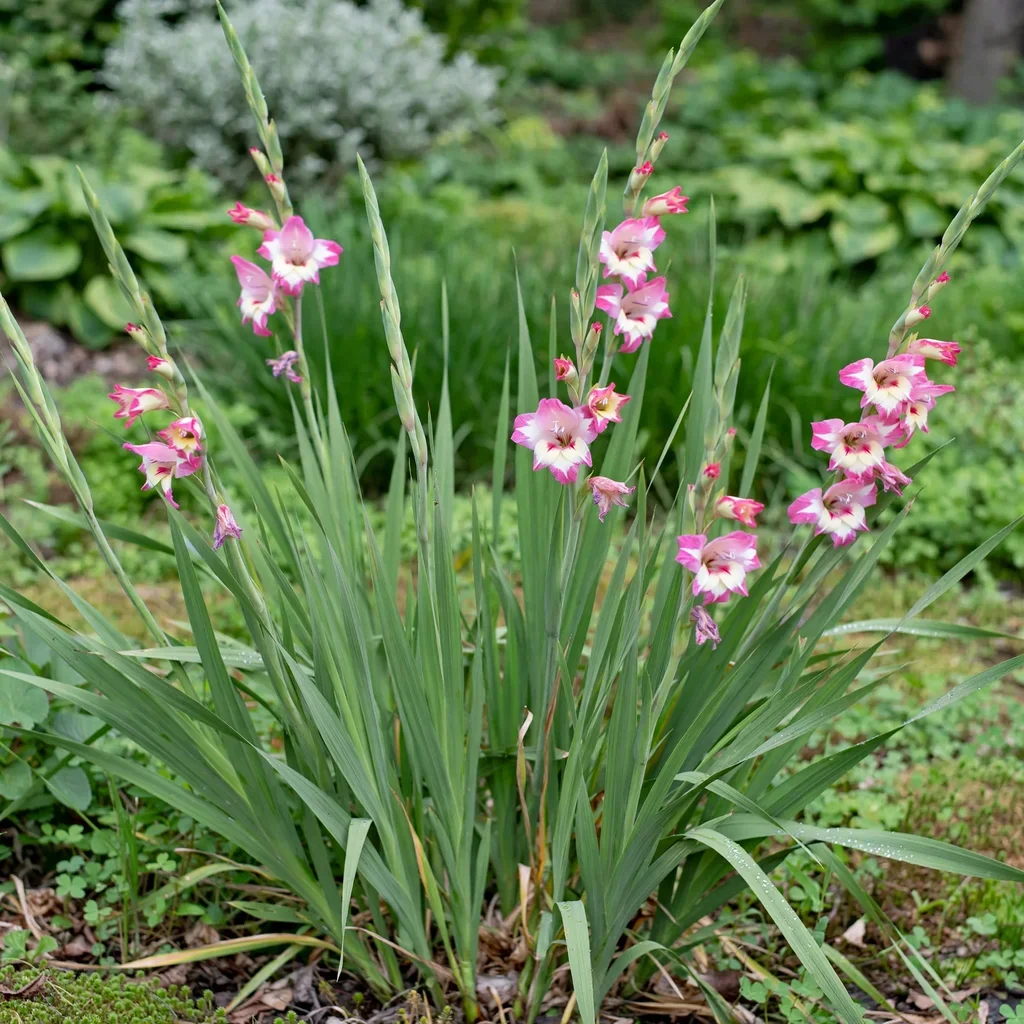
Galaxian Hybrid Gladiolus
Gladiolus x hybrida 'Galaxian Hardy'
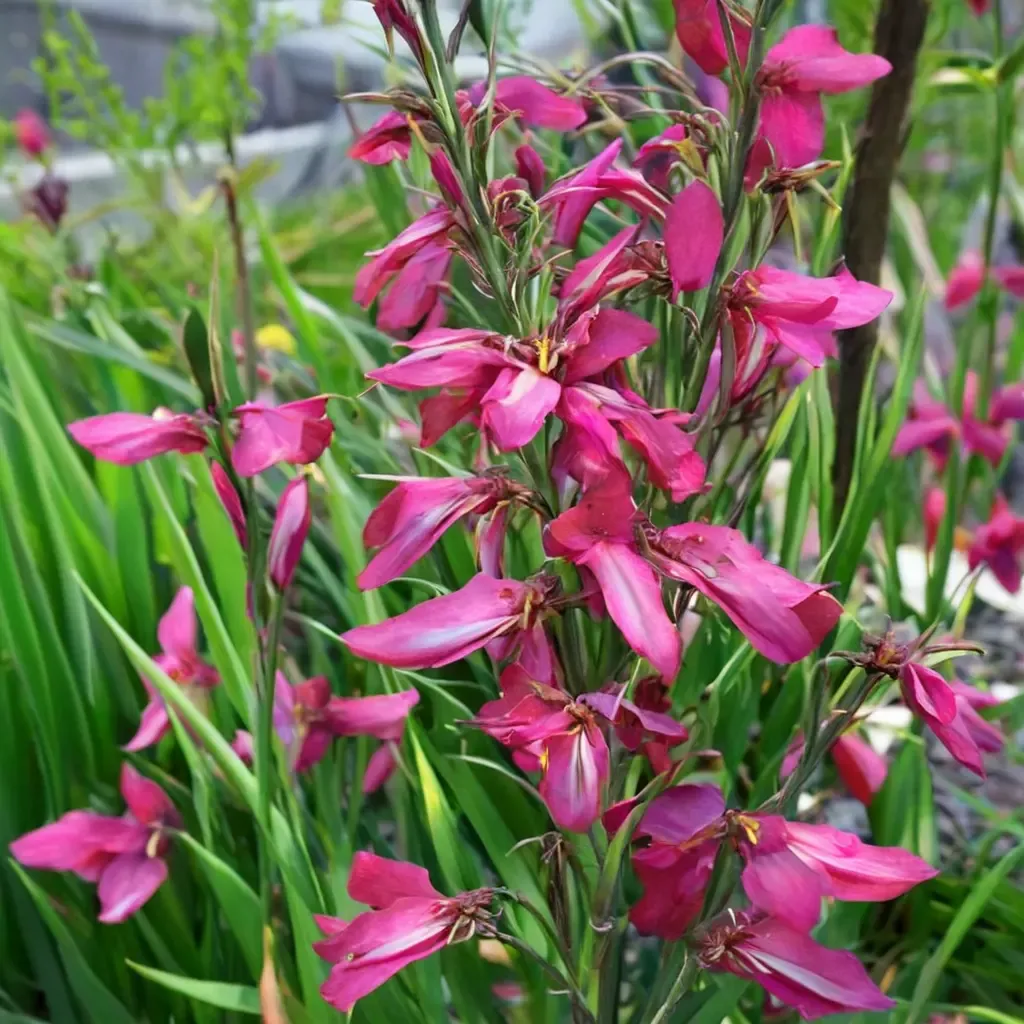
Corn Flag
Gladiolus communis
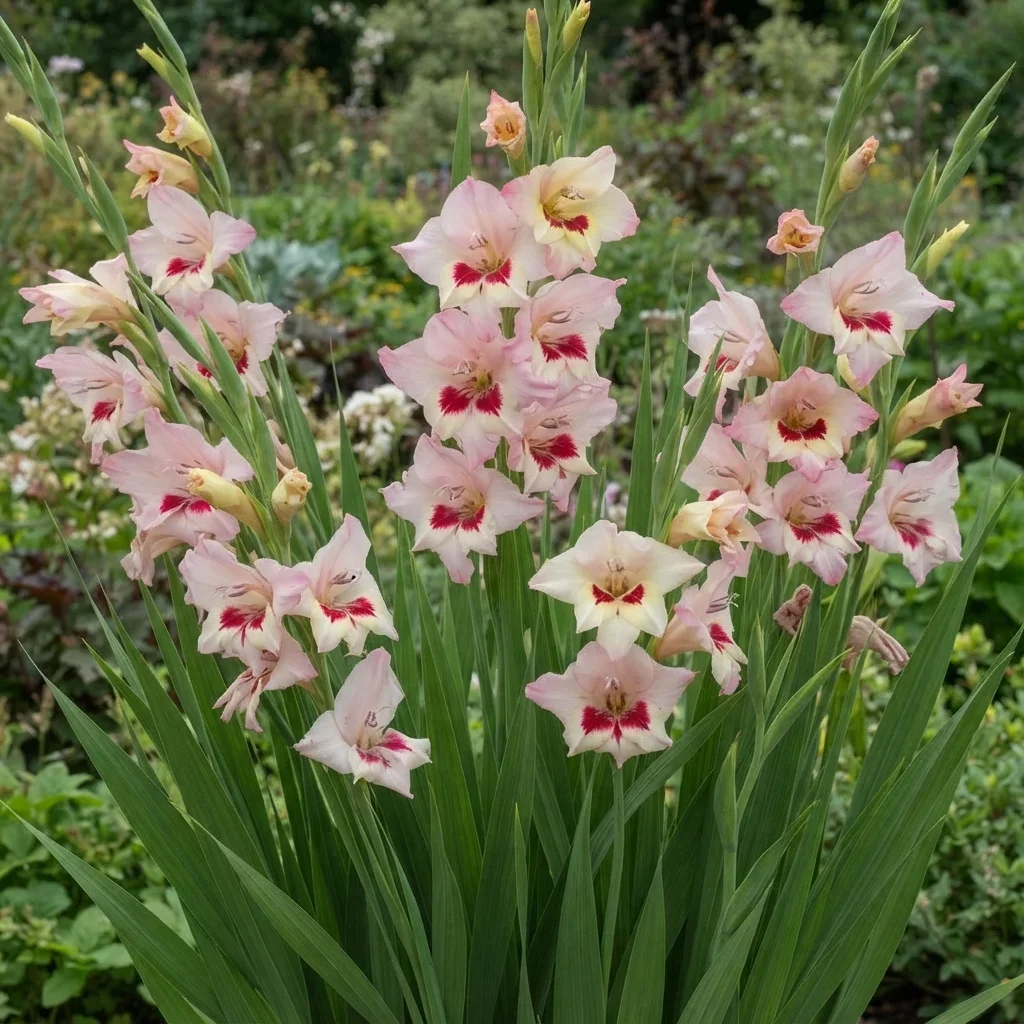
Elvira Gladiolus
Gladiolus hortulanus 'Elvira'
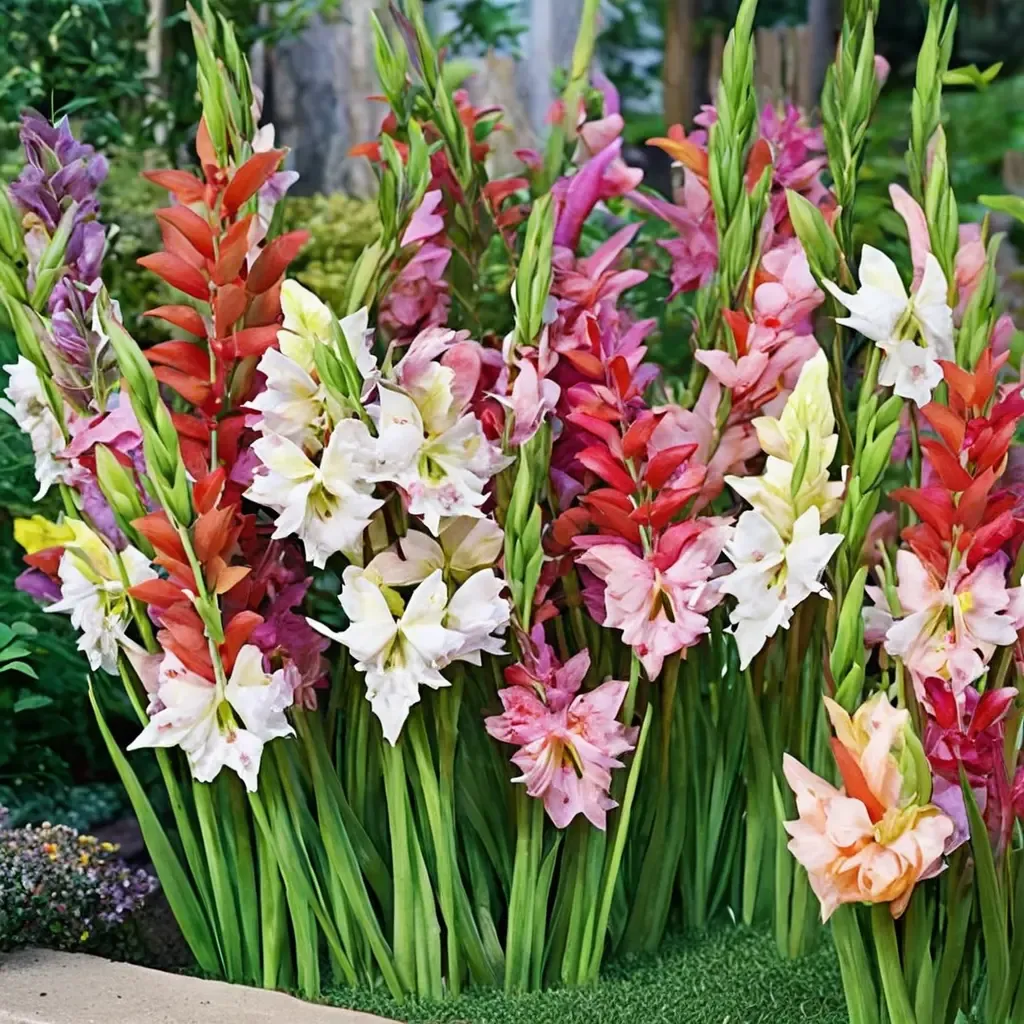
Glamini Dwarf Mix Gladiolus
Gladiolus hortulanus 'Glamini Dwarf Mix'
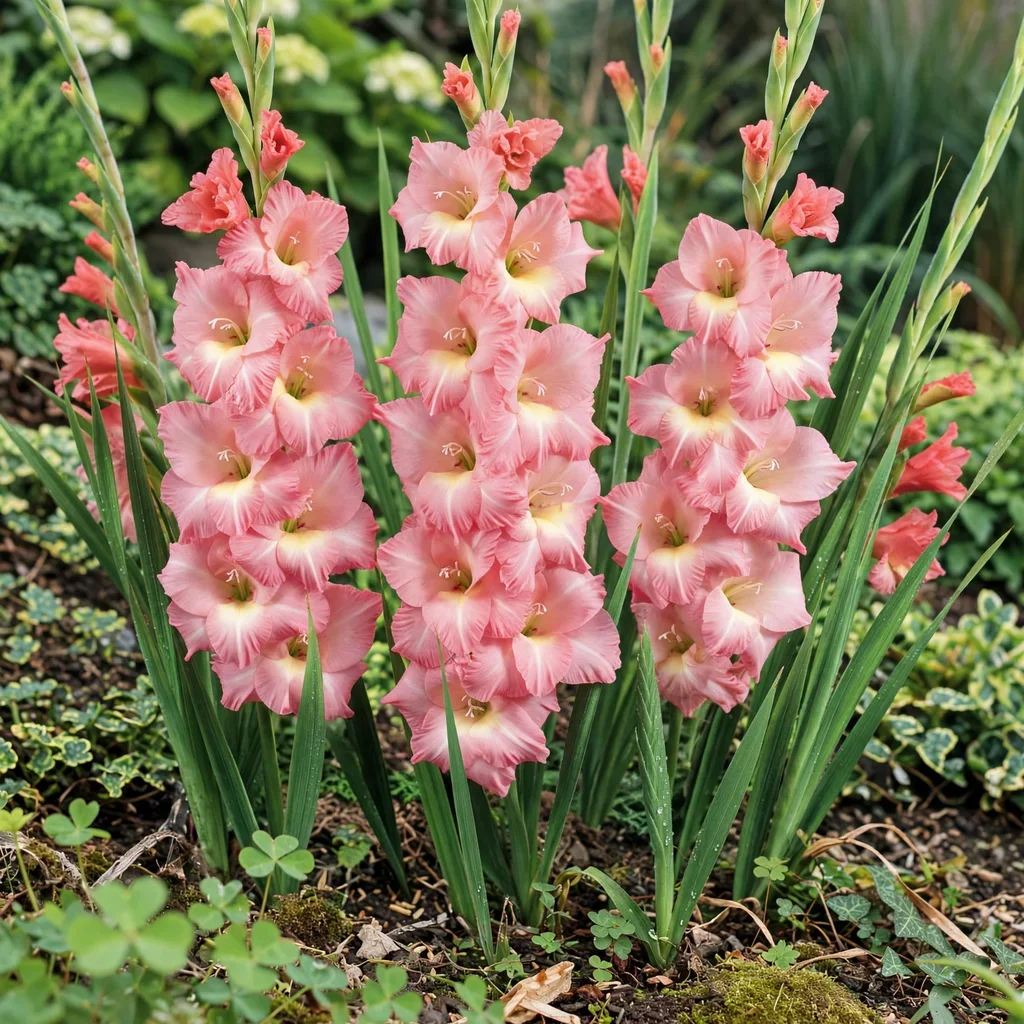
Rose Supreme Gladiolus
Gladiolus hortulanus 'Rose Supreme'
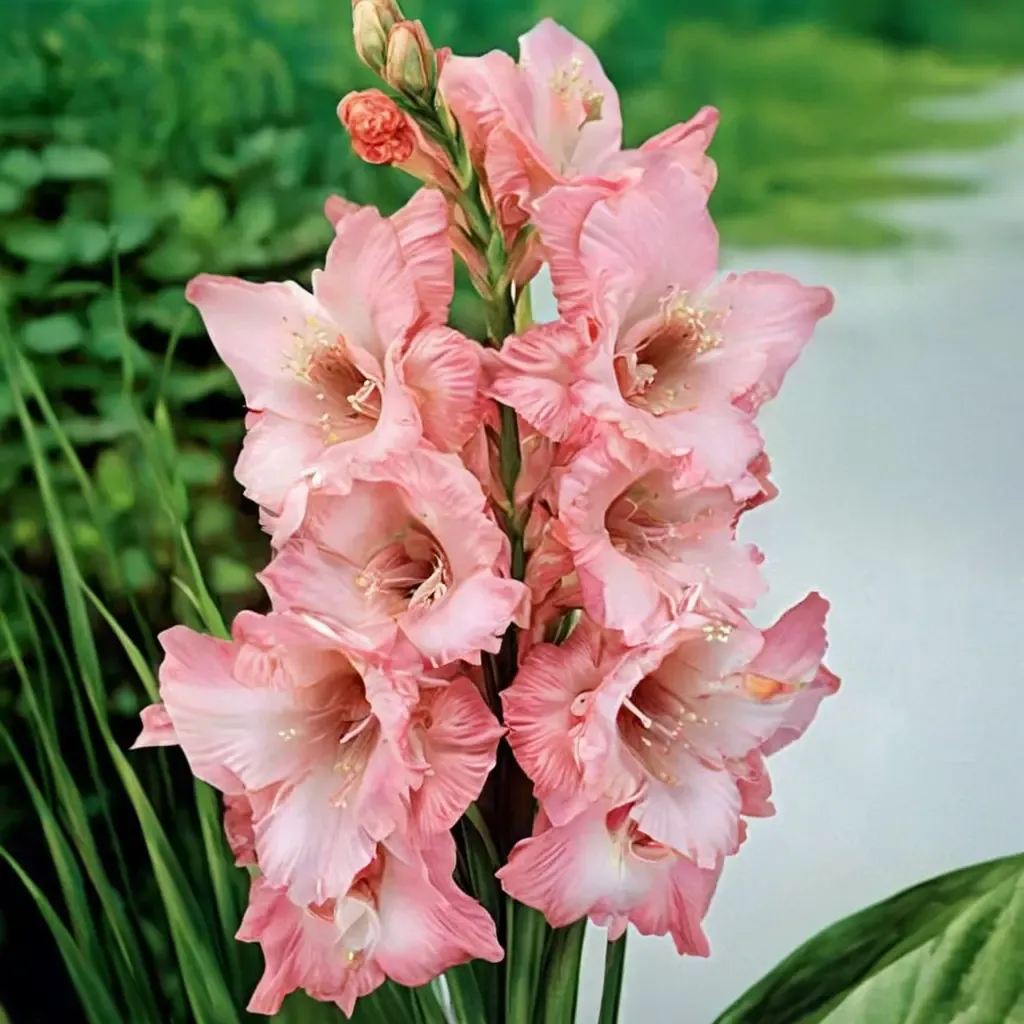
Ben Venuto Gladiolus
Gladiolus hortulanus 'Ben Venuto'
Keep exploring
Explore the genus
Hardy in your zone?
Grow Abyssinian Gladiolus with confidence
See it in a design of your actual yard, get zone-matched care reminders, and track it season by season in your garden journal.