The Story
Plant Bio
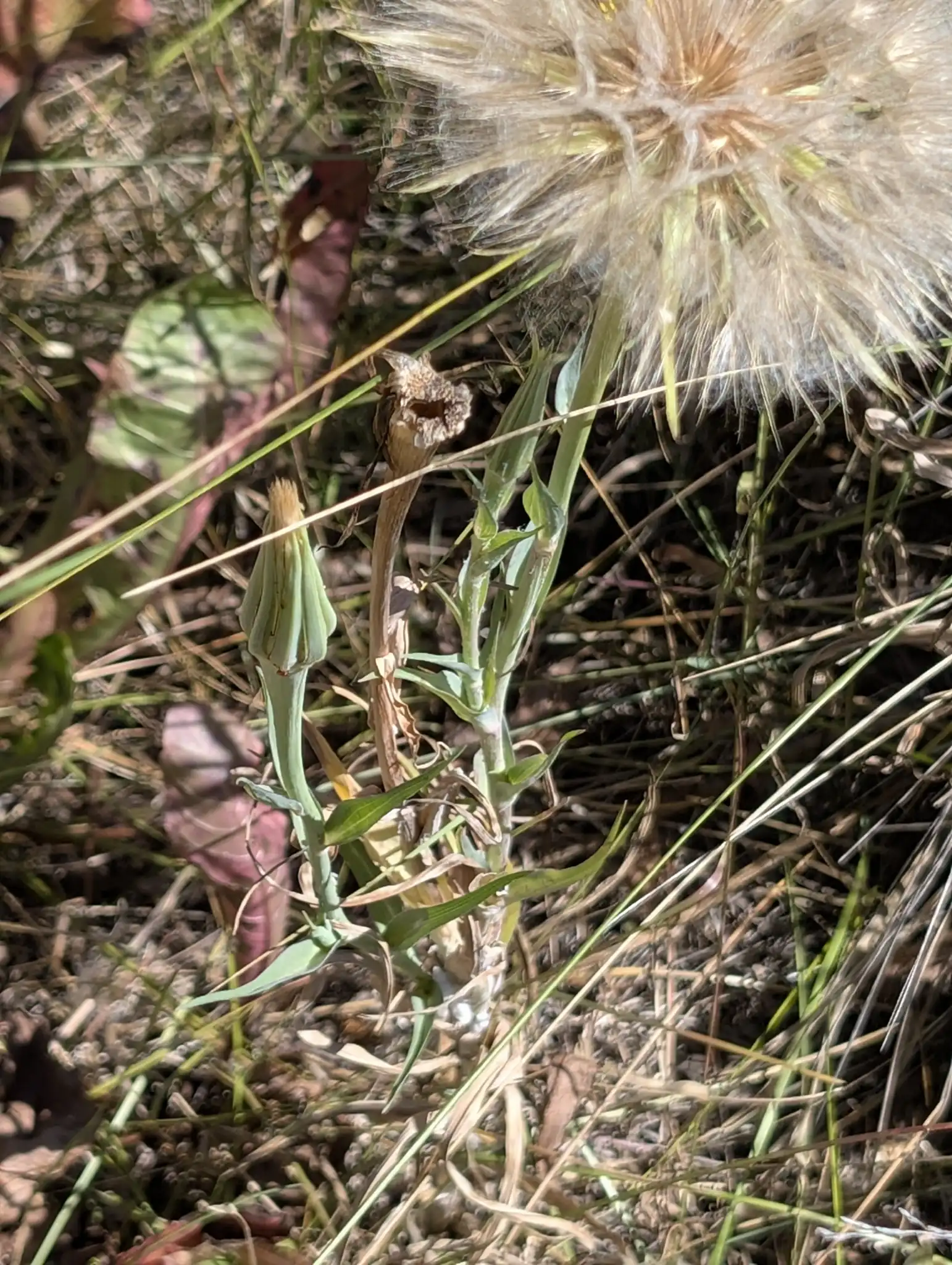
Tragopogon dubius, commonly known as yellow salsify, is an erect biennial herb native to Eurasia that reaches twelve to forty-eight inches in height. It develops a deep, fleshy taproot and a single, hollow stem that exudes a bitter, sticky milky latex when cut or broken.
The glaucous, bluish-green leaves are grass-like and clasp the stem at their bases. Solitary terminal flower heads feature bright yellow ray florets surrounded by long, green bracts that extend past the petals, opening only in the morning before closing by midday.
Uses & Benefits:
Essentials
At a Glance
Plant Type
Perennial
Height
48"
Width
12"
Light
Full Sun
Zones
4, 5, 6, 7, 8, 9
Water
Low
Humidity
Low to Moderate
Lifespan
Biennial
Native To
Eurasia
Toxicity
Mild skin irritant (milky latex)
Bloom period
Spring – Summer
In flower about 6 months of the year
Planting
How to Grow
- Select a site in full sun with dry, lean, and exceptionally well-drained soil.
- Sow seeds directly onto the soil surface in autumn or early spring, pressing them lightly into the substrate.
- Avoid applying fertilizers or rich organic compost, which encourage weak, rank growth and excessive weediness.
- Manually dig out the deep taproots of first-year basal rosettes if you wish to eradicate unwanted plants before they flower.
Pro Tip
Cut down the flowering stalks before the large, dandelion-like seed heads mature to prevent the wind-dispersed seeds from aggressively colonizing surrounding garden beds.
Keep It Thriving
Care Guide
Do
- Grow in poor, gravelly, or sandy soils to limit aggressive spreading.
- Remove flower heads immediately after blooming to prevent self-seeding.
- Wear gloves when handling the plant to avoid skin irritation from the sticky latex.
Don't
- Do not fertilize or amend the soil with rich organic matter.
- Do not plant in heavy clay or waterlogged areas where root rot is certain.
- Do not allow seed heads to mature if neighboring agricultural or garden areas are nearby.
Seasonal Care Calendar
| Task | Jan | Feb | Mar | Apr | May | Jun | Jul | Aug | Sep | Oct | Nov | Dec |
|---|---|---|---|---|---|---|---|---|---|---|---|---|
| Pest Check | ||||||||||||
| Propagate | ||||||||||||
| Prune | ||||||||||||
| Spring Cleanup |
Watch Out For
Pests & Diseases
Common Pests
Common Diseases
In the Garden
Landscape Uses & Companions
Landscape Uses
Companion Plants
Multiply
Propagation Methods
Good to Know
Common Questions
Yellow Salsify questions
What zones can Yellow Salsify grow in?
Yellow Salsify is hardy in USDA Zones 4–9. Inside that range it survives winter in the ground; outside it, grow it as an annual or a container plant you protect.
Is Yellow Salsify deer resistant?
Yes — Yellow Salsify is rated deer-resistant. Deer typically pass it over, though extreme hunger can override any plant's defenses.
When does Yellow Salsify bloom?
Yellow Salsify typically blooms in spring through summer. Exact timing shifts a week or two with your zone — Sow's bloom calendar maps it to your garden.
Does Yellow Salsify need full sun?
Yellow Salsify does best in full sun (6+ hours).
Is Yellow Salsify drought tolerant?
Yes — once established (usually after the first full season), Yellow Salsify handles dry spells with minimal watering. Water deeply its first year to build the root system that makes that possible.
Keep exploring
Explore the genus
Grow Yellow Salsify with confidence
See it in a design of your actual yard, get zone-matched care reminders, and track it season by season in your garden journal.