The Story
Plant Bio
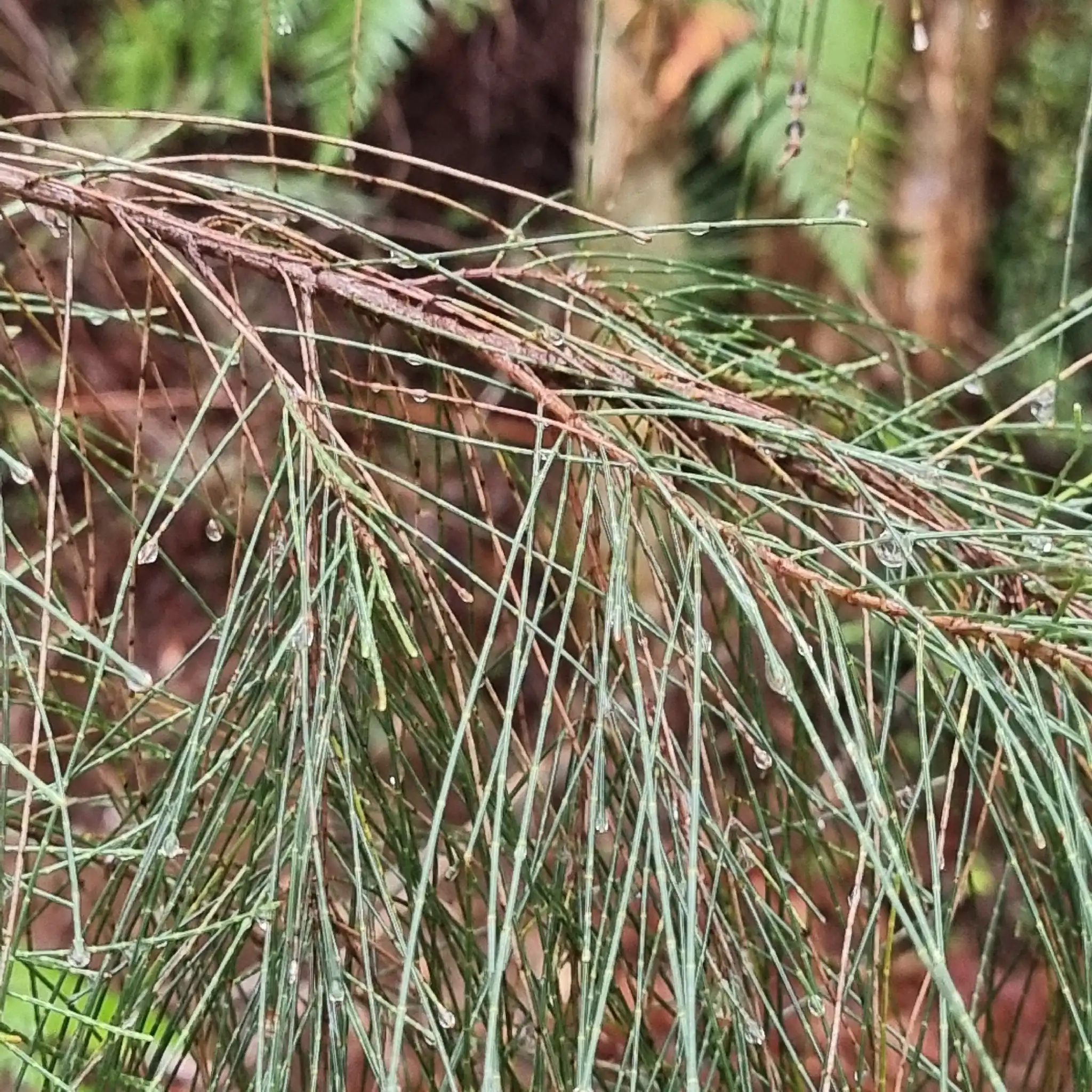
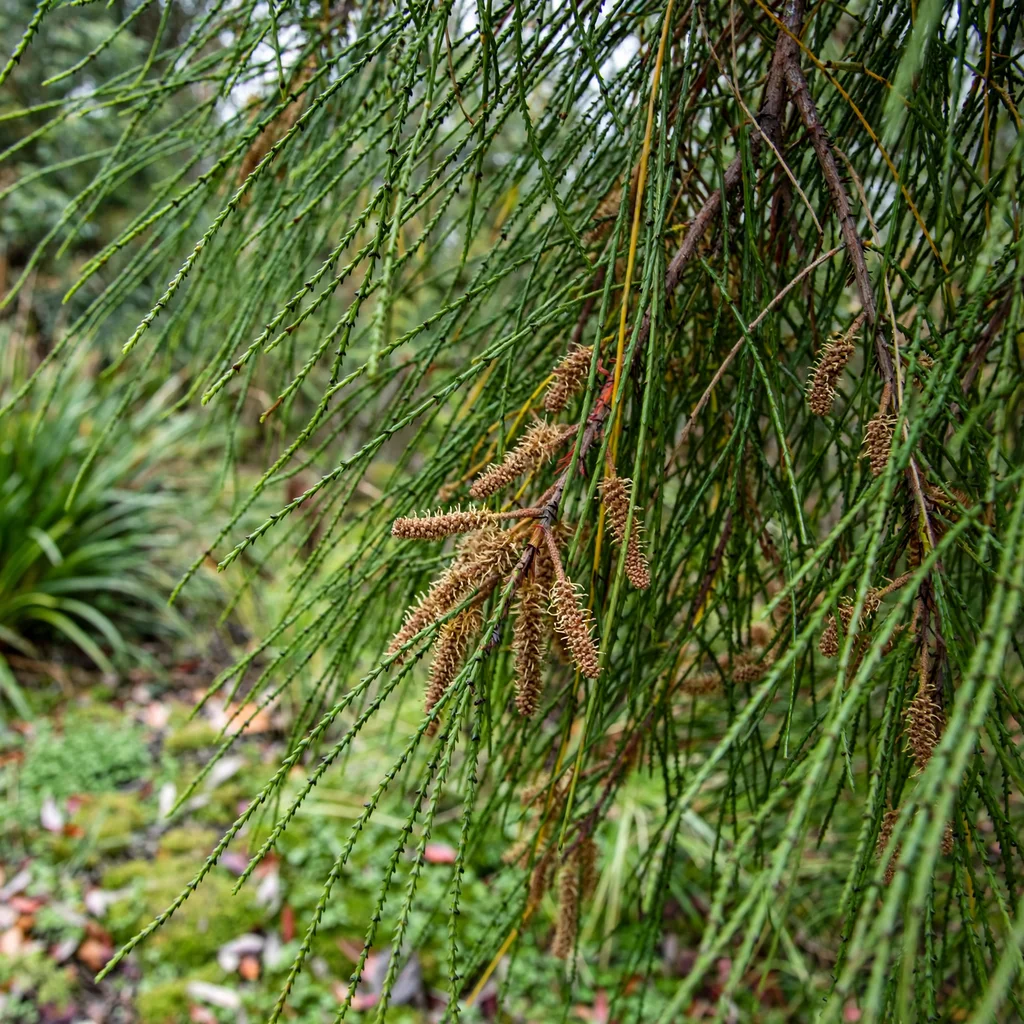
Allocasuarina littoralis, the black she-oak, is an upright evergreen tree native to eastern Australia, characterized by a dense, conical crown of weeping, needle-like branchlets. The deeply fissured, dark grey-brown bark provides high structural interest, while the foliage consists of tiny, scale-like leaves reduced to teeth around jointed green stems.
This dioecious species displays distinct reproductive structures, with male trees producing rusty-brown pollen spikes in winter and female trees bearing vibrant red flower clusters that mature into woody, pinecone-like cones. It serves as a highly wind-tolerant and salt-resistant specimen ideal for coastal windbreaks or poor, sandy soils.
Uses & Benefits:
Essentials
At a Glance
Plant Type
Tree
Height
393"
Width
275"
Light
Full Sun, Partial Sun
Zones
9, 10
Water
Low
Humidity
Moderate
Lifespan
Moderate
Native To
Australia
Toxicity
Non-toxic
Bloom period
Autumn – Spring
In flower about 9 months of the year
Planting
How to Grow
- Select a planting site in full sun to light partial shade with highly permeable, well-drained soil.
- Dig a hole twice the width of the root ball and of equal depth, ensuring the crown sits level with the surrounding soil.
- Water deeply immediately after planting to settle the soil, then maintain regular moisture only until the root system is established.
- Apply a thin layer of organic mulch around the base to suppress weeds, keeping the mulch clear of the trunk to prevent rot.
Pro Tip
Never prune back into old, leafless wood; this species lacks epicormic buds and cannot regenerate from bare timber.
Keep It Thriving
Care Guide
Do
- Plant in exceptionally well-drained soil to prevent root rot.
- Use low-phosphorus fertilizers formulated specifically for native plants if feeding is necessary.
- Water young plants regularly during their first dry season to establish a deep root system.
Don't
- Do not prune heavily into old, brown, leafless wood as the plant cannot regenerate from bare timber.
- Do not allow the soil to become waterlogged or soggy.
- Do not apply standard high-phosphorus garden fertilizers.
Seasonal Care Calendar
| Task | Jan | Feb | Mar | Apr | May | Jun | Jul | Aug | Sep | Oct | Nov | Dec |
|---|---|---|---|---|---|---|---|---|---|---|---|---|
| Fertilize | ||||||||||||
| Mulch | ||||||||||||
| Pest Check | ||||||||||||
| Prune |
Watch Out For
Pests & Diseases
Common Pests
Common Diseases
In the Garden
Landscape Uses & Companions
Landscape Uses
Companion Plants
Multiply
Propagation Methods
Good to Know
Common Questions
Black She-oak questions
What zones can Black She-oak grow in?
Black She-oak is hardy in USDA Zones 9–10. Inside that range it survives winter in the ground; outside it, grow it as an annual or a container plant you protect.
When does Black She-oak bloom?
Black She-oak typically blooms in autumn through spring. Exact timing shifts a week or two with your zone — Sow's bloom calendar maps it to your garden.
Does Black She-oak need full sun?
Black She-oak does best in full sun to part shade. In hot climates, afternoon shade keeps blooms fresher longer.
Is Black She-oak drought tolerant?
Yes — once established (usually after the first full season), Black She-oak handles dry spells with minimal watering. Water deeply its first year to build the root system that makes that possible.
More Allocasuarina to compare
Keep exploring
Explore the genus
Hardy in your zone?
Grow Black She-oak with confidence
See it in a design of your actual yard, get zone-matched care reminders, and track it season by season in your garden journal.