The Story
Plant Bio
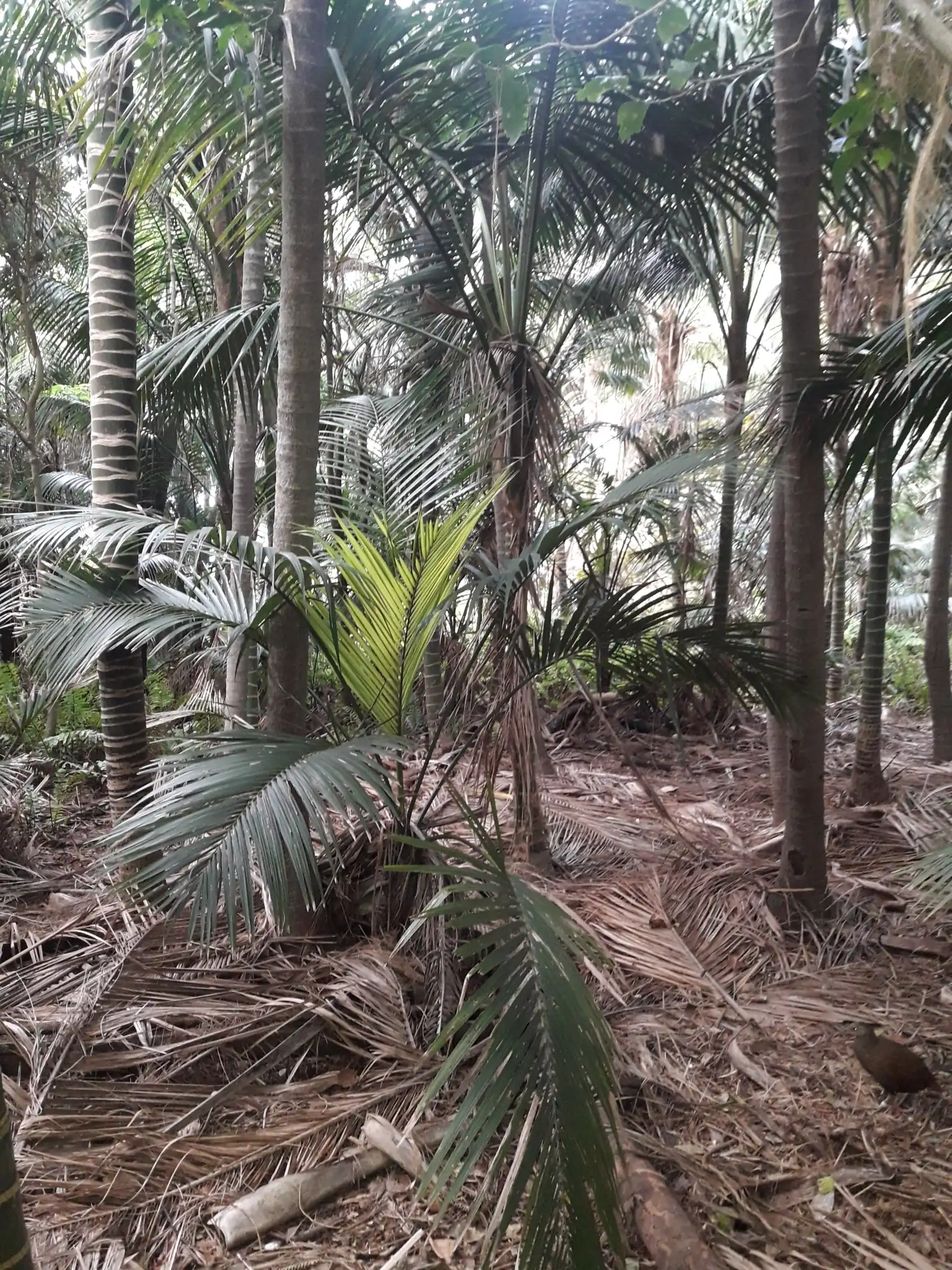
Howea forsteriana, the Kentia palm, is a slow-growing, single-stemmed palm native to Lord Howe Island, featuring a graceful canopy of arching, deep green fronds. In its native habitat, it reaches heights of up to forty feet, though indoor container specimens remain much smaller.
The species is highly valued for its exceptional tolerance of low light and dry indoor air, making it one of the most resilient indoor palms. Young plants are typically sold with multiple seedlings clustered in a single pot to create a dense, multi-stemmed appearance.
Uses & Benefits:
Essentials
At a Glance
Plant Type
Tropical
Height
140"
Width
60"
Light
Partial Sun, Shade
Zones
10
Water
Moderate
Humidity
Moderate to high
Lifespan
Long-lived
Native To
Lord Howe Island (Australia)
Toxicity
Non-toxic to humans and pets
Bloom period
Spring – Summer
In flower about 6 months of the year
Planting
How to Grow
- Select a container with ample drainage holes and fill it with a rich, well-draining, loam-based potting mix.
- Position the palm in a spot that receives bright, indirect light indoors, or dappled shade if grown outdoors in frost-free zones.
- Water thoroughly only when the top two inches of soil have dried out, ensuring the pot never sits in standing water.
- Repot very rarely, as the sensitive root system resents disturbance and performs best when slightly root-bound.
Pro Tip
Never prune green or partially yellowing fronds, and avoid tearing old leaf bases from the trunk; cutting into live tissue causes permanent scarring and exposes the stem to fatal fungal pathogens.
Keep It Thriving
Care Guide
Do
- Water consistently but allow the soil to partially dry between waterings to prevent root rot.
- Wipe the fronds periodically with a damp cloth to remove dust and discourage spider mites.
- Keep the plant in a warm room away from cold drafts and air conditioning vents.
Don't
- Do not overwater or allow the pot to sit in waterlogged soil.
- Do not expose the foliage to harsh, direct midday sunlight, which causes leaf scorch.
- Do not aggressively separate clustered seedlings when repotting, as this damages the delicate roots.
Seasonal Care Calendar
| Task | Jan | Feb | Mar | Apr | May | Jun | Jul | Aug | Sep | Oct | Nov | Dec |
|---|---|---|---|---|---|---|---|---|---|---|---|---|
| Fertilize | ||||||||||||
| Pest Check | ||||||||||||
| Prune | ||||||||||||
| Winter Prep |
Watch Out For
Pests & Diseases
Common Pests
Common Diseases
In the Garden
Landscape Uses & Companions
Landscape Uses
Multiply
Propagation Methods
Good to Know
Common Questions
Kentia Palm questions
What zones can Kentia Palm grow in?
Kentia Palm is hardy in USDA Zone 10. Inside that range it survives winter in the ground; outside it, grow it as an annual or a container plant you protect.
When does Kentia Palm bloom?
Kentia Palm typically blooms in spring through summer. Exact timing shifts a week or two with your zone — Sow's bloom calendar maps it to your garden.
Does Kentia Palm need full sun?
Kentia Palm does best in part shade.
Is Kentia Palm drought tolerant?
Yes — once established (usually after the first full season), Kentia Palm handles dry spells with minimal watering. Water deeply its first year to build the root system that makes that possible.
Keep exploring
Explore the genus
Hardy in your zone?
Grow Kentia Palm with confidence
See it in a design of your actual yard, get zone-matched care reminders, and track it season by season in your garden journal.