The Story
Plant Bio
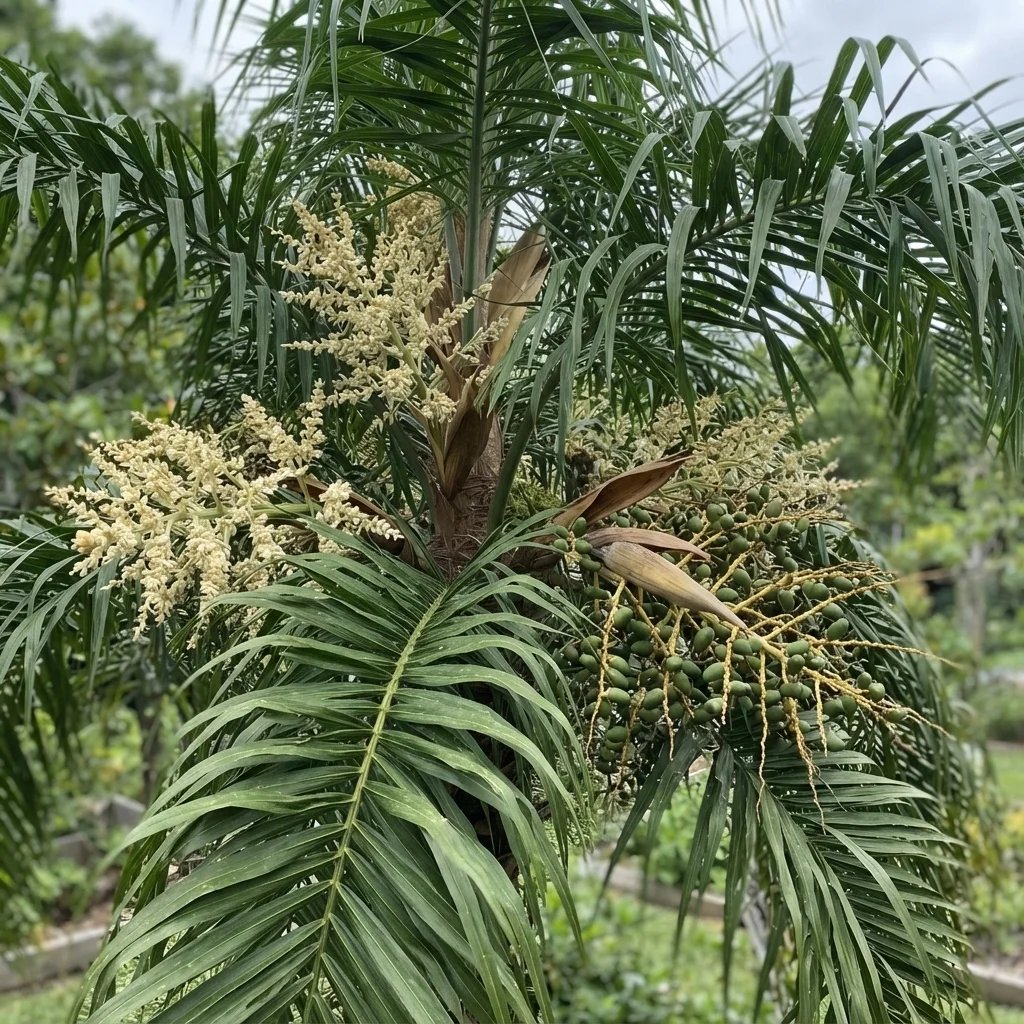
Syagrus romanzoffiana is a solitary, single-stemmed evergreen palm native to South America, growing to a height of 50 to 65 feet with a strong central leader. It develops a high, open, drooping canopy of large pinnate fronds up to 16 feet long, featuring leaflets arranged in multiple planes.
Bright green new growth matures to a deep green with lighter grayish undersides, creating a distinct two-toned effect in the canopy. During spring and summer, the palm produces large, branched panicles of creamy white to yellowish flowers enclosed in woody, boat-shaped bracts.
Uses & Benefits:
Essentials
At a Glance
Plant Type
Tree
Height
787"
Width
295"
Light
Full Sun, Partial Sun
Zones
9, 10
Water
Moderate
Humidity
High
Lifespan
Long-lived
Native To
South America
Toxicity
Non-toxic
Bloom period
Spring – Summer
In flower about 6 months of the year
Marketplace
Where to Buy
Shipping costs Year-round shipping Free shipping
Planting
How to Grow
- Select a planting site in full sun to partial shade with average, well-drained soil.
- Dig a hole twice as wide as the root ball but no deeper, ensuring the root flare sits exactly at or slightly above the soil line to prevent trunk suffocation.
- Backfill with native soil, water deeply to settle the roots, and apply a layer of organic mulch around the base without letting it touch the trunk.
- Apply a specialized palm fertilizer containing potassium, magnesium, and manganese regularly throughout the active growing season.
Pro Tip
Never prune green or yellowing lower fronds, as the palm actively reabsorbs essential potassium from them; removing living foliage starves the crown and stunts development.
Keep It Thriving
Care Guide
Do
- Sterilize all pruning tools with disinfectant before and after trimming to prevent the transmission of vascular pathogens.
- Clear fallen fruit promptly to prevent slippery walking hazards and avoid attracting fermenting-insect pests.
- Apply a specialized palm fertilizer with micronutrients during the active spring and summer growing seasons.
Don't
- Do not plant the palm too deep, as buried trunks suffocate roots and invite lethal borers and fungal rots.
- Do not cut into green or partially yellowing fronds, which starves the palm of critical potassium.
- Do not allow the soil to remain waterlogged, as the root system requires excellent drainage to survive.
Seasonal Care Calendar
| Task | Jan | Feb | Mar | Apr | May | Jun | Jul | Aug | Sep | Oct | Nov | Dec |
|---|---|---|---|---|---|---|---|---|---|---|---|---|
| Fertilize | ||||||||||||
| Pest Check | ||||||||||||
| Prune |
Watch Out For
Pests & Diseases
Common Pests
Common Diseases
In the Garden
Landscape Uses & Companions
Landscape Uses
Companion Plants
Multiply
Propagation Methods
Good to Know
Common Questions
Queen Palm questions
What zones can Queen Palm grow in?
Queen Palm is hardy in USDA Zones 9–10. Inside that range it survives winter in the ground; outside it, grow it as an annual or a container plant you protect.
When does Queen Palm bloom?
Queen Palm typically blooms in spring through summer. Exact timing shifts a week or two with your zone — Sow's bloom calendar maps it to your garden.
Does Queen Palm need full sun?
Queen Palm does best in full sun to part shade. In hot climates, afternoon shade keeps blooms fresher longer.
Is Queen Palm drought tolerant?
Yes — once established (usually after the first full season), Queen Palm handles dry spells with minimal watering. Water deeply its first year to build the root system that makes that possible.
Keep exploring
Explore the genus
Hardy in your zone?
Grow Queen Palm with confidence
See it in a design of your actual yard, get zone-matched care reminders, and track it season by season in your garden journal.