

The Story
Plant Bio
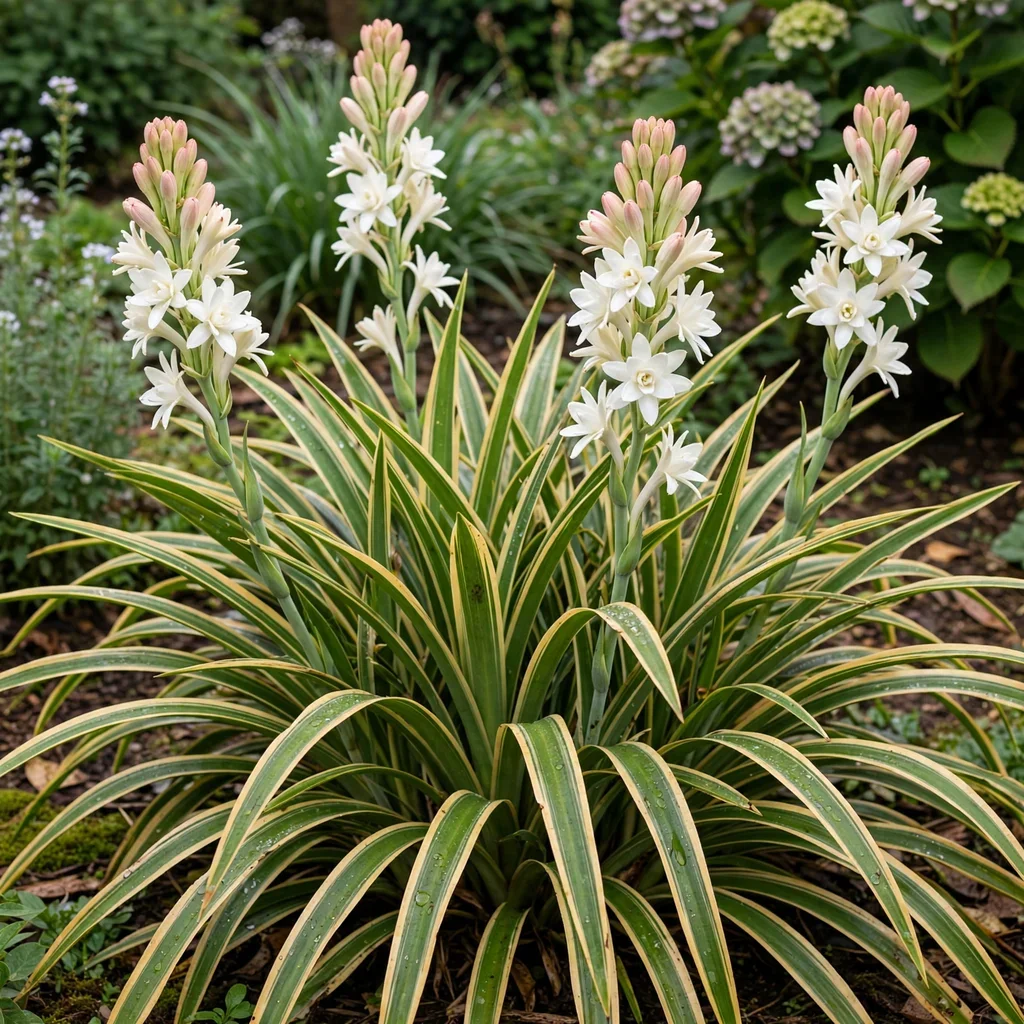
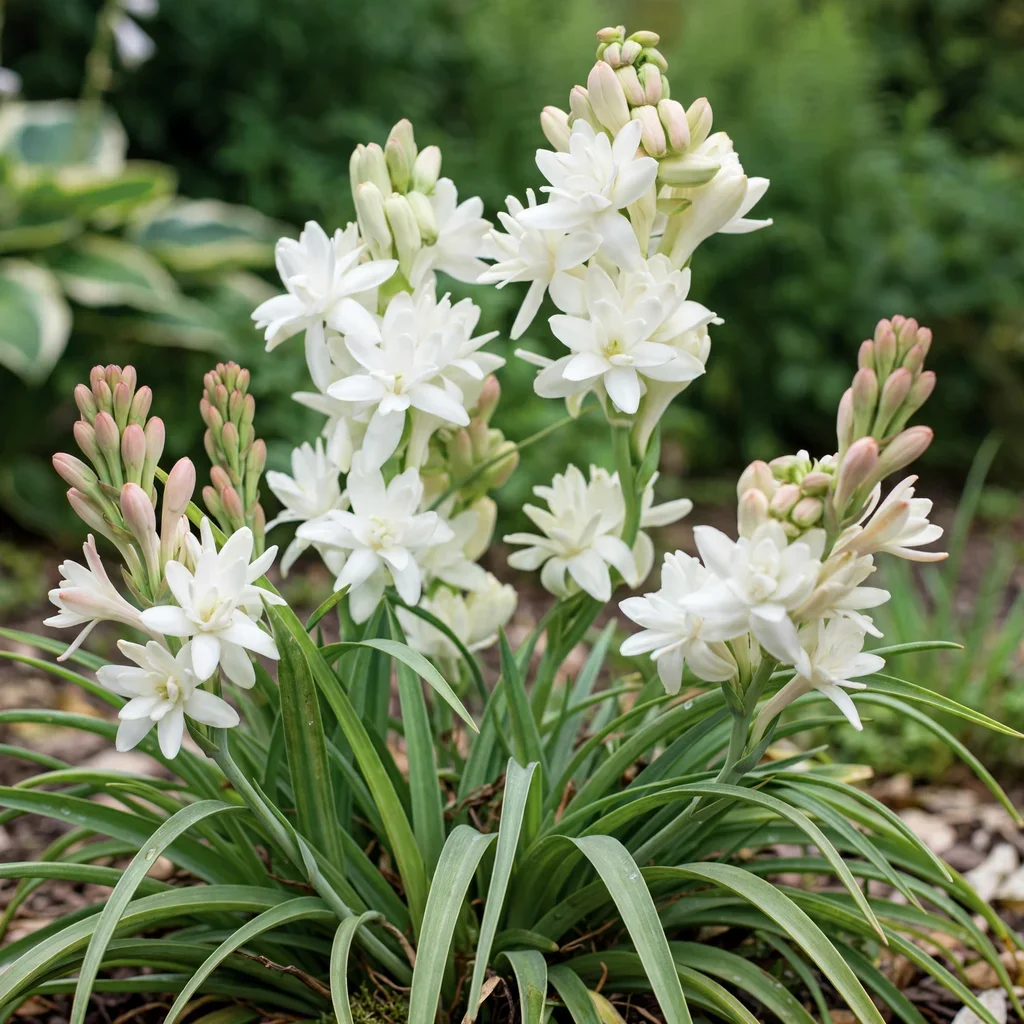
Polianthes tuberosa, the tuberose, is a bulbous perennial known only in cultivation, with a history of growing that reaches back to pre-Columbian Mexico. Grassy basal leaves surround stiff stems two to three feet high, which carry waxy white tubular flowers in August and September. The scent is heavy, sweet and carries some distance in still evening air.
The perfume is the entire reason to grow it, and it strengthens as the light fades, so the plant earns its place beside a seat, a path or an open window rather than in a border you only see from a distance. Bulbs flower once and then divide, so a clump takes a season or two to build up again after blooming.
Uses & Benefits:
Essentials
At a Glance
Plant Type
Perennial
Height
24"
Width
24"
Light
Full Sun, Partial Sun
Zones
5, 6, 7, 8, 9, 10
Water
Medium
Humidity
Average
Lifespan
Perennial
Native To
Known only in cultivation; thought to have originated in Mexico
Toxicity
Non-toxic
Planting
How to Grow
- Plant bulbs in spring once the soil has warmed.
- Choose full sun and rich, free-draining soil.
- Set bulbs about two inches deep, close together.
- Water and feed steadily through the growing season.
- Site them near seating, paths or open windows.
- Lift and store bulbs dry over winter below zone 7.
Pro Tip
A bulb that has flowered will not flower again; it splits into offsets that need a season or two of feeding to reach flowering size.
Keep It Thriving
Care Guide
Do
- Plant in full sun in rich, free-draining soil ☀️
- Feed steadily through the growing season 🌿
- Site it where the evening scent is noticed 🌙
- Lift and store bulbs dry in cold regions ❄️
Don't
- Plant it before the soil has warmed ❌
- Leave bulbs in cold, wet winter ground ❌
- Expect the same bulb to flower a second year ❌
Seasonal Care Calendar
| Task | Jan | Feb | Mar | Apr | May | Jun | Jul | Aug | Sep | Oct | Nov | Dec |
|---|---|---|---|---|---|---|---|---|---|---|---|---|
| Lift | ||||||||||||
| Plant |
Watch Out For
Pests & Diseases
Common Pests
Common Diseases
In the Garden
Landscape Uses & Companions
Landscape Uses
Companion Plants
Multiply
Propagation Methods
Good to Know
Common Questions
Tuberose questions
What zones can Tuberose grow in?
Tuberose is hardy in USDA Zones 5–10. Inside that range it survives winter in the ground; outside it, grow it as an annual or a container plant you protect.
Is Tuberose deer resistant?
Yes — Tuberose is rated deer-resistant. Deer typically pass it over, though extreme hunger can override any plant's defenses.
When does Tuberose bloom?
Tuberose typically blooms in late summer to early fall through late fall. Exact timing shifts a week or two with your zone — Sow's bloom calendar maps it to your garden.
Does Tuberose need full sun?
Tuberose does best in full sun to part shade. In hot climates, afternoon shade keeps blooms fresher longer.
Is Tuberose drought tolerant?
Yes — once established (usually after the first full season), Tuberose handles dry spells with minimal watering. Water deeply its first year to build the root system that makes that possible.
More Polianthes to compare
Keep exploring
Explore the genus
Grow Tuberose with confidence
See it in a design of your actual yard, get zone-matched care reminders, and track it season by season in your garden journal.