The Story
Plant Bio
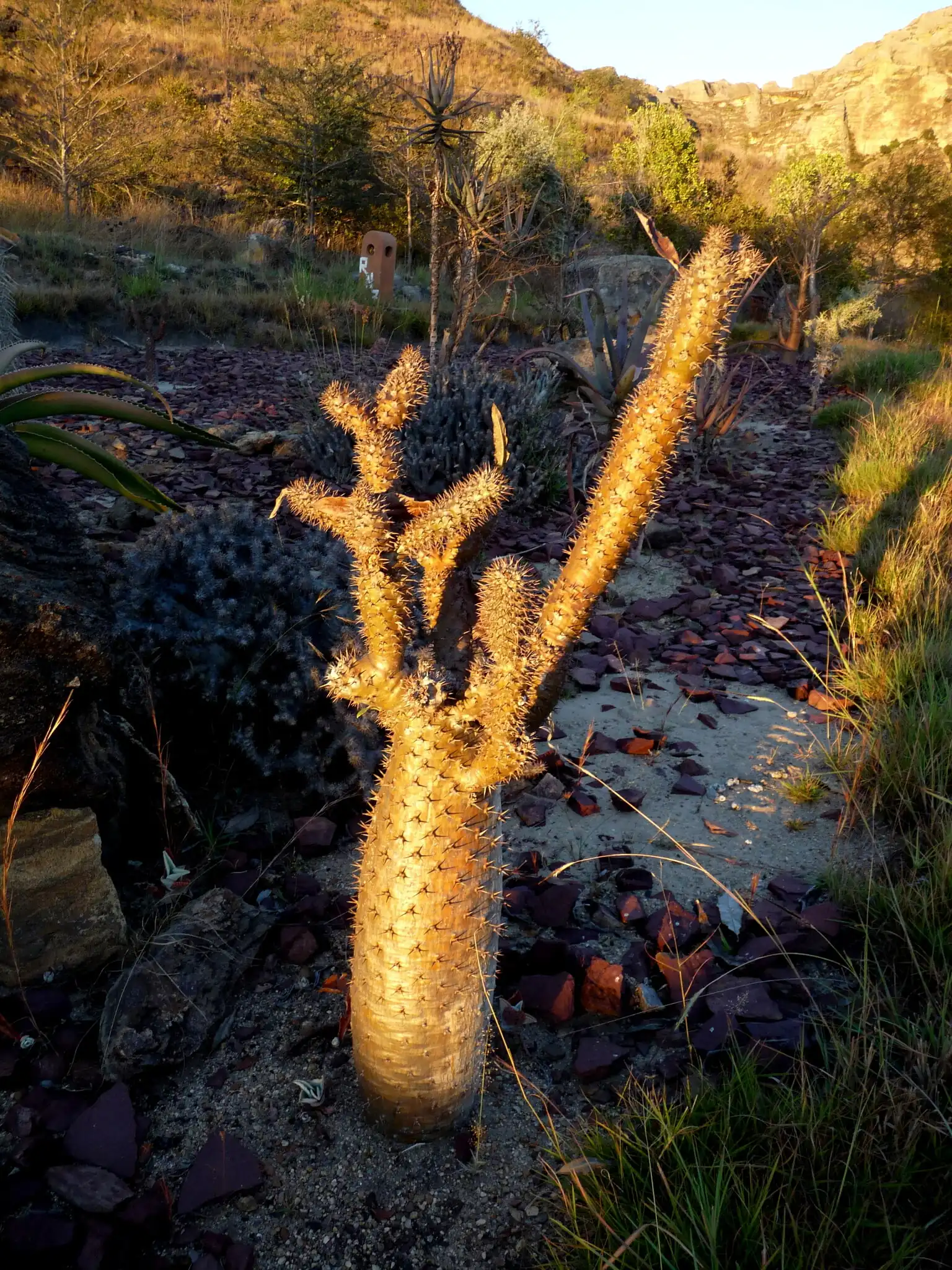
Pachypodium lamerei, known as the Madagascar palm, is a pachycaulous succulent tree featuring a thick, silver-gray trunk heavily armed with sharp, triple-spined nodes. The trunk terminates in a sparse crown of glossy, dark green, linear-lanceolate leaves that drop during cold temperatures or drought.
Highly fragrant, white, funnel-shaped flowers with yellowish centers emerge in cymose inflorescences near the top of the stem during spring and summer. The succulent trunk functions as a water-storage organ, providing extreme drought tolerance once the root system is established.
Uses & Benefits:
Essentials
At a Glance
Plant Type
Cactus Succulent
Height
236"
Width
71"
Light
Full Sun, Partial Sun
Zones
10
Water
Low
Humidity
Low to Moderate
Native To
Madagascar
Toxicity
Highly Toxic
Bloom period
Spring – Summer
In flower about 6 months of the year
Planting
How to Grow
- Plant in a fast-draining cactus and succulent potting mix or a gritty mineral soil with a pH between 6.0 and 7.5.
- Position the container in a location that receives at least six hours of direct sunlight daily.
- Water thoroughly during the spring and summer active growth phases only when the soil medium has dried out completely.
- Withhold water and fertilizer entirely during winter dormancy when the plant drops its leaves.
Pro Tip
Do not panic when the plant drops its leaves in winter, as this is a normal dormancy response; withhold water entirely during this period to prevent fatal root and stem rot.
Keep It Thriving
Care Guide
Do
- Provide exceptional drainage to prevent standing water around the root system.
- Bring the plant indoors or protect it when temperatures drop below 5°C (41°F).
- Wear thick gloves when handling to protect against the extremely sharp, rigid spines.
Don't
- Do not water the plant during winter dormancy when the leaves have fallen.
- Do not prune into healthy green or old leafless woody trunks unless removing rotted tissue.
- Do not allow the milky sap to contact skin or eyes, as it causes severe irritation.
Seasonal Care Calendar
| Task | Jan | Feb | Mar | Apr | May | Jun | Jul | Aug | Sep | Oct | Nov | Dec |
|---|---|---|---|---|---|---|---|---|---|---|---|---|
| Fertilize | ||||||||||||
| Pest Check | ||||||||||||
| Prune | ||||||||||||
| Winter Prep |
Watch Out For
Pests & Diseases
Common Pests
Common Diseases
In the Garden
Landscape Uses & Companions
Landscape Uses
Companion Plants
Multiply
Propagation Methods
Good to Know
Common Questions
Madagascar Palm questions
What zones can Madagascar Palm grow in?
Madagascar Palm is hardy in USDA Zone 10. Inside that range it survives winter in the ground; outside it, grow it as an annual or a container plant you protect.
When does Madagascar Palm bloom?
Madagascar Palm typically blooms in spring through summer. Exact timing shifts a week or two with your zone — Sow's bloom calendar maps it to your garden.
Does Madagascar Palm need full sun?
Madagascar Palm does best in full sun to part shade. In hot climates, afternoon shade keeps blooms fresher longer.
Is Madagascar Palm drought tolerant?
Yes — once established (usually after the first full season), Madagascar Palm handles dry spells with minimal watering. Water deeply its first year to build the root system that makes that possible.
Keep exploring
Explore the genus
Hardy in your zone?
Grow Madagascar Palm with confidence
See it in a design of your actual yard, get zone-matched care reminders, and track it season by season in your garden journal.