The Story
Plant Bio
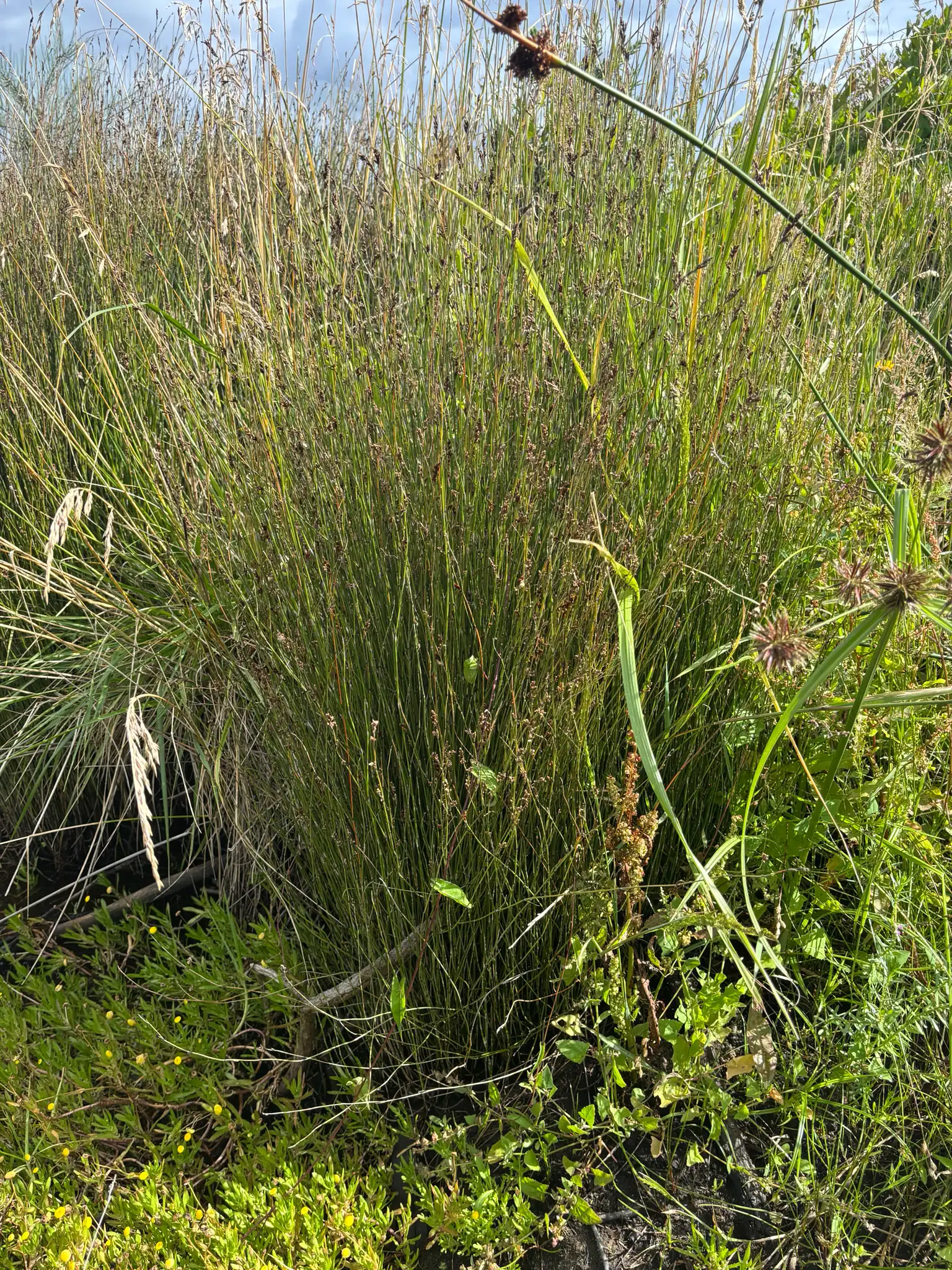
Apodasmia similis, commonly known as oioi, is an evergreen, rhizomatous rush native to New Zealand that forms dense, upright tufts of wire-like, grey-green foliage. The slender, jointed culms are banded with dark brown, papery sheathing bracts at each node and bear inconspicuous, wind-pollinated brownish flower spikelets in spring and summer.
This species is highly valued for its exceptional tolerance to saline estuaries, coastal salt spray, and waterlogged soils, making it an excellent choice for stabilizing wet margins. Once established, its creeping rhizomes bind the soil while the tough, unpalatable stems resist browsing by deer and rabbits.
Uses & Benefits:
Essentials
At a Glance
Plant Type
Grass
Height
48"
Width
39"
Light
Full Sun
Zones
8, 9, 10
Water
High to moderate
Humidity
High
Lifespan
Perennial
Native To
New Zealand
Toxicity
Non-toxic
Bloom period
Spring – Summer
In flower about 6 months of the year
Planting
How to Grow
- Select a site in full sun with moist, wet, or poorly drained soil, though it adapts to drier garden soils once established.
- Dig a hole twice the width of the root ball and set the plant at the same depth it was growing in its container.
- Water thoroughly after planting and maintain consistent moisture during the first growing season to help the rhizomes establish.
- Apply a light layer of organic mulch around the base to retain moisture, avoiding heavy chemical fertilizers which can damage the plant.
Pro Tip
Never shear this rush back to the ground like an ornamental grass; cutting into the old, leafless lower culms will permanently disfigure or kill the clump.
Keep It Thriving
Care Guide
Do
- Plant in full sun to maintain the upright, rigid habit of the culms.
- Keep the soil consistently moist or wet, especially during the establishment phase.
- Trim only the outer, damaged stems lightly if cleaning up the clump's appearance.
Don't
- Do not cut the foliage back hard to the ground, as it cannot regenerate from old, woody base tissue.
- Do not apply heavy chemical fertilizers, which can harm the root system.
- Do not plant in deep shade, which causes the stems to flop and lose their tight, upright form.
Seasonal Care Calendar
| Task | Jan | Feb | Mar | Apr | May | Jun | Jul | Aug | Sep | Oct | Nov | Dec |
|---|---|---|---|---|---|---|---|---|---|---|---|---|
| Divide | ||||||||||||
| Pest Check | ||||||||||||
| Plant | ||||||||||||
| Spring Cleanup |
Watch Out For
Pests & Diseases
Common Pests
Common Diseases
In the Garden
Landscape Uses & Companions
Landscape Uses
Companion Plants
Multiply
Propagation Methods
Good to Know
Common Questions
Oioi questions
What zones can Oioi grow in?
Oioi is hardy in USDA Zones 8–10. Inside that range it survives winter in the ground; outside it, grow it as an annual or a container plant you protect.
Is Oioi deer resistant?
Yes — Oioi is rated deer-resistant. Deer typically pass it over, though extreme hunger can override any plant's defenses.
When does Oioi bloom?
Oioi typically blooms in spring through summer. Exact timing shifts a week or two with your zone — Sow's bloom calendar maps it to your garden.
Does Oioi need full sun?
Oioi does best in full sun (6+ hours).
Is Oioi drought tolerant?
Yes — once established (usually after the first full season), Oioi handles dry spells with minimal watering. Water deeply its first year to build the root system that makes that possible.
Keep exploring
Explore the genus
Hardy in your zone?
Grow Oioi with confidence
See it in a design of your actual yard, get zone-matched care reminders, and track it season by season in your garden journal.