The Story
Plant Bio
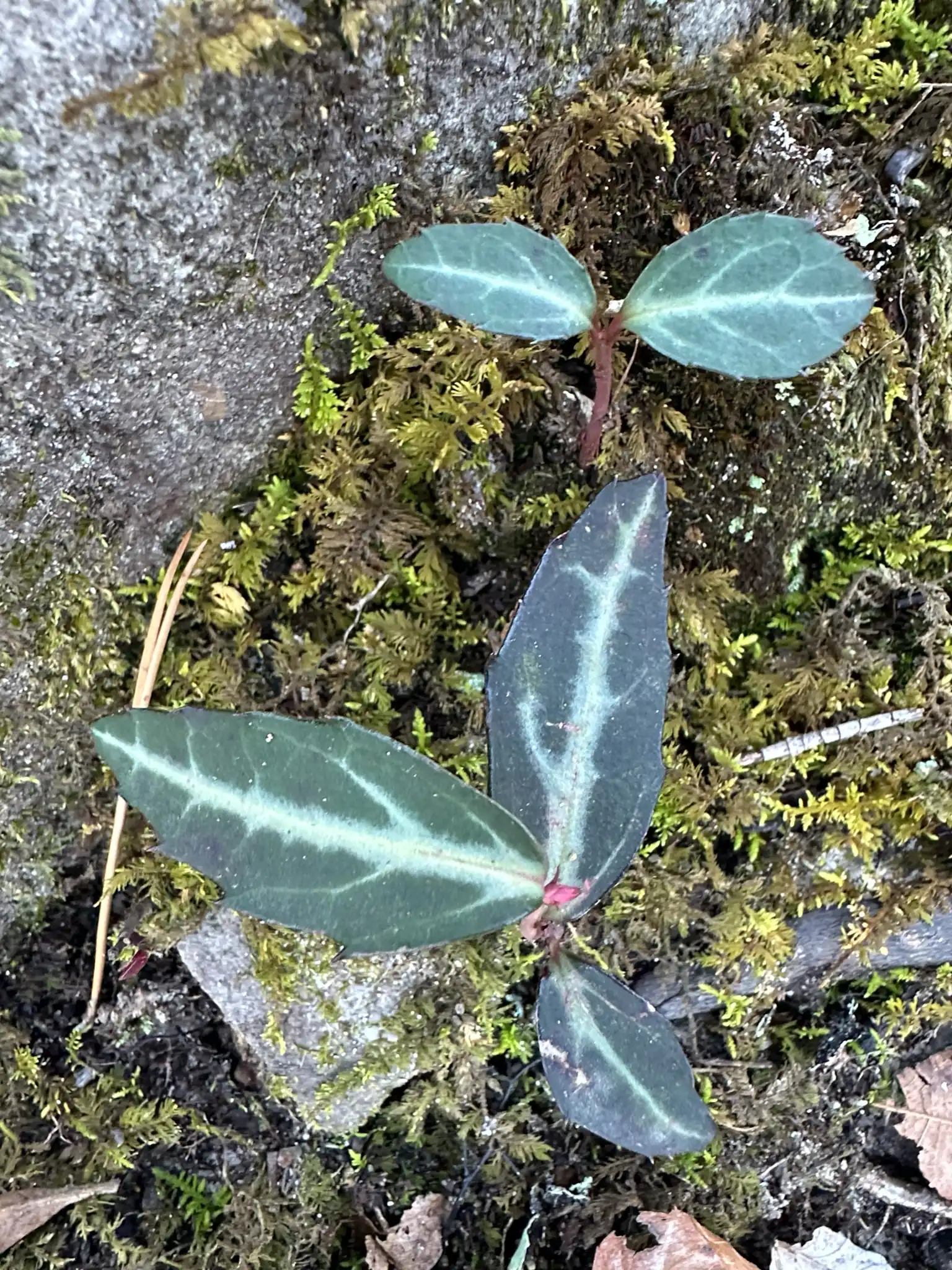
Chimaphila maculata, the spotted wintergreen, is a low-growing evergreen perennial native to North American woodlands, reaching four to ten inches in height. The leathery, dark bluish-green leaves are arranged in whorls and feature striking white variegation along the veins.
In summer, slender red peduncles bear small terminal clusters of nodding, waxy, cup-shaped white to pinkish flowers with prominent green ovaries. The plant spreads slowly via subterranean rhizomes to form loose, attractive colonies on the forest floor.
Uses & Benefits:
Essentials
At a Glance
Plant Type
Perennial
Height
10"
Width
12"
Light
Partial Sun, Shade
Zones
4, 5, 6, 7, 8
Water
Moderate
Humidity
Moderate to high
Lifespan
Perennial
Native To
North America
Toxicity
Non-toxic
Bloom period
Summer
In flower about 3 months of the year
Planting
How to Grow
- Select a fully shaded to partially shaded site with strongly acidic, sandy or loamy soil.
- Incorporate decayed leaf mold to mimic a natural woodland floor without adding heavy compost or synthetic fertilizers.
- Plant container-grown specimens carefully to avoid disturbing the sensitive, shallow root system.
- Apply a light layer of natural pine needles or oak leaf litter around the base, keeping the crown clear.
Pro Tip
Establish this species in strongly acidic, sandy or loamy soils with sharp drainage, and leave natural leaf litter intact to support the essential mycorrhizal fungi it relies on for nutrient uptake.
Keep It Thriving
Care Guide
Do
- Maintain a strongly acidic soil pH between 4.5 and 6.0.
- Ensure the planting site has immaculate, sharp drainage.
- Leave surrounding forest leaf litter intact to support soil mycorrhizae.
Don't
- Do not prune into old, leafless woody stems.
- Do not apply heavy fertilizers or rich garden compost.
- Do not allow mulch to pile directly over the crown of the plant.
Seasonal Care Calendar
| Task | Jan | Feb | Mar | Apr | May | Jun | Jul | Aug | Sep | Oct | Nov | Dec |
|---|---|---|---|---|---|---|---|---|---|---|---|---|
| Mulch | ||||||||||||
| Pest Check | ||||||||||||
| Propagate | ||||||||||||
| Spring Cleanup |
Watch Out For
Pests & Diseases
Common Pests
Common Diseases
In the Garden
Landscape Uses & Companions
Landscape Uses
Multiply
Propagation Methods
Good to Know
Common Questions
Spotted Wintergreen questions
What zones can Spotted Wintergreen grow in?
Spotted Wintergreen is hardy in USDA Zones 4–8. Inside that range it survives winter in the ground; outside it, grow it as an annual or a container plant you protect.
Is Spotted Wintergreen deer resistant?
Yes — Spotted Wintergreen is rated deer-resistant. Deer typically pass it over, though extreme hunger can override any plant's defenses.
When does Spotted Wintergreen bloom?
Spotted Wintergreen typically blooms in summer through summer. Exact timing shifts a week or two with your zone — Sow's bloom calendar maps it to your garden.
Does Spotted Wintergreen need full sun?
Spotted Wintergreen does best in part shade.
Is Spotted Wintergreen drought tolerant?
Yes — once established (usually after the first full season), Spotted Wintergreen handles dry spells with minimal watering. Water deeply its first year to build the root system that makes that possible.
Keep exploring
Explore the genus
Hardy in your zone?
Grow Spotted Wintergreen with confidence
See it in a design of your actual yard, get zone-matched care reminders, and track it season by season in your garden journal.