The Story
Plant Bio
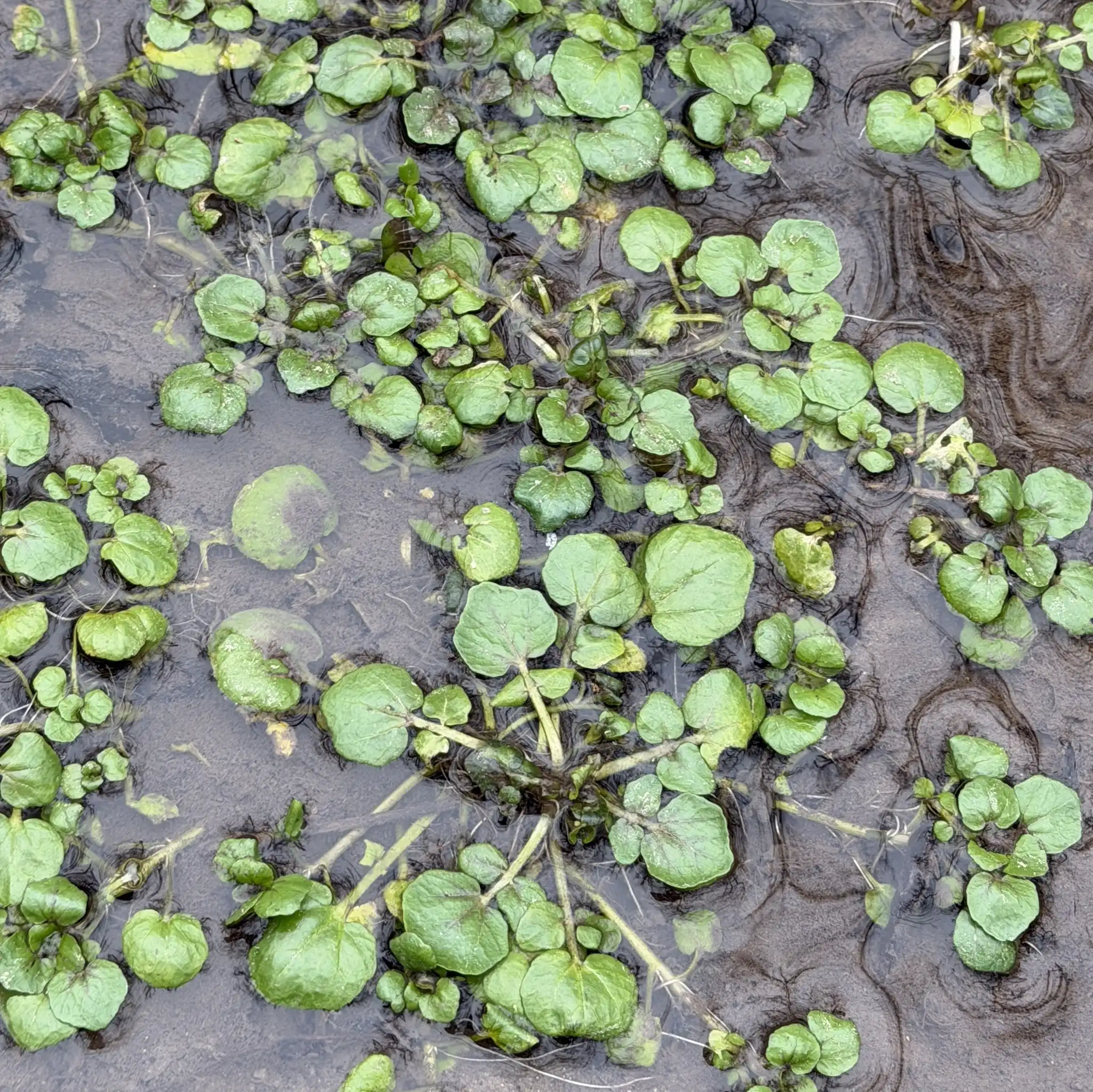
Nasturtium officinale, commonly known as watercress, is a fast-growing, semi-aquatic perennial featuring hollow, succulent stems that float on water or trail over wet mud. The alternate, pinnately compound leaves are glossy dark green, turning purplish in cold weather, and bear small, four-petaled white flowers in terminal racemes during spring and summer.
This species is highly valued as a culinary herb for its peppery foliage, which thrives exclusively in constantly saturated soils or shallow, slow-moving water. Its creeping stems root readily at the nodes, allowing the plant to rapidly form dense, sprawling mats across wet surfaces.
Uses & Benefits:
Essentials
At a Glance
Plant Type
Aquatic
Height
31"
Width
60"
Light
Full Sun, Partial Sun
Zones
4, 5, 6, 7, 8, 9, 10
Water
Wet
Humidity
High
Lifespan
Perennial
Native To
Europe, Temperate Asia
Toxicity
Non-toxic
Bloom period
Spring – Summer
In flower about 6 months of the year
Planting
How to Grow
- Select a site with full sun to partial shade and access to continuous, clean water or constantly saturated soil.
- Plant container-grown specimens directly into waterlogged mud or submerge the pot in a shallow water feature up to two inches deep.
- Maintain a steady flow of clean water to prevent stagnation, which can encourage harmful bacterial growth.
- Harvest the leafy tips regularly to stimulate fresh, bushy growth and prevent the stems from becoming woody.
Pro Tip
Grow watercress in a dedicated container or lined water feature with slow-moving, clean water rather than standard garden beds, as any period of dry soil causes immediate crop failure.
Keep It Thriving
Care Guide
Do
- Keep the growing medium completely saturated at all times.
- Use clean, potable water sources to eliminate the risk of waterborne parasites.
- Pinch back growing tips to encourage lateral branching.
- Provide light shade in hot summer climates to prevent the foliage from scorching.
Don't
- Do not plant in standard, well-drained garden soil.
- Do not allow the roots or stems to dry out even briefly.
- Do not harvest from wild, untested waterways where livestock runoff may introduce parasites.
- Do not apply heavy chemical fertilizers directly to water features containing aquatic life.
Seasonal Care Calendar
| Task | Jan | Feb | Mar | Apr | May | Jun | Jul | Aug | Sep | Oct | Nov | Dec |
|---|---|---|---|---|---|---|---|---|---|---|---|---|
| Harvest | ||||||||||||
| Pest Check | ||||||||||||
| Plant | ||||||||||||
| Winter Prep |
Watch Out For
Pests & Diseases
Common Pests
Common Diseases
In the Garden
Landscape Uses & Companions
Landscape Uses
Companion Plants
Multiply
Propagation Methods
Good to Know
Common Questions
Watercress questions
What zones can Watercress grow in?
Watercress is hardy in USDA Zones 4–10. Inside that range it survives winter in the ground; outside it, grow it as an annual or a container plant you protect.
When does Watercress bloom?
Watercress typically blooms in spring through summer. Exact timing shifts a week or two with your zone — Sow's bloom calendar maps it to your garden.
Does Watercress need full sun?
Watercress does best in full sun to part shade. In hot climates, afternoon shade keeps blooms fresher longer.
Keep exploring
Explore the genus
Grow Watercress with confidence
See it in a design of your actual yard, get zone-matched care reminders, and track it season by season in your garden journal.