The Story
Plant Bio
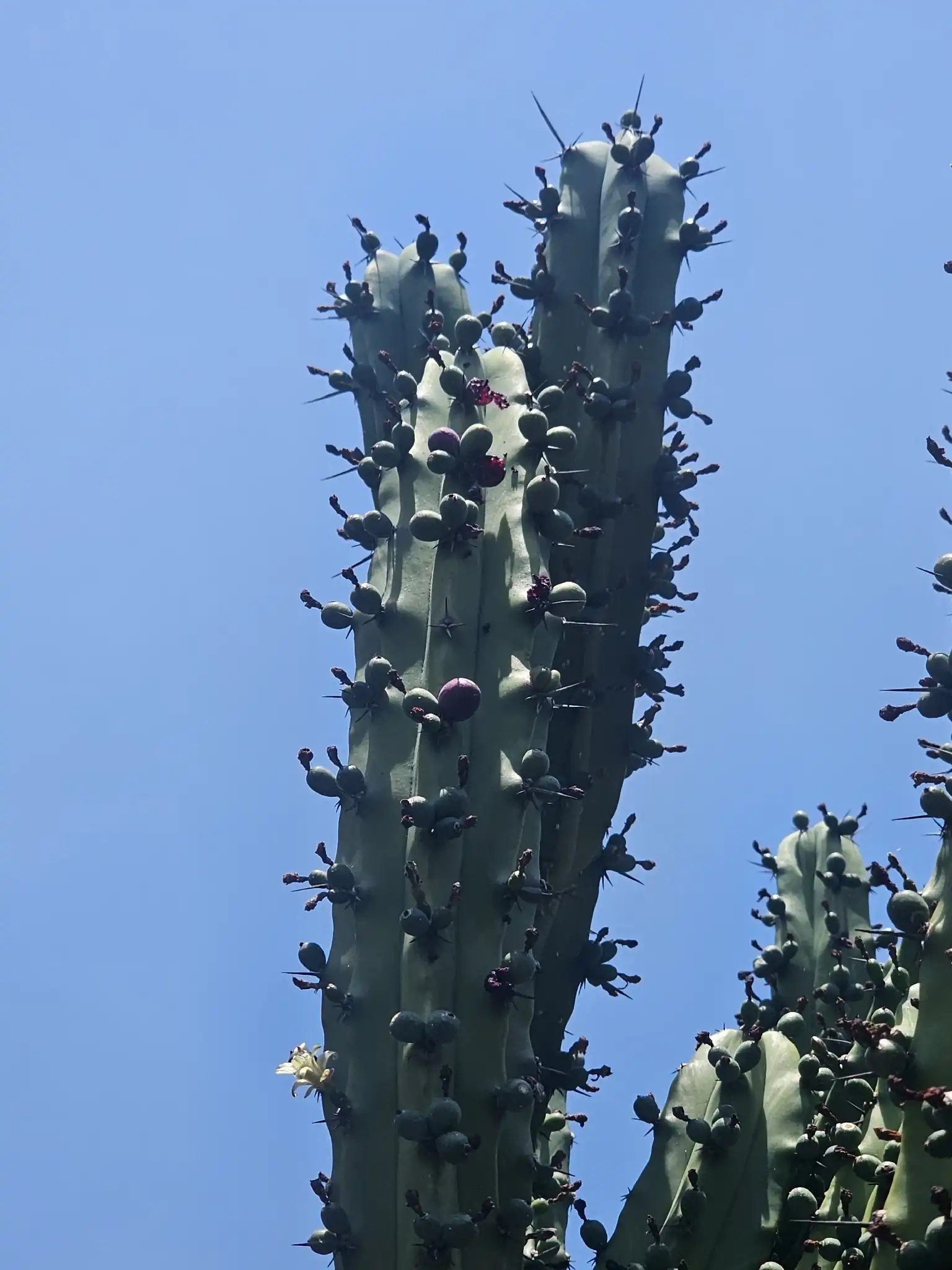
Myrtillocactus geometrizans is a fast-growing, arborescent cactus native to the arid regions of central and northern Mexico. Over time, it develops a highly branched, candelabra-like silhouette supported by a short, woody trunk.
The species is distinguished by its powdery, glaucous blue-green stems that feature five to eight prominent ribs. Small, creamy-white flowers emerge from the areoles in spring, followed by edible, dark purple, spherical berries known as garambullos.
Uses & Benefits:
Essentials
At a Glance
Plant Type
Cactus Succulent
Height
196"
Width
118"
Light
Full Sun
Zones
9, 10
Water
Low
Humidity
Low
Lifespan
Long-lived
Native To
Mexico
Toxicity
Non-toxic (spines present)
Bloom period
Spring – Summer
In flower about 6 months of the year
Planting
How to Grow
- Select a planting site or container with exceptional drainage, using an ultra-gritty, mineral-rich cactus potting mix.
- Position the plant where it receives at least six hours of direct sunlight daily to maintain its intense blue coloration.
- Water deeply only when the substrate has dried out completely, and avoid splashing water onto the stems.
- Protect the cactus from frost by keeping it entirely dry if temperatures drop near freezing, or move container specimens indoors.
Pro Tip
Withhold water entirely during the winter dormancy period; moisture combined with cold temperatures rapidly triggers unrecoverable root and stem rot.
Keep It Thriving
Care Guide
Do
- Use highly porous, mineral-heavy soil mixes containing coarse sand, pumice, or perlite.
- Ensure containers have large, unobstructed drainage holes at the bottom.
- Provide maximum direct sunlight to encourage dense growth and vibrant blue skin color.
- Allow the soil to dry out completely to the bottom of the pot between waterings.
Don't
- Never water the plant during the cold winter months when it is dormant.
- Do not use standard organic potting soil, which retains moisture and suffocates the roots.
- Avoid planting in areas with high humidity or poor air circulation.
- Do not prune into old, woody, leafless stem bases unless removing diseased or rotting sections.
Seasonal Care Calendar
| Task | Jan | Feb | Mar | Apr | May | Jun | Jul | Aug | Sep | Oct | Nov | Dec |
|---|---|---|---|---|---|---|---|---|---|---|---|---|
| Fertilize | ||||||||||||
| Pest Check | ||||||||||||
| Propagate | ||||||||||||
| Winter Prep |
Watch Out For
Pests & Diseases
Common Pests
Common Diseases
In the Garden
Landscape Uses & Companions
Landscape Uses
Multiply
Propagation Methods
Good to Know
Common Questions
Blue Candle questions
What zones can Blue Candle grow in?
Blue Candle is hardy in USDA Zones 9–10. Inside that range it survives winter in the ground; outside it, grow it as an annual or a container plant you protect.
When does Blue Candle bloom?
Blue Candle typically blooms in spring through summer. Exact timing shifts a week or two with your zone — Sow's bloom calendar maps it to your garden.
Does Blue Candle need full sun?
Blue Candle does best in full sun (6+ hours).
Is Blue Candle drought tolerant?
Yes — once established (usually after the first full season), Blue Candle handles dry spells with minimal watering. Water deeply its first year to build the root system that makes that possible.
Keep exploring
Explore the genus
Hardy in your zone?
Grow Blue Candle with confidence
See it in a design of your actual yard, get zone-matched care reminders, and track it season by season in your garden journal.