The Story
Plant Bio
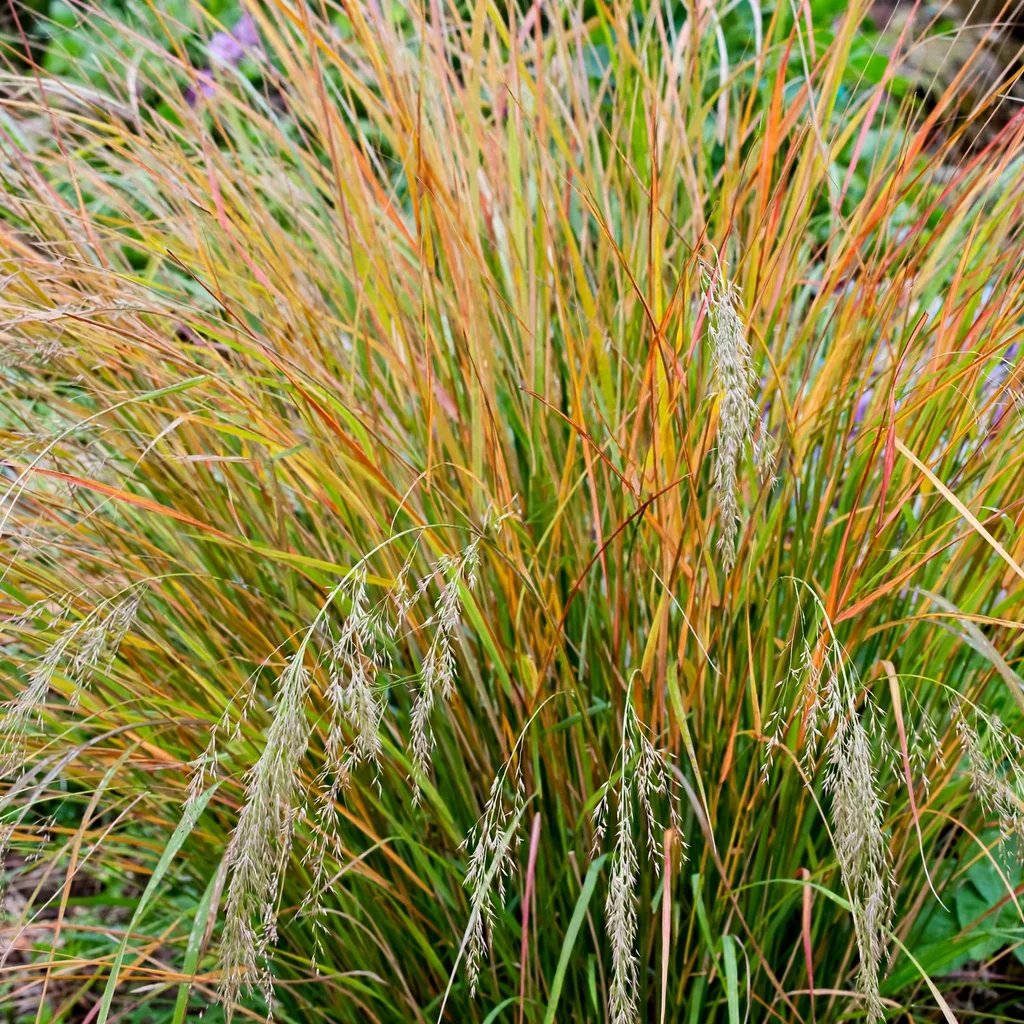
Anemanthele lessoniana, commonly known as pheasant's tail grass, is an evergreen perennial grass native to New Zealand that forms graceful, weeping mounds. The arching foliage begins bright green with coppery streaks before transitioning to intense shades of orange, red, and gold in full sun.
This species is distinguished by its loose, airy panicles of purplish-green flowers that emerge in summer and mature into shimmering, feathery seed heads. The dramatic color shift of the foliage intensifies with seasonal temperature drops and exposure to direct sunlight.
Uses & Benefits:
Essentials
At a Glance
Plant Type
Grass
Height
36"
Width
36"
Light
Full Sun, Partial Sun
Zones
8, 9, 10
Water
Low to Moderate
Humidity
Low to Moderate
Lifespan
Perennial
Native To
New Zealand
Toxicity
Non-toxic
Bloom period
Summer – Fall
In flower about 6 months of the year
Planting
How to Grow
- Select a planting site in full sun to partial shade with exceptionally well-drained soil.
- Dig a hole twice the width of the root ball and set the plant at the same depth as its nursery container.
- Water moderately during the first growing season to establish a deep, resilient root system.
- Comb out dead foliage annually in early spring rather than cutting the plant back to the ground.
Pro Tip
Never shear this evergreen grass flat to the ground in late winter; hard pruning into old wood frequently kills the sensitive crown. Instead, gently comb through the clump with gloved fingers in spring to remove dead, straw-like foliage.
Keep It Thriving
Care Guide
Do
- Plant in full sun to maximize the vibrant orange and coppery foliage colors.
- Ensure the soil drains rapidly, especially during wet winter months.
- Wear gloves when handling the foliage to avoid minor cuts from the slightly sharp leaf edges.
Don't
- Do not cut the plant back hard to the ground, as this can kill the evergreen crown.
- Do not over-fertilize, which causes weak, floppy, dull green growth.
- Do not plant in heavy, poorly drained clay or waterlogged areas.
Seasonal Care Calendar
| Task | Jan | Feb | Mar | Apr | May | Jun | Jul | Aug | Sep | Oct | Nov | Dec |
|---|---|---|---|---|---|---|---|---|---|---|---|---|
| Divide | ||||||||||||
| Fertilize | ||||||||||||
| Pest Check | ||||||||||||
| Spring Cleanup |
Watch Out For
Pests & Diseases
Common Pests
Common Diseases
In the Garden
Landscape Uses & Companions
Landscape Uses
Companion Plants
Multiply
Propagation Methods
Good to Know
Common Questions
Pheasant's Tail Grass questions
What zones can Pheasant's Tail Grass grow in?
Pheasant's Tail Grass is hardy in USDA Zones 8–10. Inside that range it survives winter in the ground; outside it, grow it as an annual or a container plant you protect.
When does Pheasant's Tail Grass bloom?
Pheasant's Tail Grass typically blooms in summer through fall. Exact timing shifts a week or two with your zone — Sow's bloom calendar maps it to your garden.
Does Pheasant's Tail Grass need full sun?
Pheasant's Tail Grass does best in full sun to part shade. In hot climates, afternoon shade keeps blooms fresher longer.
Is Pheasant's Tail Grass drought tolerant?
Yes — once established (usually after the first full season), Pheasant's Tail Grass handles dry spells with minimal watering. Water deeply its first year to build the root system that makes that possible.
More Stipa to compare
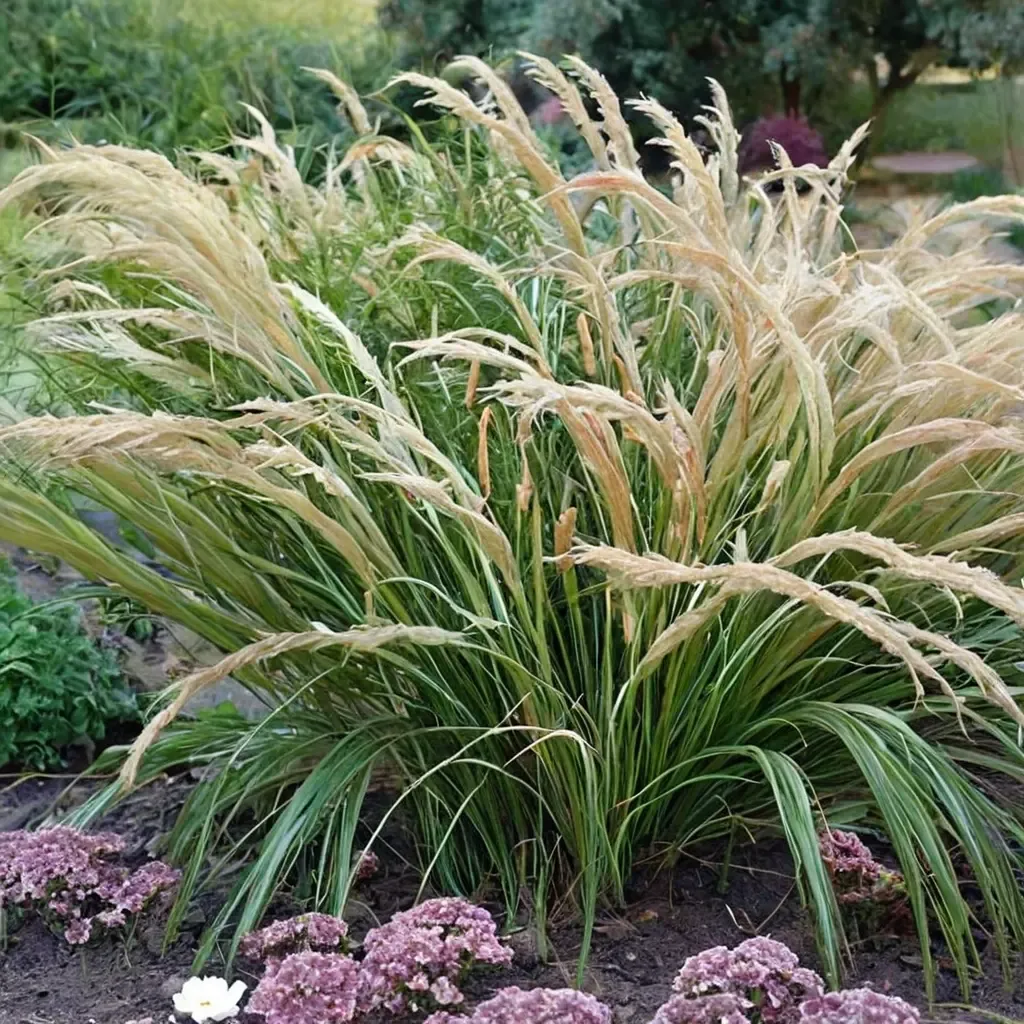
Silver Spear Grass
Stipa calamagrostis
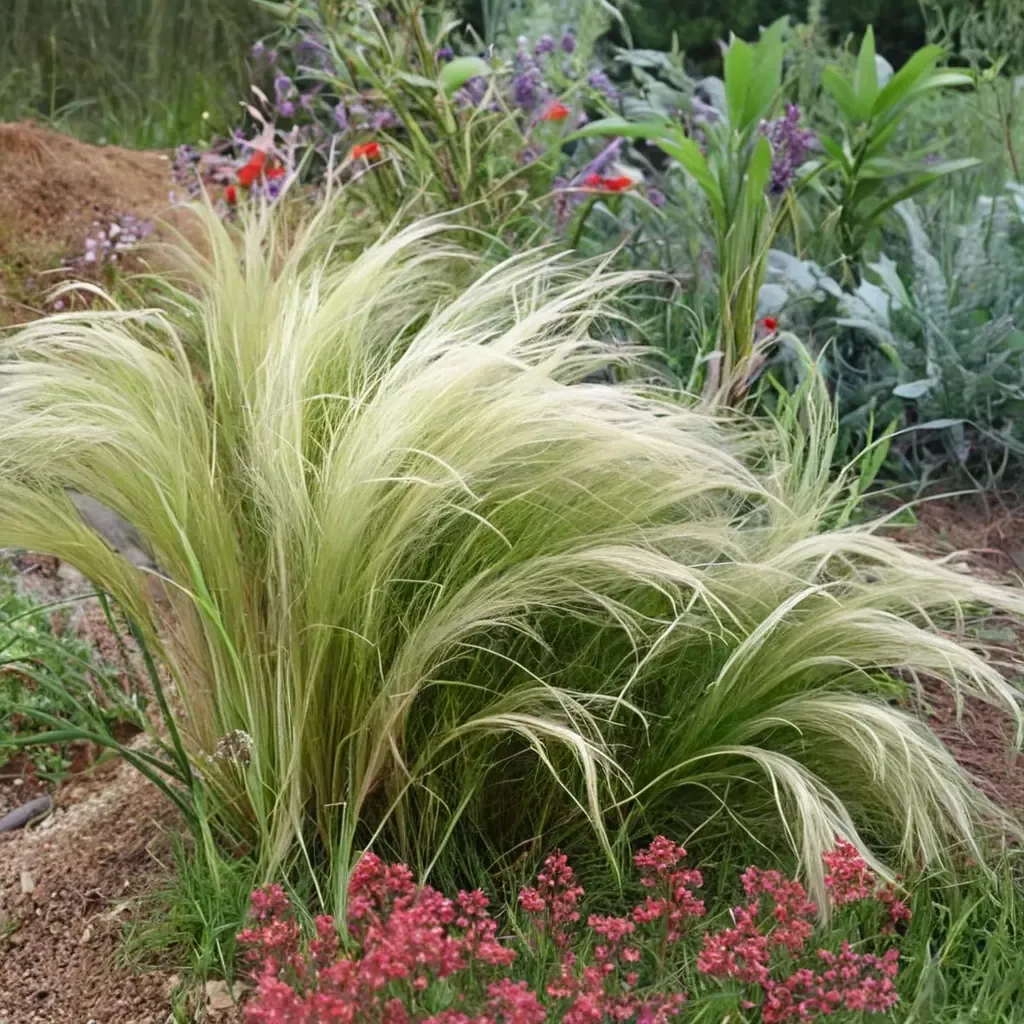
Mexican Feather Grass
Stipa tenuissima
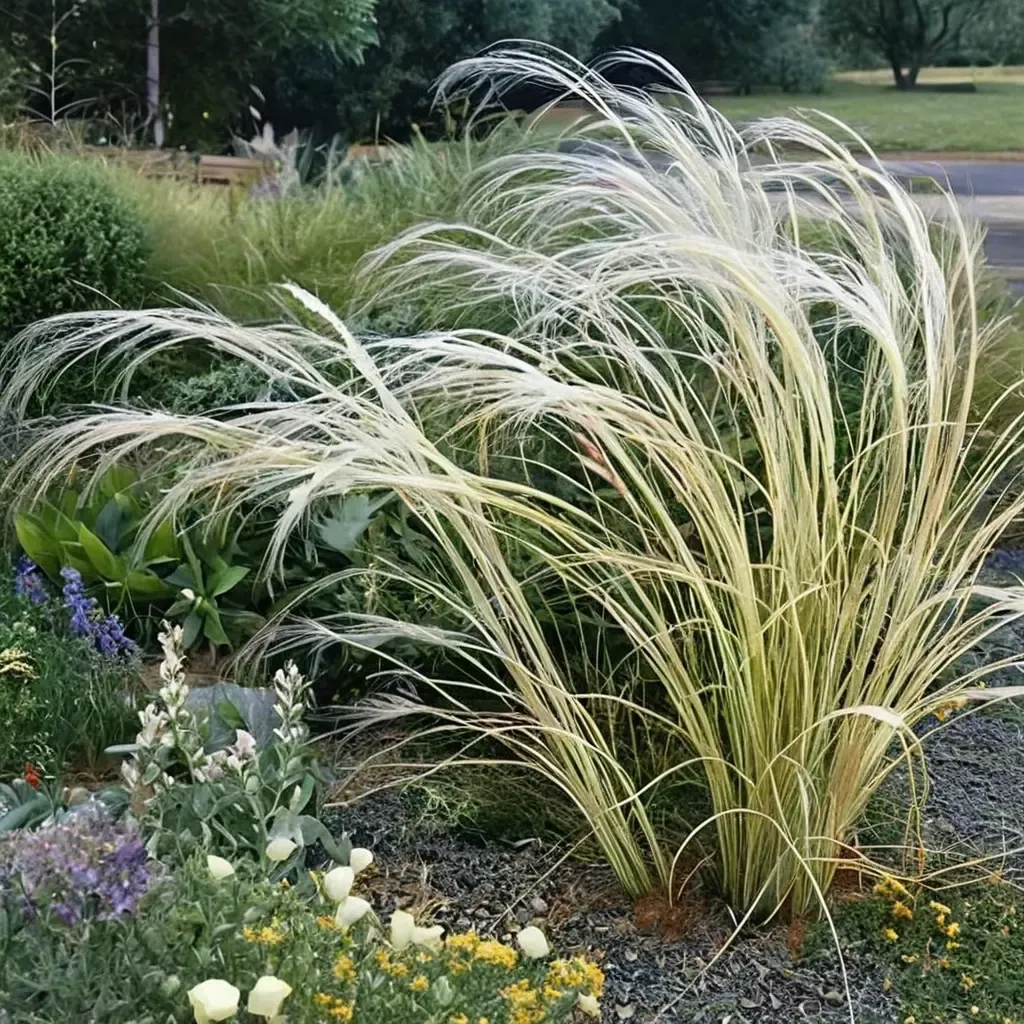
Silver Feather Grass
Stipa barbata
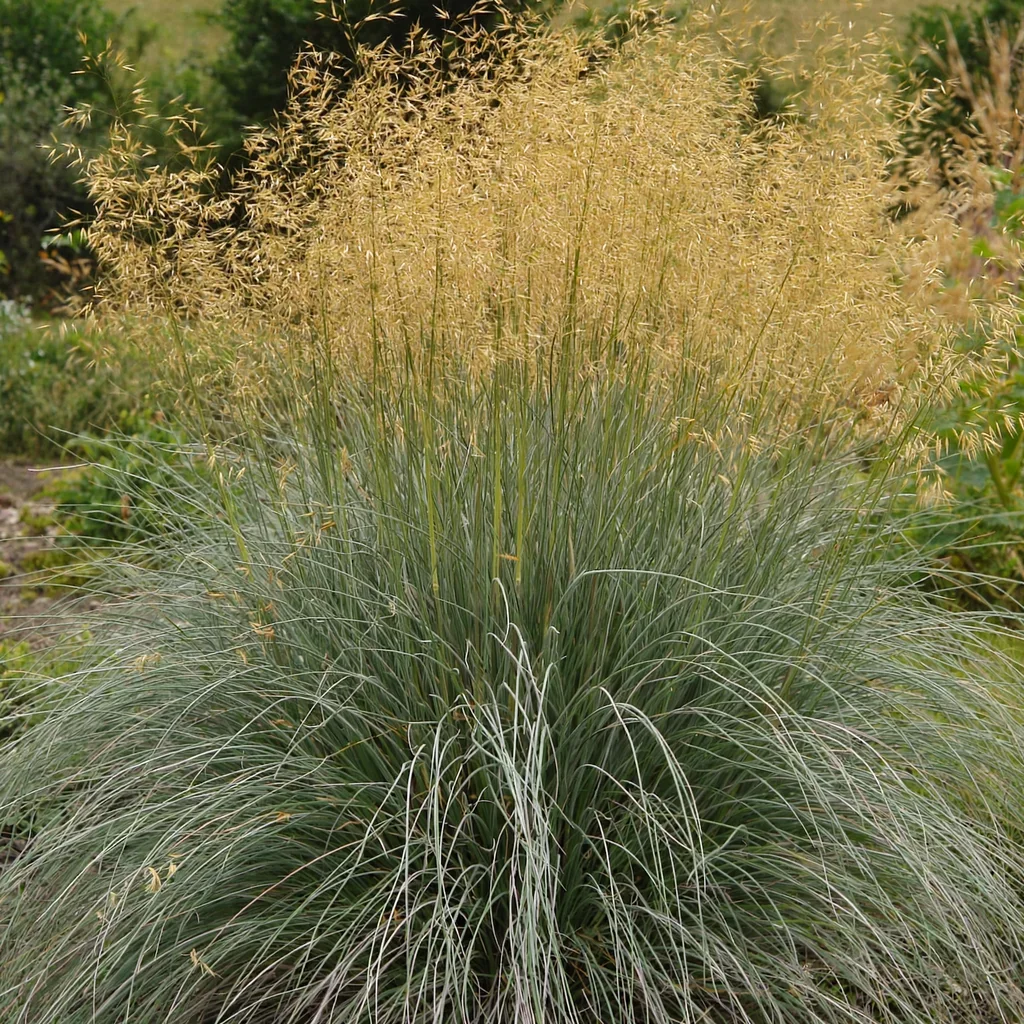
Purple Needlegrass
Stipa pulchra
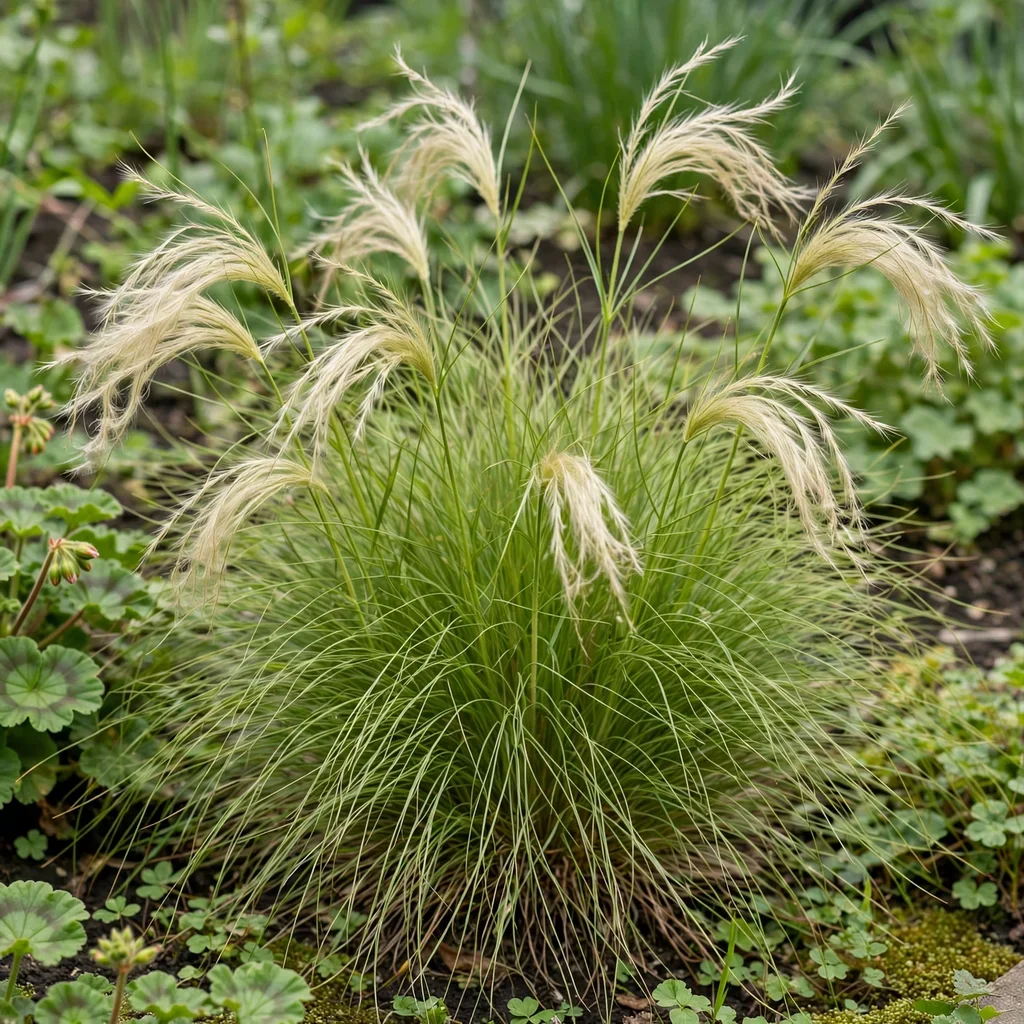
Ponytails Mexican Feather Grass
Stipa tenuissima 'Ponytails'
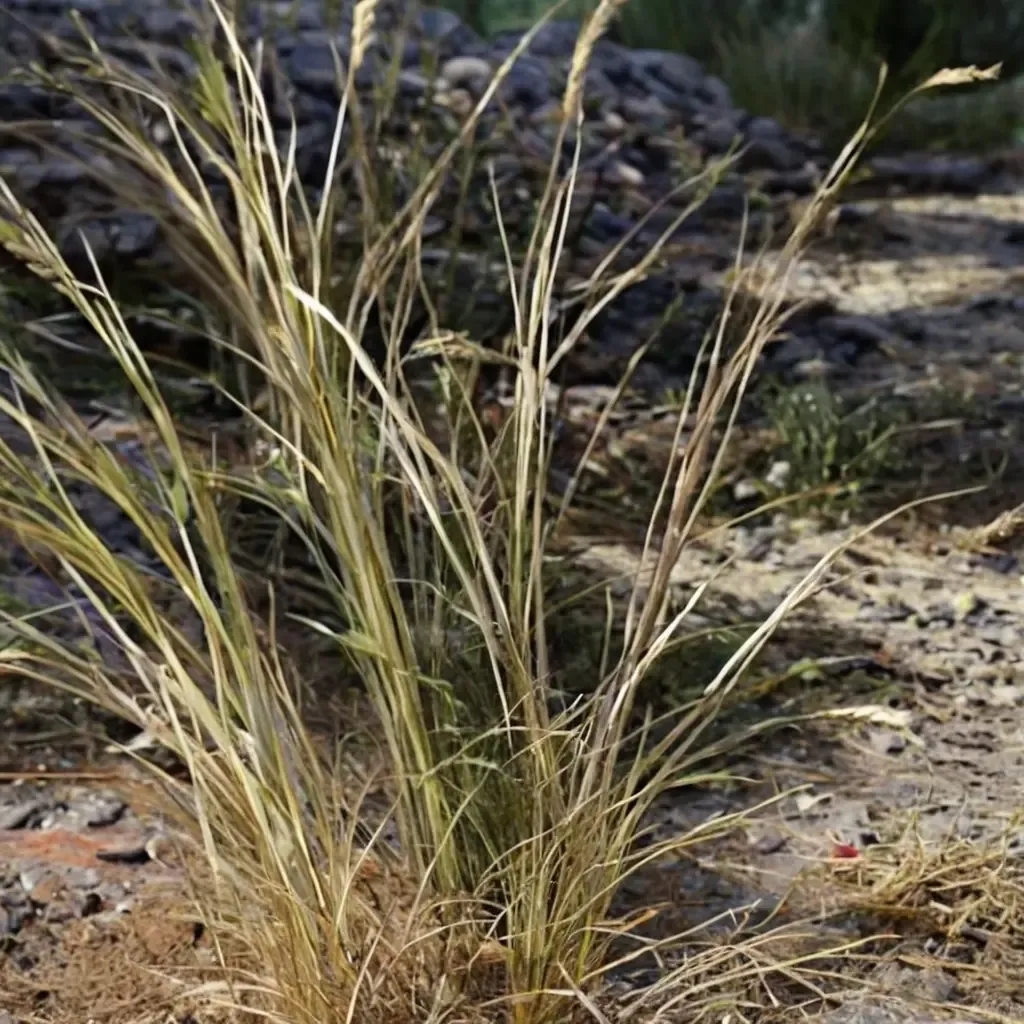
Nodding Needlegrass
Stipa cernua
Keep exploring
Explore the genus
Hardy in your zone?
Grow Pheasant's Tail Grass with confidence
See it in a design of your actual yard, get zone-matched care reminders, and track it season by season in your garden journal.