The Story
Plant Bio
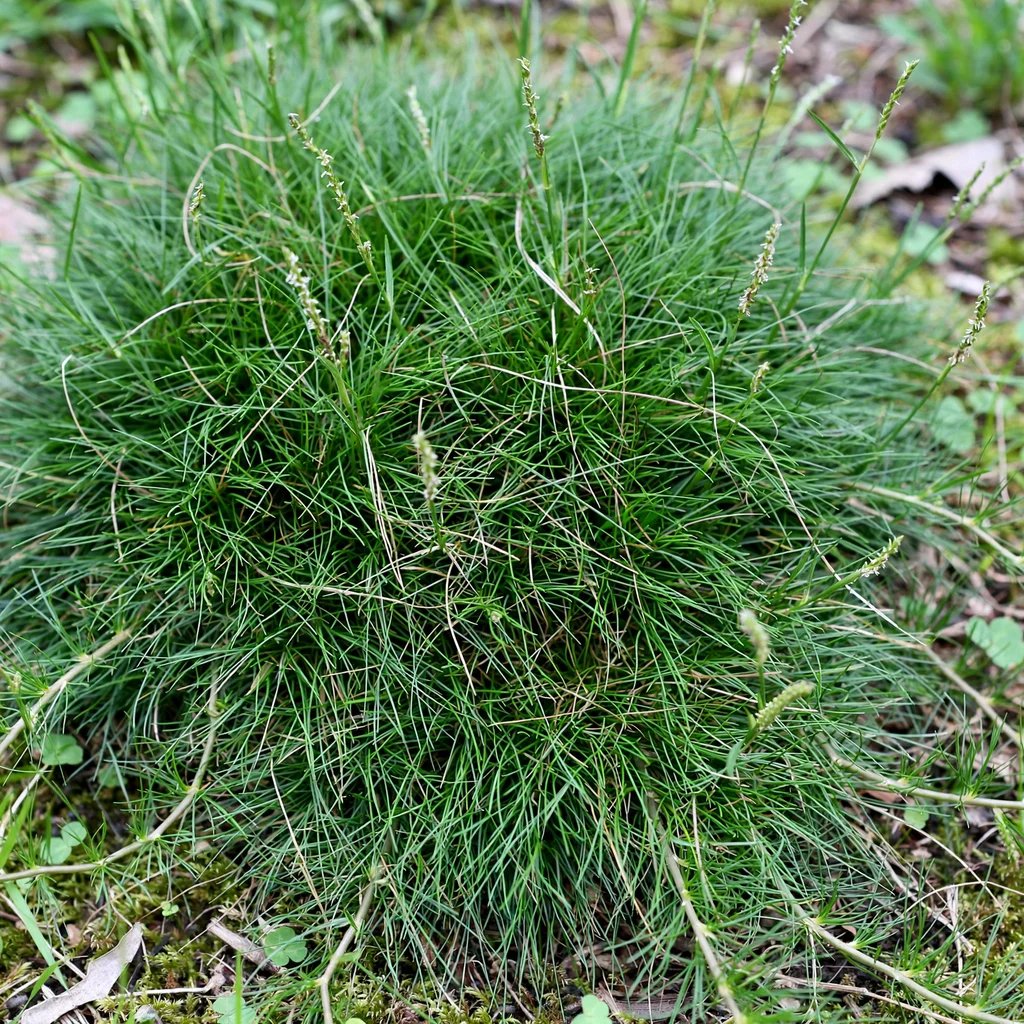
Zoysia tenuifolia is a low-growing, warm-season perennial grass native to eastern Asia that forms highly textured, undulating mounds of dense green turf. The extremely fine, needle-like foliage spreads slowly via creeping stolons and shallow rhizomes, creating a distinctive puffy, lumpy carpet.
This species is distinguished by its dramatic, self-limiting growth habit that requires no regular mowing to maintain its sculptural, rolling contours. It develops a thick, heavy thatch layer that remains vibrant green through hot, humid summers but turns completely straw-brown during cold winter dormancy.
Uses & Benefits:
Essentials
At a Glance
Plant Type
Grass
Height
6"
Width
60"
Light
Full Sun, Partial Sun
Zones
6, 7, 8, 9, 10
Water
Moderate
Humidity
High
Lifespan
Perennial
Native To
Eastern Asia
Toxicity
Non-toxic
Bloom period
Summer – Fall
In flower about 6 months of the year
Planting
How to Grow
- Select a planting site in full sun to partial shade with exceptionally well-drained loamy or sandy soil.
- Space plugs or container divisions 6 to 12 inches apart to allow the creeping stolons room to spread and knit together.
- Water deeply and infrequently during the first growing season to encourage deep root establishment while avoiding waterlogged conditions.
- Apply a light, balanced slow-release fertilizer once in mid-spring, avoiding heavy nitrogen applications that cause excessive thatch buildup.
Pro Tip
Treat this plant strictly as an ornamental groundcover or stepping-stone filler rather than a standard turfgrass; mowing it too low or too frequently scalps the crowns into bare, woody stems that take months or years to recover.
Keep It Thriving
Care Guide
Do
- Allow the grass to grow un-mown to showcase its natural, undulating contours.
- Ensure excellent soil drainage, as the roots are highly intolerant of standing water.
- Water deeply during prolonged dry spells once the plant is fully established.
Don't
- Do not scalp or mow the grass short, as cutting into the old woody stems causes severe, long-lasting damage.
- Do not apply high-nitrogen fertilizers in early spring or late fall, which triggers disease susceptibility.
- Do not plant in heavy, wet clay soils that retain moisture.
Seasonal Care Calendar
| Task | Jan | Feb | Mar | Apr | May | Jun | Jul | Aug | Sep | Oct | Nov | Dec |
|---|---|---|---|---|---|---|---|---|---|---|---|---|
| Fertilize | ||||||||||||
| Pest Check | ||||||||||||
| Prune | ||||||||||||
| Winter Prep |
Watch Out For
Pests & Diseases
Common Pests
Common Diseases
In the Garden
Landscape Uses & Companions
Landscape Uses
Companion Plants
Multiply
Propagation Methods
Good to Know
Common Questions
Korean Velvet Grass questions
What zones can Korean Velvet Grass grow in?
Korean Velvet Grass is hardy in USDA Zones 6–10. Inside that range it survives winter in the ground; outside it, grow it as an annual or a container plant you protect.
When does Korean Velvet Grass bloom?
Korean Velvet Grass typically blooms in summer through fall. Exact timing shifts a week or two with your zone — Sow's bloom calendar maps it to your garden.
Does Korean Velvet Grass need full sun?
Korean Velvet Grass does best in full sun to part shade. In hot climates, afternoon shade keeps blooms fresher longer.
Is Korean Velvet Grass drought tolerant?
Yes — once established (usually after the first full season), Korean Velvet Grass handles dry spells with minimal watering. Water deeply its first year to build the root system that makes that possible.
More Zoysia to compare
Keep exploring
Explore the genus
Hardy in your zone?
Grow Korean Velvet Grass with confidence
See it in a design of your actual yard, get zone-matched care reminders, and track it season by season in your garden journal.