The Story
Plant Bio
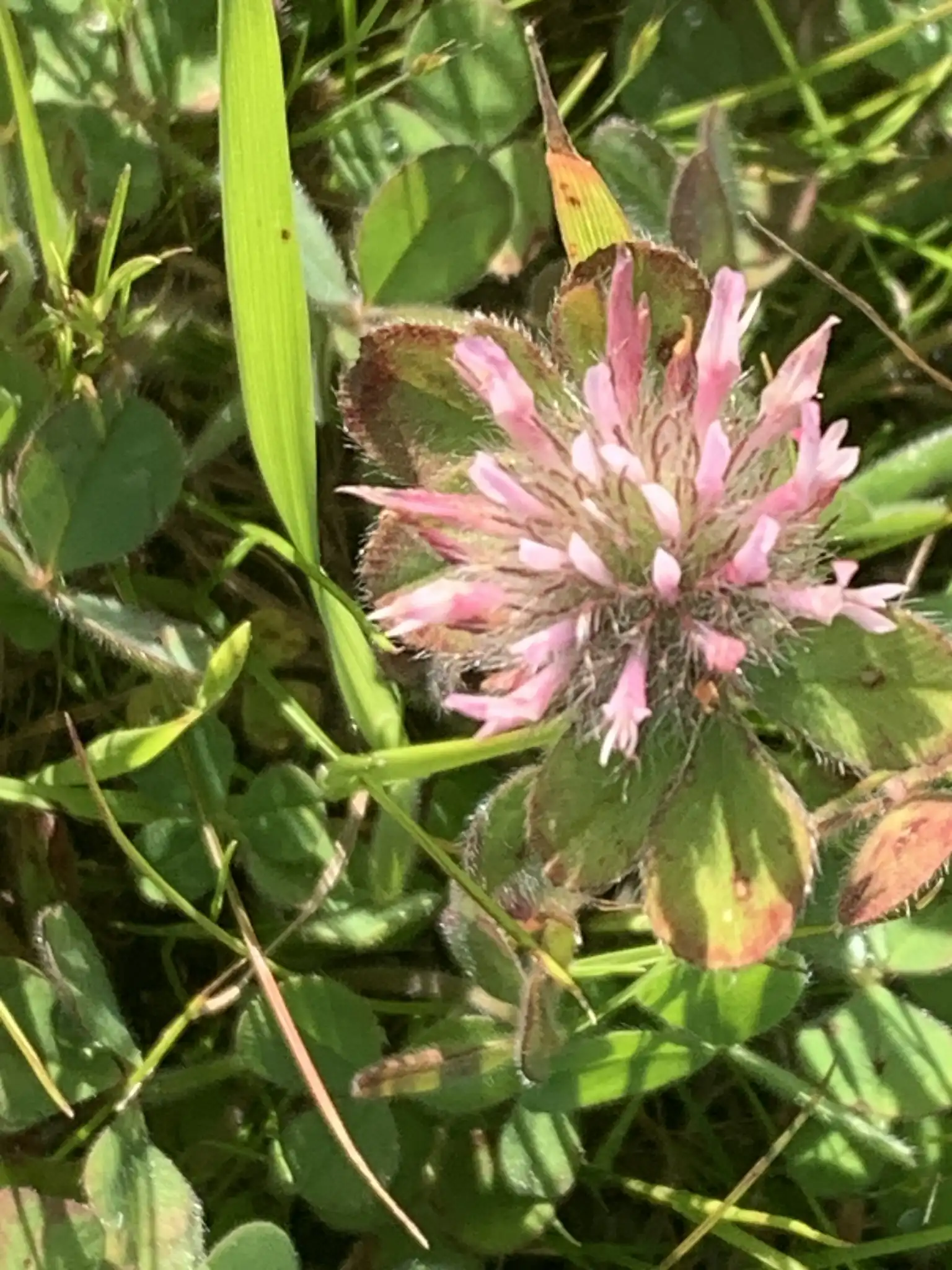
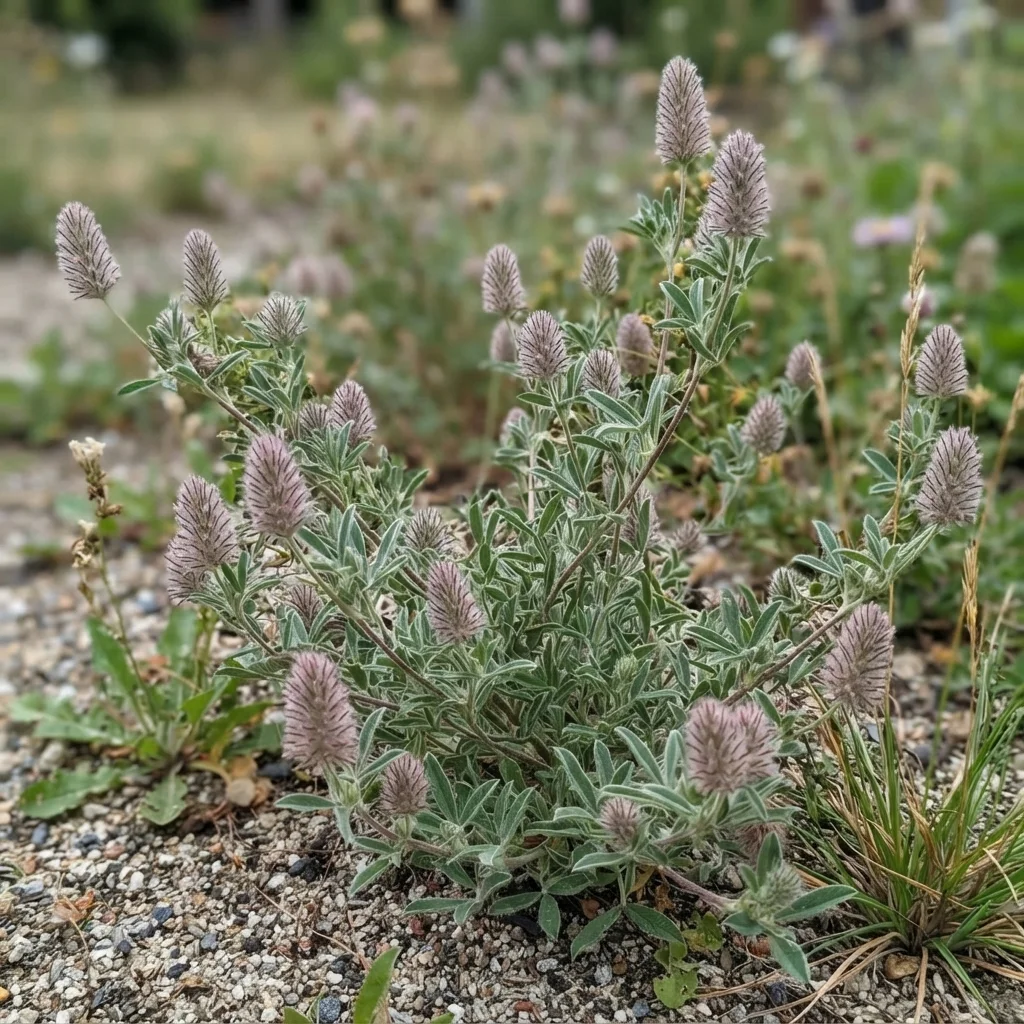
Trifolium hirtum, commonly known as rose clover, is a winter annual herb native to Eurasia and North Africa that forms branched, densely hairy stems up to sixteen inches tall. In spring, it produces spherical, deep pink to purplish-red flower heads tightly enclosed by enlarged, prominently veined bracts.
The pale green, trifoliate leaves feature distinct pale crescents bordered by brownish-red lines and are covered in fine, appressed hairs. This species is highly valued for its ability to fix nitrogen in low-fertility soils and persist through dry summers via a robust, dormant seed bank.
Uses & Benefits:
Essentials
At a Glance
Plant Type
Annual
Height
16"
Width
12"
Light
Full Sun
Zones
6, 7, 8, 9, 10
Water
Low
Humidity
Low
Lifespan
Annual
Native To
Eurasia, North Africa
Toxicity
Non-toxic
Bloom period
Spring – Early summer
In flower about 4 months of the year
Planting
How to Grow
- Sow seeds directly into well-drained soil in late summer or early autumn to align with winter-dominant rainfall.
- Press the seeds lightly into the soil surface, ensuring good seed-to-soil contact without burying them deeply.
- Water the area thoroughly to trigger germination, then rely on seasonal winter rains for establishment.
- Allow the plants to flower and set seed in early summer to establish a persistent soil seed bank for the following year.
Pro Tip
Avoid applying nitrogen-rich fertilizers, as this species hosts root-nodule bacteria that fix their own nitrogen, and excess soil nitrogen will only encourage competing weeds.
Keep It Thriving
Care Guide
Do
- Sow in a location that receives full sun throughout the day.
- Ensure the soil has excellent drainage to prevent root rot.
- Allow the plant to complete its annual cycle and drop seed for natural regeneration.
Don't
- Do not overwater or plant in low-lying areas prone to waterlogging.
- Do not apply heavy nitrogen fertilizers, which suppress natural nitrogen fixation.
- Do not mow or graze the plants before they have successfully set seed if long-term persistence is desired.
Seasonal Care Calendar
| Task | Jan | Feb | Mar | Apr | May | Jun | Jul | Aug | Sep | Oct | Nov | Dec |
|---|---|---|---|---|---|---|---|---|---|---|---|---|
| Harvest | ||||||||||||
| Pest Check | ||||||||||||
| Plant | ||||||||||||
| Spring Cleanup |
Watch Out For
Pests & Diseases
Common Pests
Common Diseases
In the Garden
Landscape Uses & Companions
Landscape Uses
Companion Plants
Multiply
Propagation Methods
Good to Know
Common Questions
Rose Clover questions
What zones can Rose Clover grow in?
Rose Clover is hardy in USDA Zones 6–10. Inside that range it survives winter in the ground; outside it, grow it as an annual or a container plant you protect.
When does Rose Clover bloom?
Rose Clover typically blooms in spring through early summer. Exact timing shifts a week or two with your zone — Sow's bloom calendar maps it to your garden.
Does Rose Clover need full sun?
Rose Clover does best in full sun (6+ hours).
Is Rose Clover drought tolerant?
Yes — once established (usually after the first full season), Rose Clover handles dry spells with minimal watering. Water deeply its first year to build the root system that makes that possible.
More Trifolium to compare
Keep exploring
Explore the genus
Hardy in your zone?
Grow Rose Clover with confidence
See it in a design of your actual yard, get zone-matched care reminders, and track it season by season in your garden journal.