The Story
Plant Bio
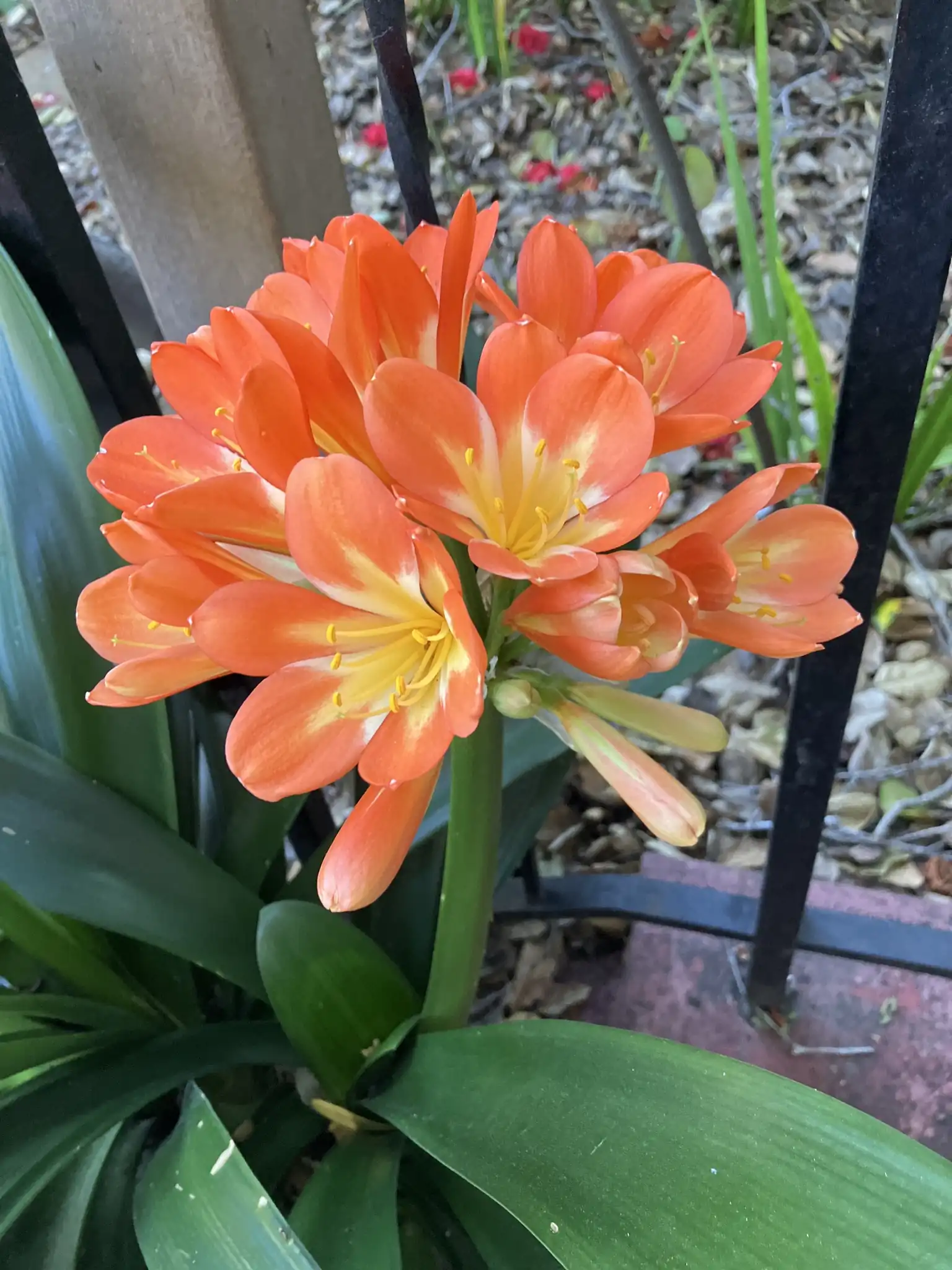
Clivia miniata is an evergreen, clump-forming perennial native to the subtropical forest understories of southern Africa, characterized by its thick, fleshy roots and broad, dark green, strap-shaped leaves arranged in a neat, two-ranked fan. In late winter and early spring, it produces stout, flattened flower stems topped with dense, rounded clusters of twelve to twenty funnel-shaped, orange-to-scarlet flowers with yellow throats.
This species is highly valued for its exceptional shade tolerance and its ability to thrive in dry, root-bound container environments where other flowering plants fail. The architectural foliage remains highly glossy and attractive year-round, while the bright winter blooms provide reliable color during the darkest months of the year.
Uses & Benefits:
Essentials
At a Glance
Plant Type
Perennial
Height
24"
Width
36"
Light
Partial Sun, Shade
Zones
9, 10
Water
Moderate
Humidity
Moderate to high
Lifespan
Long-lived perennial
Native To
South Africa, Eswatini
Toxicity
Toxic if ingested; sap can cause skin irritation
Bloom period
Winter – Spring
In flower about 6 months of the year
Planting
How to Grow
- Select a heavy, well-draining container only slightly larger than the root mass, using a coarse, organic, loamy potting mix to ensure rapid drainage.
- Position the plant in dappled shade or deep indirect light indoors, ensuring it is completely shielded from direct, hot midday sun which will scorch the foliage.
- Water thoroughly during the spring and summer active growing seasons, allowing the top inch of soil to dry out completely before watering again, and always apply water directly to the soil rather than into the central leaf funnel.
- Apply a balanced, water-soluble fertilizer monthly from spring through late summer, then cease feeding entirely during the autumn and winter resting phase.
Pro Tip
To trigger abundant flowering, keep the plant tightly rootbound in a snug container and provide a cool, dry rest period between fifty and fifty-five degrees Fahrenheit from mid-fall through winter, withholding fertilizer and watering only when the soil is dry to the touch.
Keep It Thriving
Care Guide
Do
- Keep the plant rootbound in its container to encourage more prolific flowering.
- Provide a cool, dry rest period in late fall and winter to initiate flower bud development.
- Water the soil directly to avoid trapping moisture in the central crown.
- Wipe the broad leaves occasionally with a damp cloth to remove dust and maintain their glossy appearance.
Don't
- Do not overpot into an oversized container, which holds excess moisture and inhibits blooming.
- Do not expose the foliage to direct midday sunlight, which causes permanent bleaching and leaf scorch.
- Do not overwater or allow the pot to sit in standing water, as the fleshy roots are highly susceptible to fatal rot.
- Do not prune into old, green stems; limit trimming to removing entirely dead outer leaves at the base.
Seasonal Care Calendar
| Task | Jan | Feb | Mar | Apr | May | Jun | Jul | Aug | Sep | Oct | Nov | Dec |
|---|---|---|---|---|---|---|---|---|---|---|---|---|
| Divide | ||||||||||||
| Fertilize | ||||||||||||
| Pest Check | ||||||||||||
| Winter Prep |
Watch Out For
Pests & Diseases
Common Pests
Common Diseases
In the Garden
Landscape Uses & Companions
Landscape Uses
Multiply
Propagation Methods
Good to Know
Common Questions
Bush Lily questions
What zones can Bush Lily grow in?
Bush Lily is hardy in USDA Zones 9–10. Inside that range it survives winter in the ground; outside it, grow it as an annual or a container plant you protect.
Is Bush Lily deer resistant?
Not reliably. Deer may browse Bush Lily, especially tender spring growth — plan on repellents or fencing where pressure is high.
When does Bush Lily bloom?
Bush Lily typically blooms in winter through spring. Exact timing shifts a week or two with your zone — Sow's bloom calendar maps it to your garden.
Does Bush Lily need full sun?
Bush Lily does best in part shade.
Is Bush Lily drought tolerant?
Yes — once established (usually after the first full season), Bush Lily handles dry spells with minimal watering. Water deeply its first year to build the root system that makes that possible.
More Clivia to compare
Keep exploring
Explore the genus
Hardy in your zone?
Grow Bush Lily with confidence
See it in a design of your actual yard, get zone-matched care reminders, and track it season by season in your garden journal.