The Story
Plant Bio
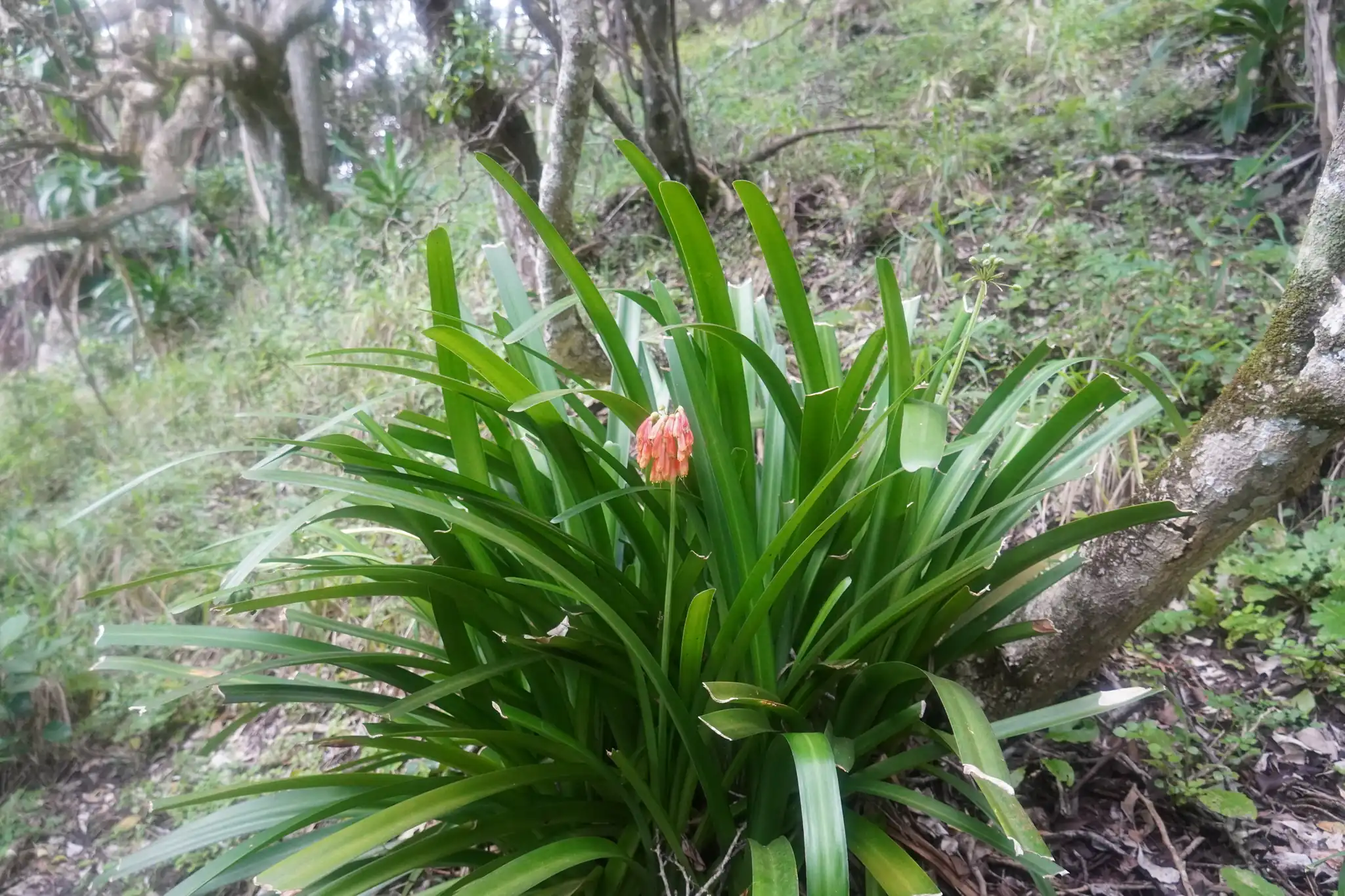
Clivia nobilis is an evergreen, slow-growing rhizomatous perennial native to the coastal forests and rocky riverbanks of South Africa. It forms tight, architectural clumps of thick, fleshy roots and strap-shaped, dull dark green foliage with rough, finely serrated margins.
Unlike the more common Clivia miniata, this species produces narrow, pendulous, tubular flowers in shades of orange or red with distinct pale green tips. The blooms are borne in dense, drooping umbels of twenty to sixty flowers from fall through spring.
Uses & Benefits:
Essentials
At a Glance
Plant Type
Perennial
Height
24"
Width
36"
Light
Partial Sun, Shade
Zones
9, 10
Water
Moderate
Humidity
Moderate to high
Lifespan
Long-lived perennial
Native To
South Africa
Toxicity
Toxic if ingested
Bloom period
Fall – Spring
In flower about 9 months of the year
Planting
How to Grow
- Select a planting site or container with bright, dappled shade, completely sheltered from direct midday sun which scorches the foliage.
- Plant in a highly porous, organic potting mix or rich, well-draining soil with a slightly acidic to neutral pH.
- Water thoroughly during the spring and summer growing seasons, allowing the top few inches of soil to dry out completely between waterings.
- Protect the plant from hard freezes, moving containers indoors to a bright, cool room if temperatures drop below twenty-eight degrees Fahrenheit.
Pro Tip
Never cut back healthy green leaves or prune into old bare wood; only remove spent flower stalks and dead foliage at the base after they have completely browned.
Keep It Thriving
Care Guide
Do
- Provide exceptional drainage to prevent the fleshy roots from rotting in waterlogged soil.
- Feed sparingly with a balanced liquid fertilizer diluted to half-strength during the active spring and summer growing seasons.
- Keep the plant slightly pot-bound in containers to encourage more reliable flowering.
Don't
- Do not water overhead or allow moisture to sit on the foliage, which encourages fungal leaf spot.
- Do not expose the plant to direct, harsh afternoon sun.
- Do not prune or cut into healthy green leaves.
Seasonal Care Calendar
| Task | Jan | Feb | Mar | Apr | May | Jun | Jul | Aug | Sep | Oct | Nov | Dec |
|---|---|---|---|---|---|---|---|---|---|---|---|---|
| Divide | ||||||||||||
| Fertilize | ||||||||||||
| Pest Check | ||||||||||||
| Winter Prep |
Watch Out For
Pests & Diseases
Common Pests
Common Diseases
In the Garden
Landscape Uses & Companions
Landscape Uses
Companion Plants
Multiply
Propagation Methods
Good to Know
Common Questions
Drooping Clivia questions
What zones can Drooping Clivia grow in?
Drooping Clivia is hardy in USDA Zones 9–10. Inside that range it survives winter in the ground; outside it, grow it as an annual or a container plant you protect.
Is Drooping Clivia deer resistant?
Not reliably. Deer may browse Drooping Clivia, especially tender spring growth — plan on repellents or fencing where pressure is high.
When does Drooping Clivia bloom?
Drooping Clivia typically blooms in fall through spring. Exact timing shifts a week or two with your zone — Sow's bloom calendar maps it to your garden.
Does Drooping Clivia need full sun?
Drooping Clivia does best in part shade.
Is Drooping Clivia drought tolerant?
Yes — once established (usually after the first full season), Drooping Clivia handles dry spells with minimal watering. Water deeply its first year to build the root system that makes that possible.
More Clivia to compare
Keep exploring
Explore the genus
Hardy in your zone?
Grow Drooping Clivia with confidence
See it in a design of your actual yard, get zone-matched care reminders, and track it season by season in your garden journal.