The Story
Plant Bio
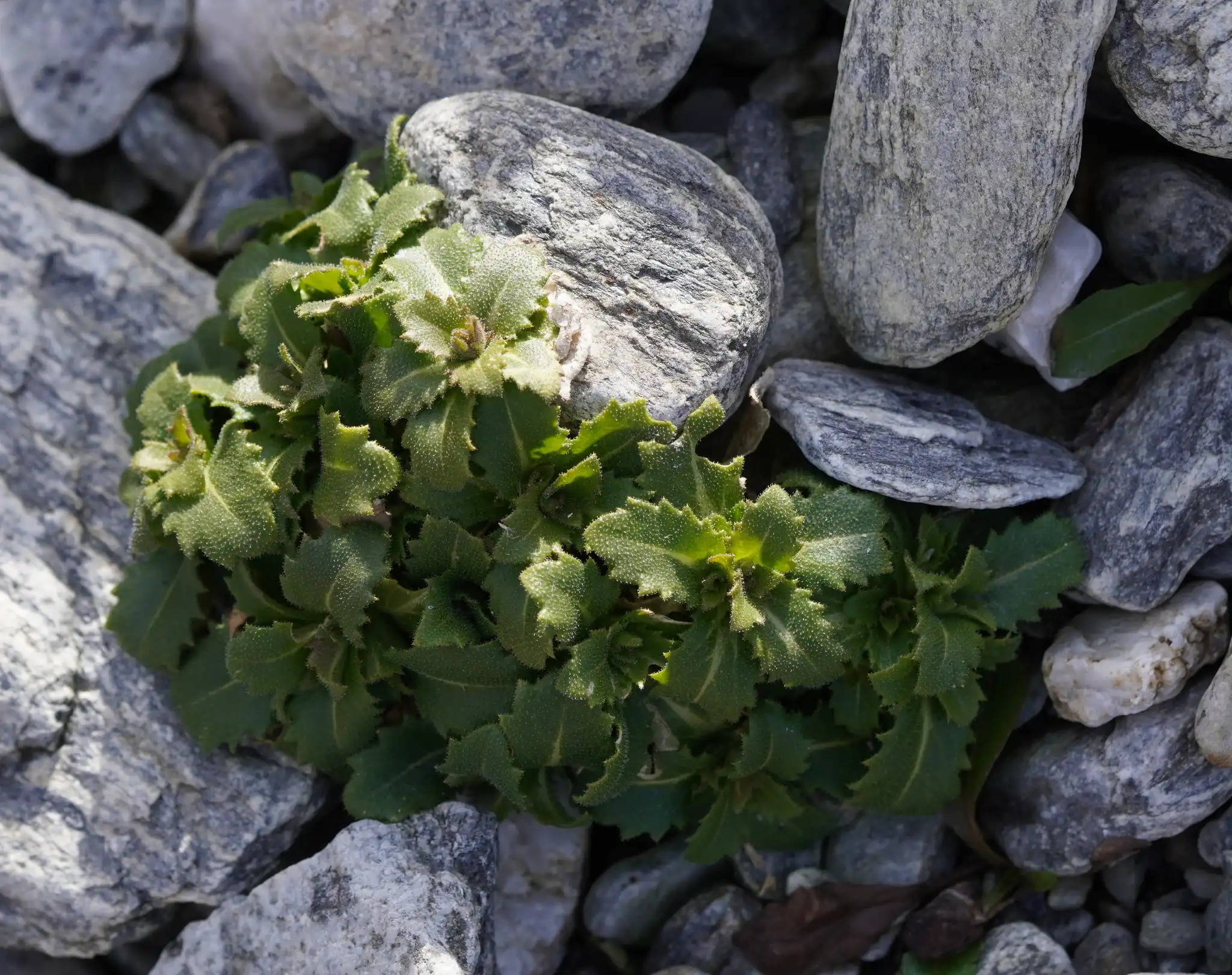
Arabis alpina is a low, mat-forming evergreen perennial subshrub native to cold, mountainous regions across North America, Europe, Asia, and Africa. It produces loose rosettes of gray-green, toothed foliage topped in spring by dense racemes of small, four-petaled white flowers.
The spreading stems root along gravelly surfaces to form a tight ground-covering mat suited for dry stone walls and rock gardens. Its early-season blooms provide an important nectar source for specialized native bees.
Uses & Benefits:
Essentials
At a Glance
Plant Type
Perennial
Height
10"
Width
24"
Light
Full Sun
Zones
4, 5, 6, 7, 8
Water
Low
Humidity
Low
Lifespan
Perennial
Native To
North America, Europe, Asia, Africa
Toxicity
Non-toxic
Bloom period
Spring – Late spring
In flower about 3 months of the year
Planting
How to Grow
- Select a planting site in full sun with gritty, gravelly, or calcareous soil that drains rapidly.
- Amend neutral or heavy soils with crushed limestone and coarse grit to ensure proper alkalinity and porosity.
- Set plants into the ground at the same depth as their nursery pots, firming gritty soil around the root crown.
- Water lightly to settle the soil, then allow the substrate to dry out between subsequent waterings.
Pro Tip
Plant in lean, sharply draining alkaline substrate and shear the foliage back hard immediately after flowering to maintain a compact habit and prevent legginess.
Keep It Thriving
Care Guide
Do
- Prune back hard after flowering finishes in late spring.
- Provide gritty, well-drained, lime-rich soil.
- Ensure excellent air circulation around the crown.
Don't
- Do not plant in heavy clay or waterlogged soil.
- Do not apply high-nitrogen organic fertilizers.
- Do not disturb established root crowns once settled.
Seasonal Care Calendar
| Task | Jan | Feb | Mar | Apr | May | Jun | Jul | Aug | Sep | Oct | Nov | Dec |
|---|---|---|---|---|---|---|---|---|---|---|---|---|
| Divide | ||||||||||||
| Pest Check | ||||||||||||
| Prune | ||||||||||||
| Spring Cleanup |
Watch Out For
Pests & Diseases
Common Pests
Common Diseases
In the Garden
Landscape Uses & Companions
Landscape Uses
Multiply
Propagation Methods
Good to Know
Common Questions
Alpine Rock Cress questions
What zones can Alpine Rock Cress grow in?
Alpine Rock Cress is hardy in USDA Zones 4–8. Inside that range it survives winter in the ground; outside it, grow it as an annual or a container plant you protect.
Is Alpine Rock Cress deer resistant?
Yes — Alpine Rock Cress is rated deer-resistant. Deer typically pass it over, though extreme hunger can override any plant's defenses.
When does Alpine Rock Cress bloom?
Alpine Rock Cress typically blooms in spring through late spring. Exact timing shifts a week or two with your zone — Sow's bloom calendar maps it to your garden.
Does Alpine Rock Cress need full sun?
Alpine Rock Cress does best in full sun (6+ hours).
Is Alpine Rock Cress drought tolerant?
Yes — once established (usually after the first full season), Alpine Rock Cress handles dry spells with minimal watering. Water deeply its first year to build the root system that makes that possible.
More Arabis to compare
Keep exploring
Explore the genus
Hardy in your zone?
Grow Alpine Rock Cress with confidence
See it in a design of your actual yard, get zone-matched care reminders, and track it season by season in your garden journal.