The Story
Plant Bio
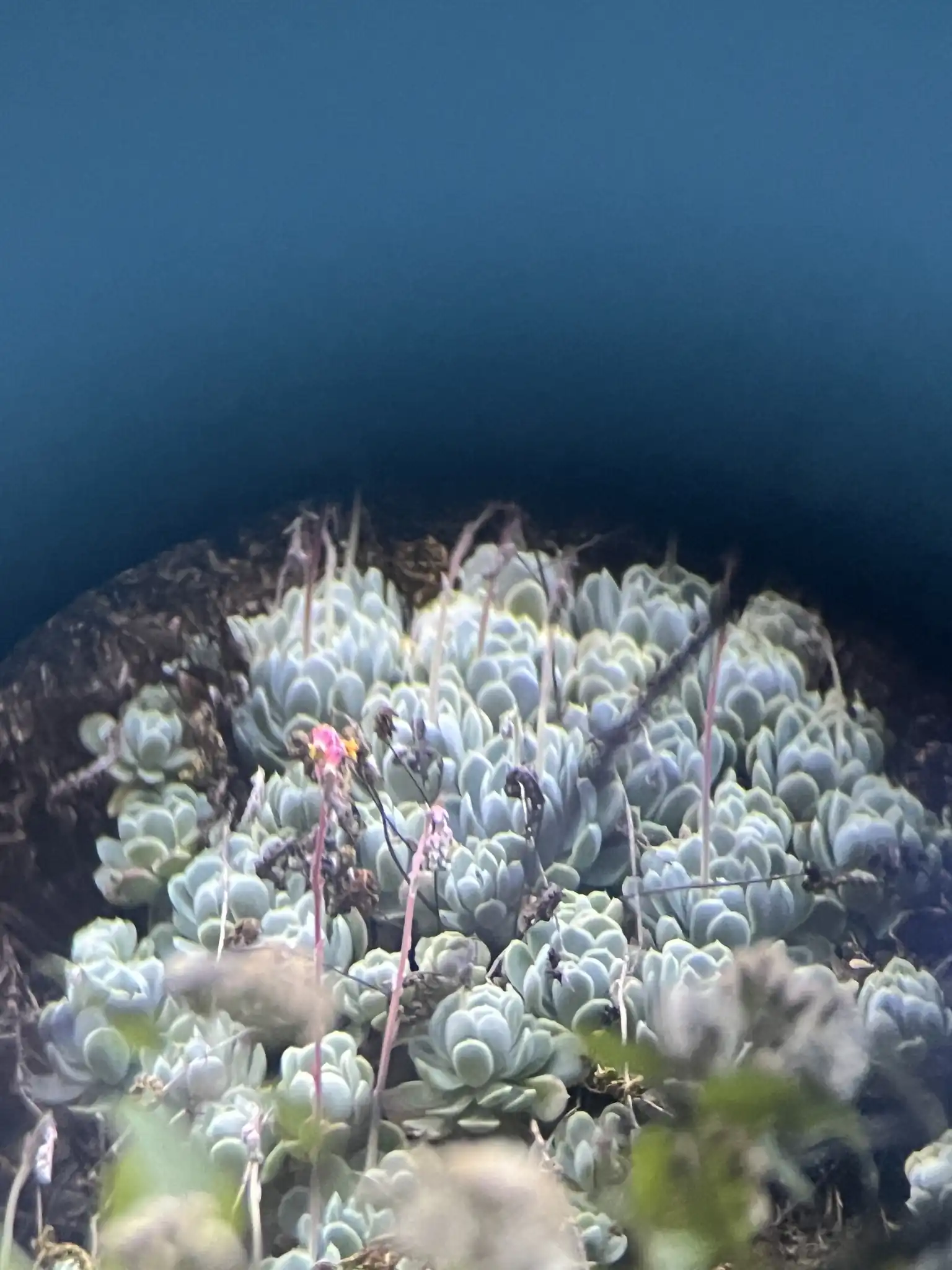
Echeveria elegans, Mexican snowball, is a clumping succulent from northeastern Mexico, forming tight rosettes of pale blue-green to silvery fleshy leaves up to two and a half inches long. Arching stems carry small pink and yellow tubular flowers in late winter and spring.
The pale silvery color comes from a waxy bloom on the leaves that rubs off permanently at a touch, so handle rosettes by the base rather than the leaves. It offsets more freely than most echeverias, so a single plant becomes a colony within a couple of seasons, and each offset pulls away already rooted.
Uses & Benefits:
Essentials
At a Glance
Plant Type
Cactus Succulent
Height
4"
Width
12"
Light
Full Sun, Partial Sun
Zones
9, 10
Water
Low
Humidity
Low
Lifespan
Perennial
Native To
Mexico
Toxicity
Non-toxic to humans and pets
Bloom period
Late spring – Early summer
In flower about 2 months of the year
Planting
How to Grow
- Tuck succulent cuttings into well-draining soil in spring.
- Mist soil lightly to encourage root growth, avoiding overwatering.
- Place in bright, indirect sunlight for 6–8 hours daily.
- Water sparingly during active growing season, every 2–3 weeks.
- Allow soil to dry completely between watering sessions.
- Transplant into larger pots as it outgrows current container after 1–2 years.
Pro Tip
Use cactus mix or add sand and perlite to improve drainage for optimal growth.
Keep It Thriving
Care Guide
Do
- Water only when soil is completely dry 💧
- Provide plenty of sunlight for vibrant foliage
- Use well-draining soil to prevent root rot
- Rotate plant regularly for even sun exposure
- Use gloves when handling to avoid skin irritation
Don't
- Avoid overwatering, which causes rot ❌
- Don’t place in low light areas
- Never use heavy, moisture-retentive soil
- Don’t forget to provide airflow around the plant
- Avoid fertilizing during winter dormancy
Seasonal Care Calendar
| Task | Jan | Feb | Mar | Apr | May | Jun | Jul | Aug | Sep | Oct | Nov | Dec |
|---|---|---|---|---|---|---|---|---|---|---|---|---|
| Fertilize | ||||||||||||
| Pest Check | ||||||||||||
| Propagate | ||||||||||||
| Winter Prep |
Watch Out For
Pests & Diseases
Common Pests
Common Diseases
In the Garden
Landscape Uses & Companions
Landscape Uses
Companion Plants
Multiply
Propagation Methods
Good to Know
Common Questions
Mexican Snowball questions
What zones can Mexican Snowball grow in?
Mexican Snowball is hardy in USDA Zones 9–10: in that range it survives winter in the ground. Colder than Zone 9, grow it in a container you can move to shelter for the winter, or as an annual.
Is Mexican Snowball deer resistant?
Yes — Mexican Snowball is rated deer-resistant. Deer typically pass it over, though extreme hunger can override any plant's defenses.
When does Mexican Snowball bloom?
Mexican Snowball typically blooms from late spring to early summer. Exact timing shifts a week or two with your zone — Sow's bloom calendar maps it to your garden.
Does Mexican Snowball need full sun?
Mexican Snowball does best in full sun to part shade. In hot climates, afternoon shade keeps blooms fresher longer.
Is Mexican Snowball drought tolerant?
Yes — once established (usually after the first full season), Mexican Snowball handles dry spells with minimal watering. Water deeply its first year to build the root system that makes that possible.
More Echeveria to compare
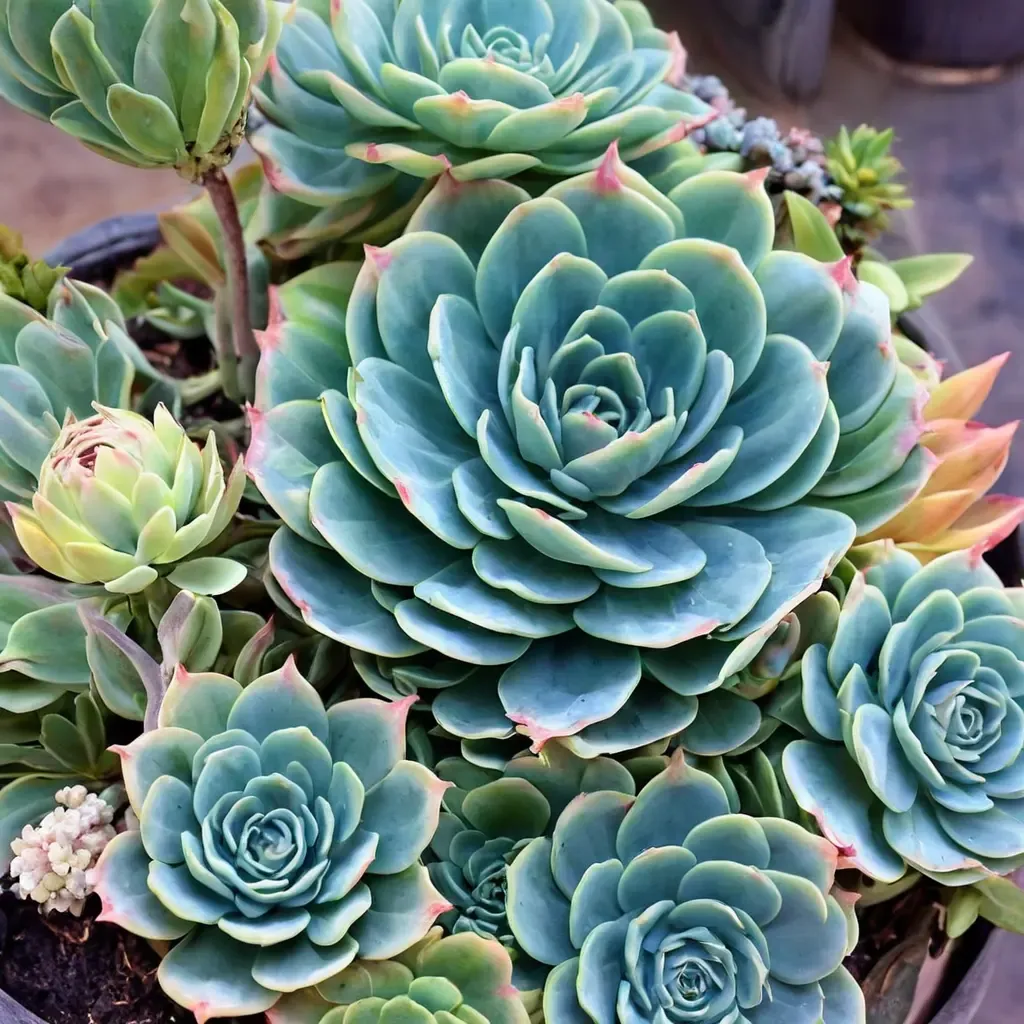
Blue Rose Echeveria
Echeveria imbricata
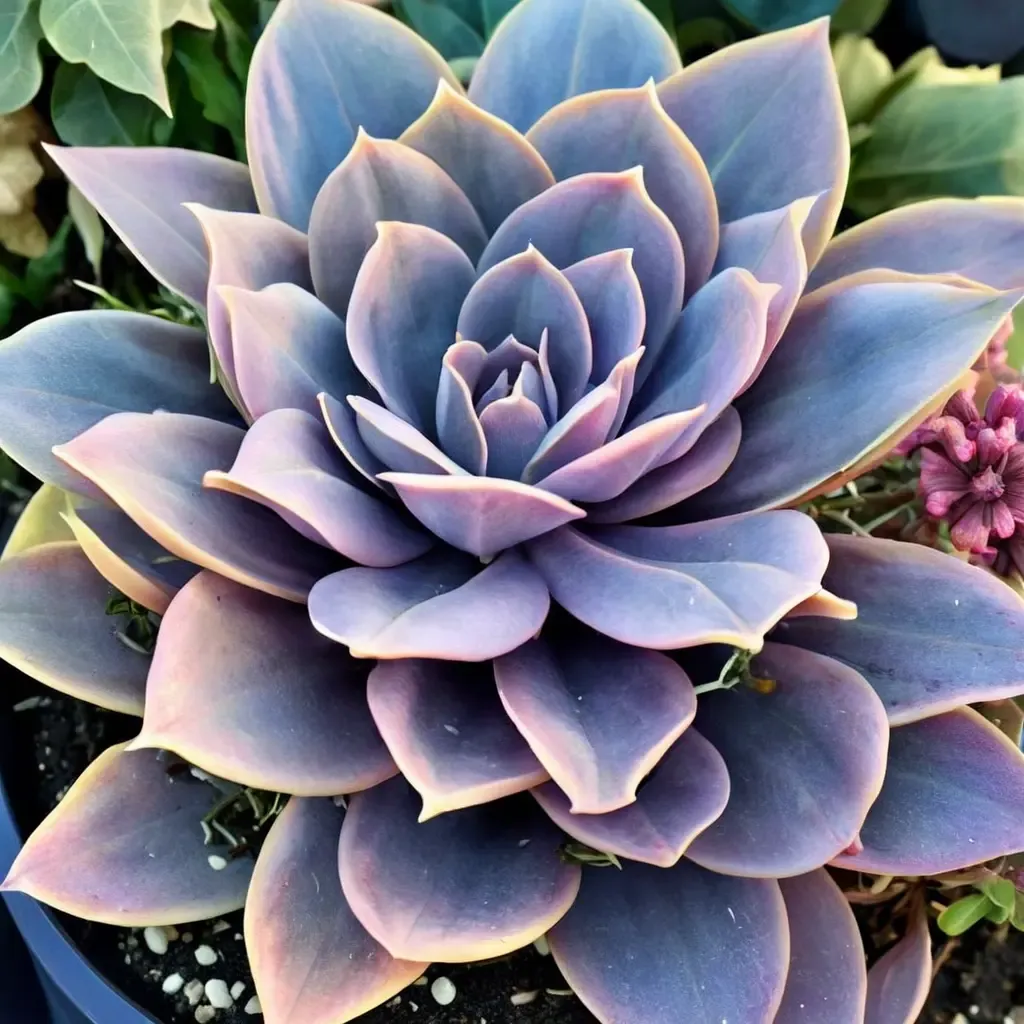
Perle Von Nurnberg
Echeveria secunda 'Perle Von Nurnberg'
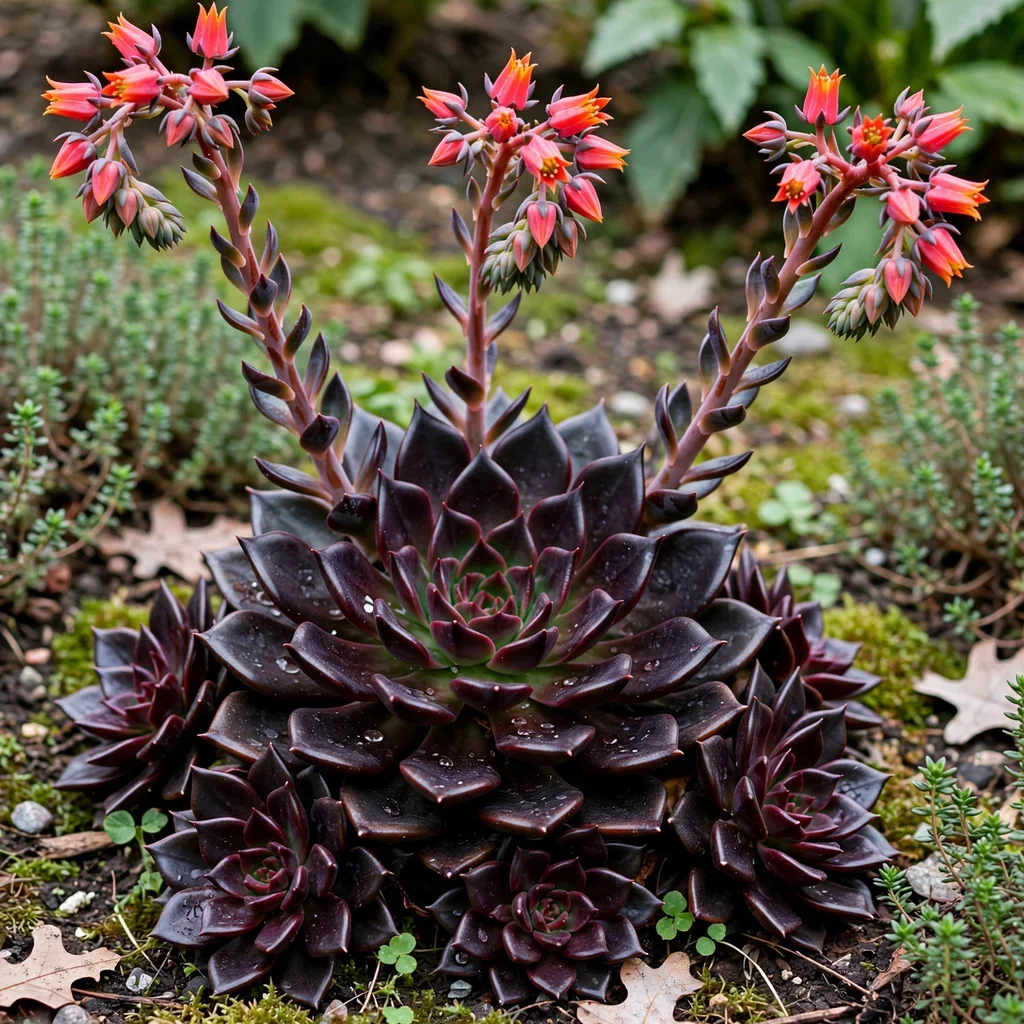
Echeveria Black Prince
Echeveria secunda 'Black Prince'
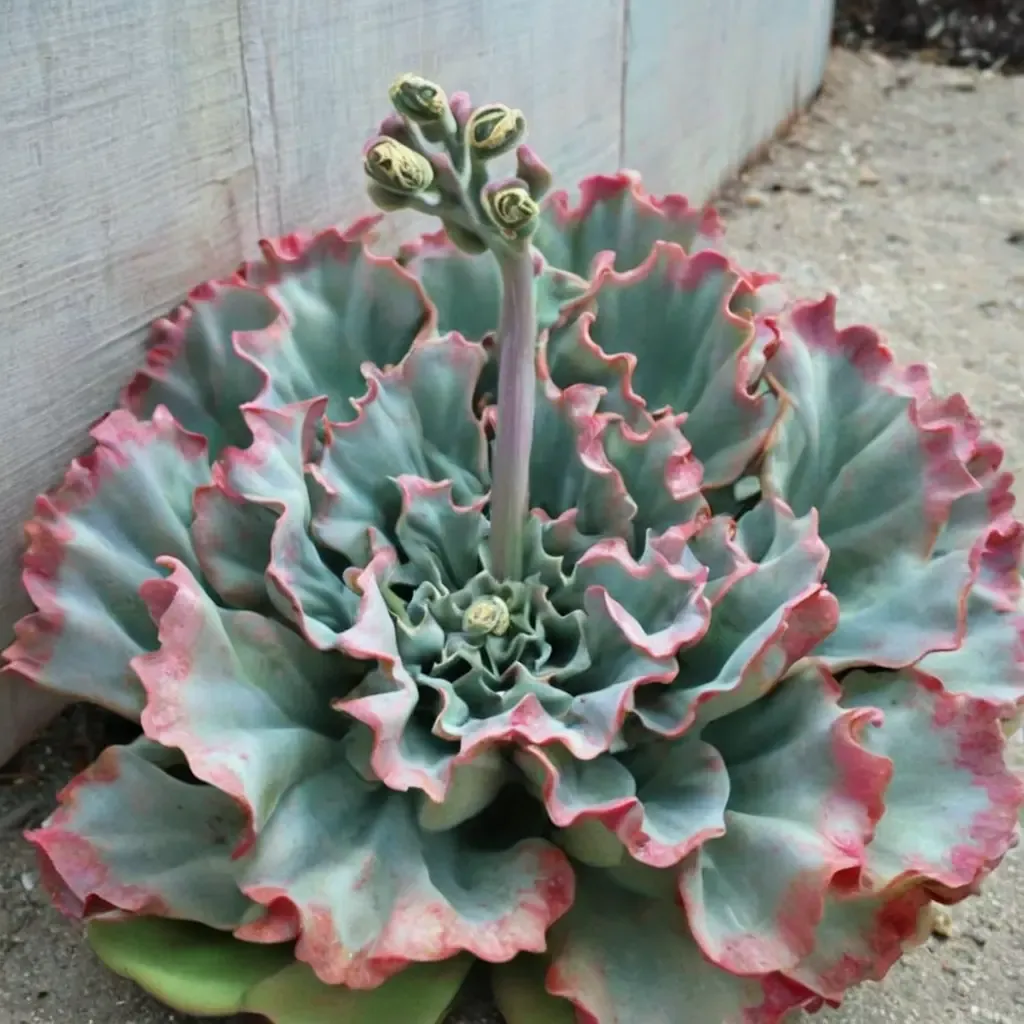
Lady Aquarius Echeveria
Echeveria gibbiflora 'Lady Aquarius'
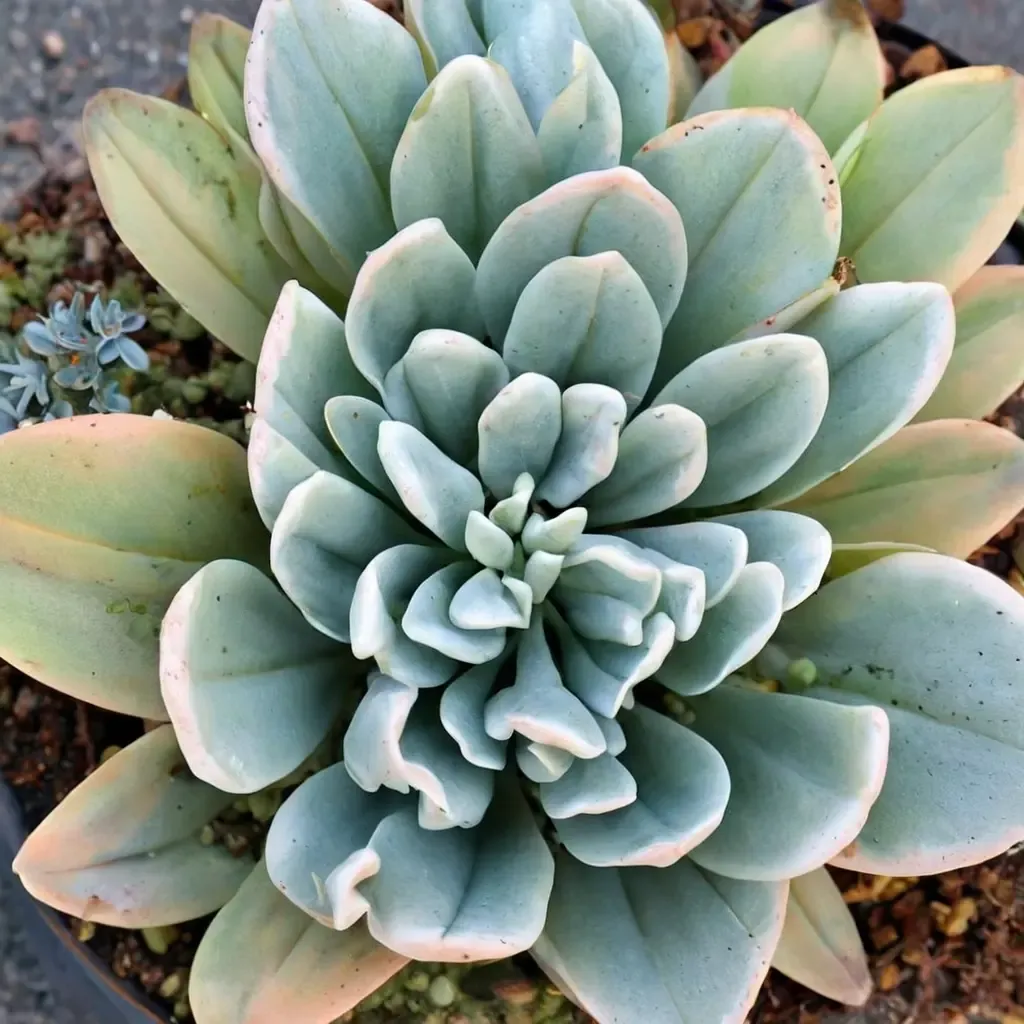
Caribbean Echeveria Echeveria Caribbean
Echeveria runyonii 'Caribbean'
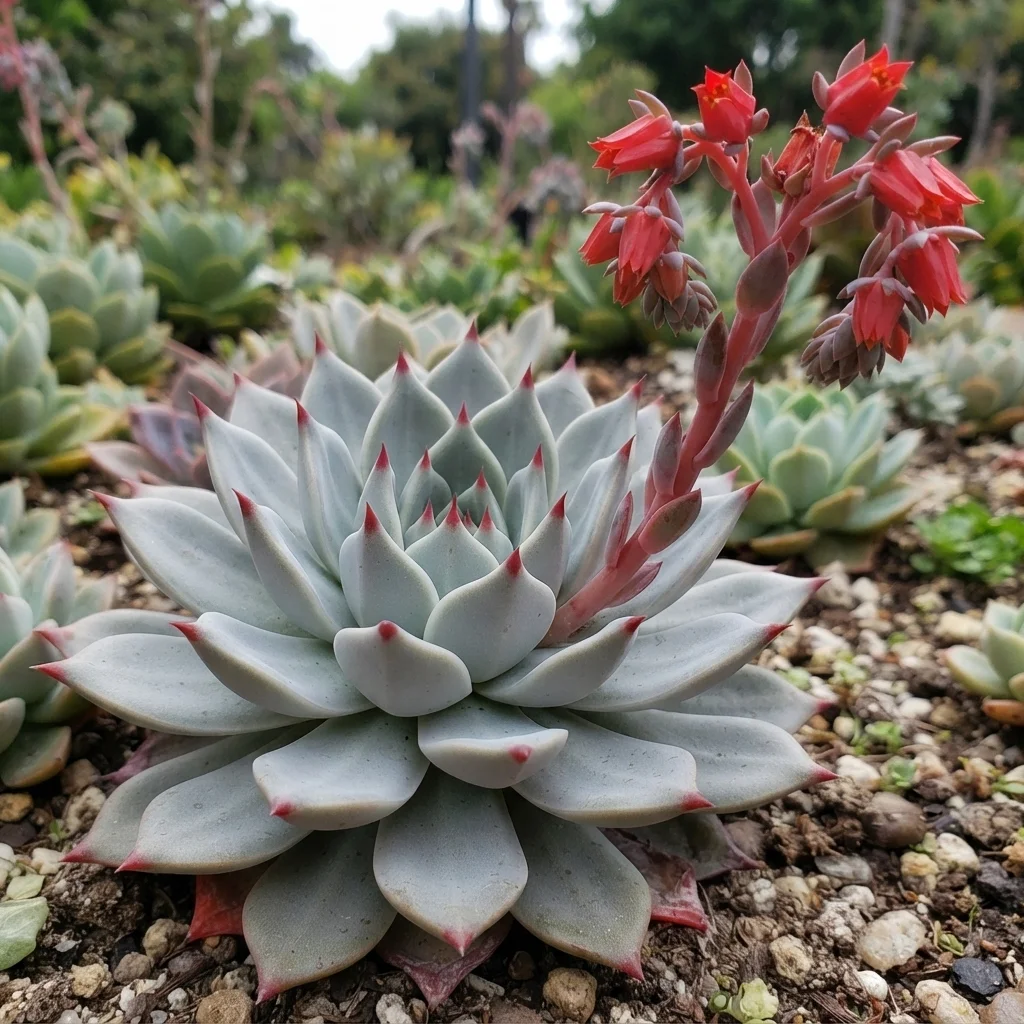
Echeveria
Echeveria colorata
Keep exploring
Explore the genus
Hardy in your zone?
Grow Mexican Snowball with confidence
See it in a design of your actual yard, get zone-matched care reminders, and track it season by season in your garden journal.