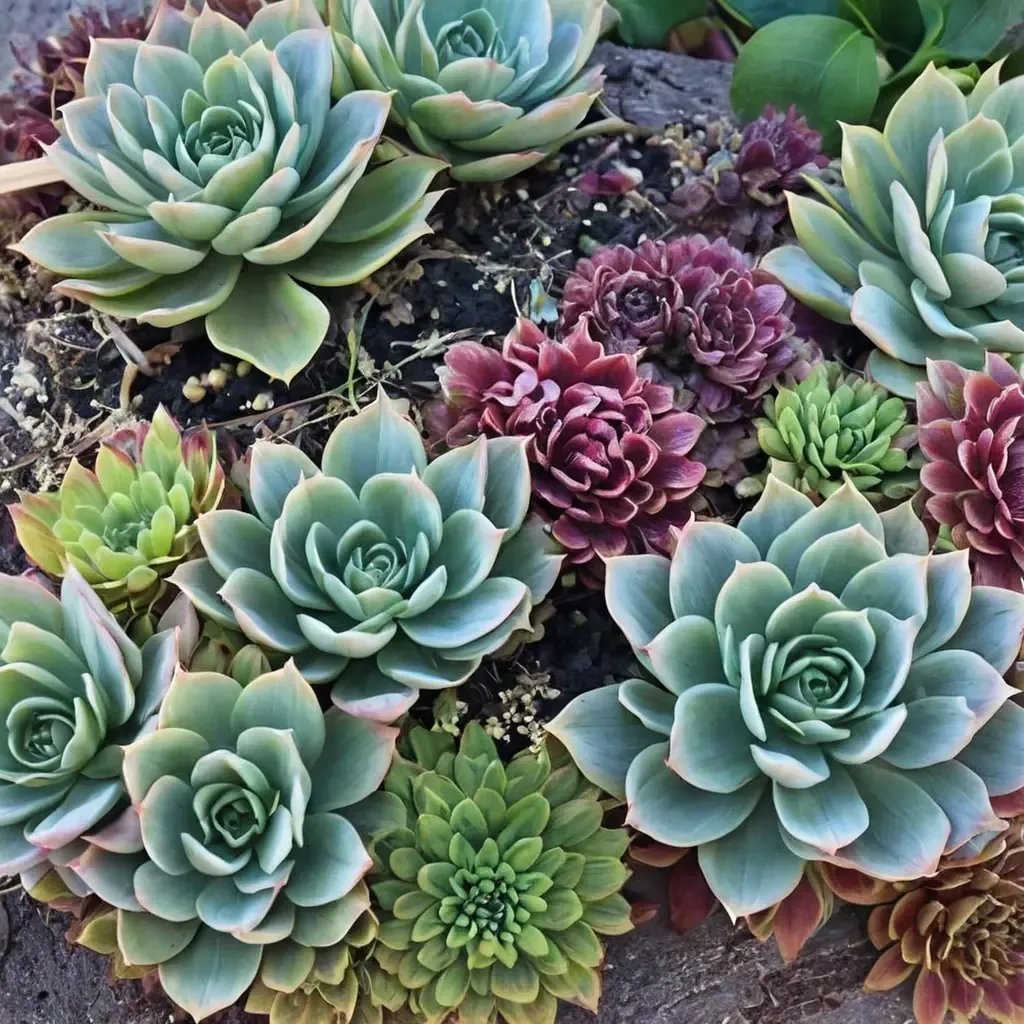
The Story
Plant Bio
Echeveria are succulent plants forming rosettes of fleshy leaves. They are native to semi-desert areas of Central America, Mexico and northwestern South America.
This collection features various Echeveria cultivars, all known for producing offsets, or 'chicks', around the main rosette, or 'hen'.
Uses & Benefits:
Perfect for small containers and rock gardens, adding a striking blue-green hue and architectural form.
Requires minimal watering and maintenance, ideal for low-effort gardens.
Supports local pollinators by providing nectar and habitat.
Essentials
At a Glance
Plant Type
Cactus Succulent
Height
4"
Width
6"
Light
Full Sun, Partial Sun
Zones
9, 10
Water
Low
Humidity
Low
Lifespan
Perennial
Native To
Mexico
Toxicity
Non-toxic
Bloom period
Summer – Late summer
J
F
M
A
M
J
J
A
S
O
N
D
In flower about 3 months of the year
Planting
How to Grow
- Tuck succulent cuttings into well-draining soil in spring.
- Mist soil lightly until roots develop, about 2-3 weeks.
- Place in bright, indirect sunlight for optimal growth.
- Water sparingly, allowing soil to dry completely between watering.
- Fertilize with cactus or succulent feed during active growing season.
- Ensure good air circulation to prevent fungal issues.
Pro Tip
Use a sandy or gritty soil mix for excellent drainage and root health.
Keep It Thriving
Care Guide
Do
- Water only when soil is completely dry 💧
- Provide bright, indirect sunlight daily 🌞
- Use well-draining soil to prevent rot
- Repot in spring when plant outgrows container
- Monitor for pests regularly
Don't
- Avoid overwatering; succulents are drought-tolerant ❌
- Don’t expose to prolonged direct sunlight in intense heat
- Do not use heavy or clay soils that retain moisture
- Avoid handling leaves roughly to prevent damage
Seasonal Care Calendar
| Task | Jan | Feb | Mar | Apr | May | Jun | Jul | Aug | Sep | Oct | Nov | Dec |
|---|---|---|---|---|---|---|---|---|---|---|---|---|
| Fertilize | ||||||||||||
| Pest Check | ||||||||||||
| Propagate | ||||||||||||
| Winter Prep |
Watch Out For
Pests & Diseases
Common Pests
Common Diseases
In the Garden
Landscape Uses & Companions
Landscape Uses
Desert-themed containerRock garden accentSucculent border
Companion Plants
Multiply
Propagation Methods
Good to Know