The Story
Plant Bio
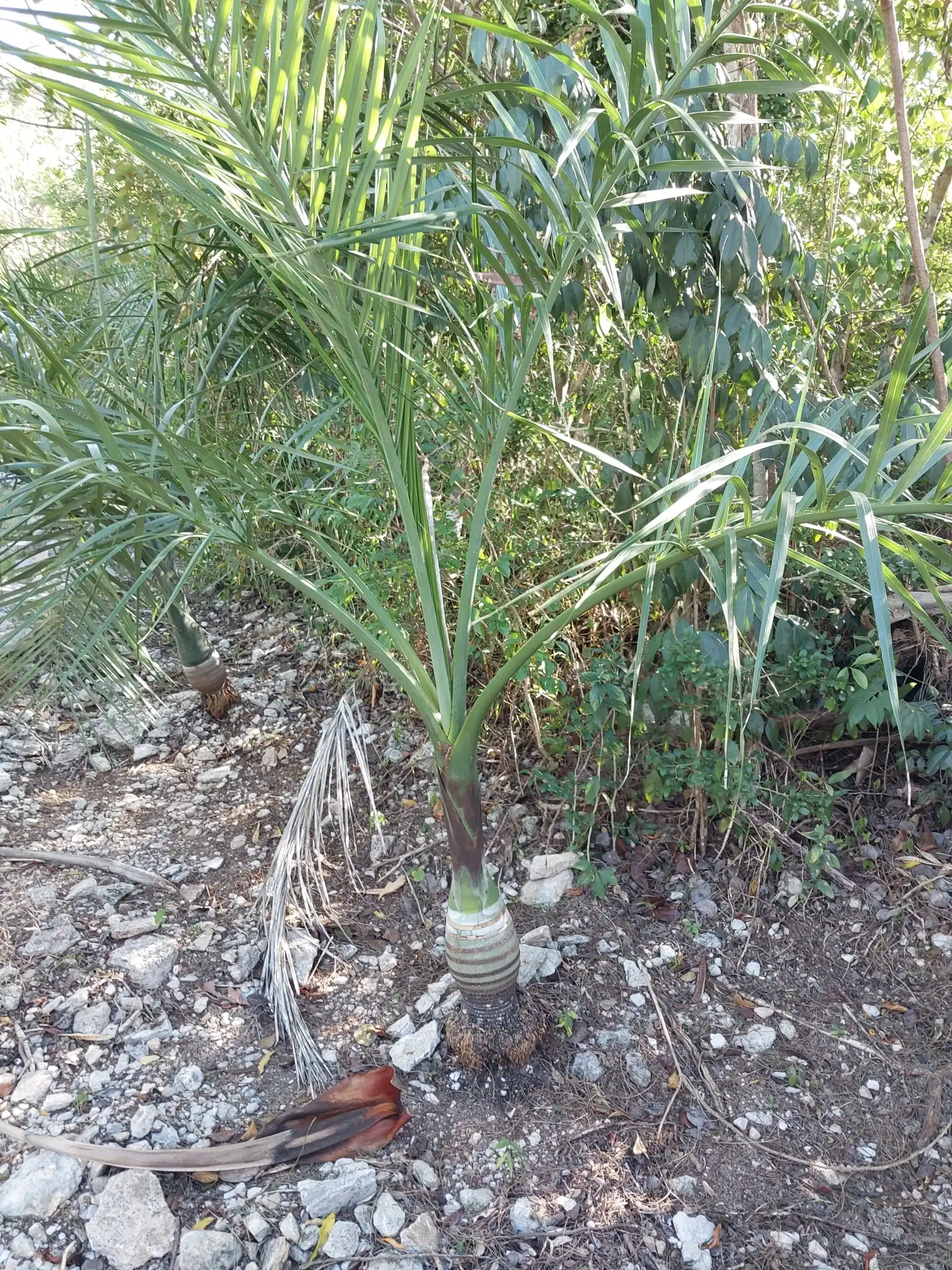
Pseudophoenix sargentii is a slow-growing, solitary palm native to South Florida, the Florida Keys, and the Caribbean, reaching ten to twenty-five feet in height. It forms a smooth gray trunk with prominent ringed leaf scars and holds a sparse crown of blue-green fronds with silvery undersides.
This species is distinguished by a trunk that often bulges at the middle or base and arching leaves with stiff leaflets set at divergent angles. Bright red, multi-lobed cherry-like fruits hang below the foliage following small yellowish flowers.
Uses & Benefits:
Essentials
At a Glance
Plant Type
Tropical
Height
300"
Width
144"
Light
Full Sun, Partial Sun
Zones
10
Water
Low to moderate
Humidity
High
Lifespan
Perennial
Native To
South Florida, Caribbean, Central America
Toxicity
Non-toxic
Bloom period
Spring – Summer
In flower about 6 months of the year
Planting
How to Grow
- Plant in a full-sun to light-shade location with sandy or limestone-based soil that drains freely.
- Set the root ball level with the surrounding soil grade and firm the ground without compacting it.
- Water deeply at planting and regularly during the first growing season until established.
- Apply a slow-release palm fertilizer containing magnesium and manganese once or twice per year during active growth.
Pro Tip
Leave green and yellowing fronds intact; removing leaves before they turn completely brown deprives the crown of recycled nutrients and slows trunk growth.
Keep It Thriving
Care Guide
Do
- Do plant in highly porous, sandy, or limestone-rich soil.
- Do allow the top layers of soil to dry between waterings once established.
- Do apply a micronutrient-enriched palm fertilizer in spring.
Don't
- Don't trim off leaves that are still green or yellowing.
- Don't plant in low-lying areas subject to standing water.
- Don't cut into the crownshaft or trunk tissue.
Seasonal Care Calendar
| Task | Jan | Feb | Mar | Apr | May | Jun | Jul | Aug | Sep | Oct | Nov | Dec |
|---|---|---|---|---|---|---|---|---|---|---|---|---|
| Fertilize | ||||||||||||
| Pest Check | ||||||||||||
| Prune | ||||||||||||
| Winter Prep |
Watch Out For
Pests & Diseases
Common Pests
Common Diseases
In the Garden
Landscape Uses & Companions
Landscape Uses
Multiply
Propagation Methods
Good to Know
Common Questions
Buccaneer Palm questions
What zones can Buccaneer Palm grow in?
Buccaneer Palm is hardy in USDA Zone 10. Inside that range it survives winter in the ground; outside it, grow it as an annual or a container plant you protect.
When does Buccaneer Palm bloom?
Buccaneer Palm typically blooms in spring through summer. Exact timing shifts a week or two with your zone — Sow's bloom calendar maps it to your garden.
Does Buccaneer Palm need full sun?
Buccaneer Palm does best in full sun to part shade. In hot climates, afternoon shade keeps blooms fresher longer.
Is Buccaneer Palm drought tolerant?
Yes — once established (usually after the first full season), Buccaneer Palm handles dry spells with minimal watering. Water deeply its first year to build the root system that makes that possible.
Keep exploring
Explore the genus
Hardy in your zone?
Grow Buccaneer Palm with confidence
See it in a design of your actual yard, get zone-matched care reminders, and track it season by season in your garden journal.