The Story
Plant Bio
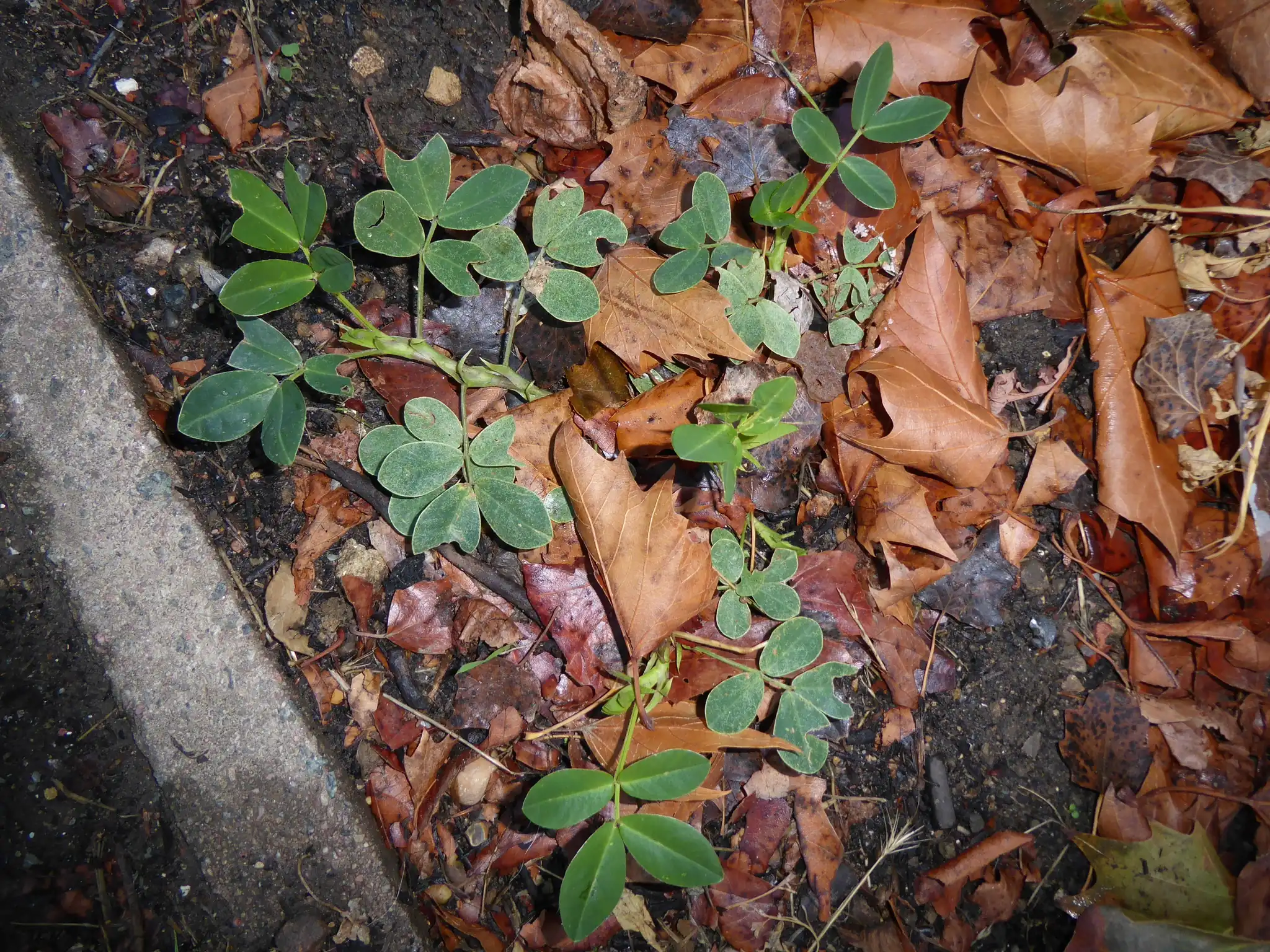
Arachis hypogaea, the peanut, is a tender herbaceous annual native to South America that grows as a low, branching mound of compound green leaves. The small, yellow pea-like flowers emerge in summer from axillary clusters close to the ground.
Following self-pollination, the flower stems elongate into downward-pointing pegs that actively push into loose soil to develop the subterranean seed pods. This unusual geocarpic habit requires light, sandy loam to allow the developing pods to mature successfully underground.
Uses & Benefits:
Essentials
At a Glance
Plant Type
Fruit Vegetable
Height
20"
Width
36"
Light
Full Sun
Zones
4, 5, 6, 7, 8, 9, 10
Water
Moderate
Humidity
Moderate to high
Lifespan
Annual
Native To
South America
Toxicity
Non-toxic (human allergen)
Bloom period
Summer
In flower about 3 months of the year
Planting
How to Grow
- Select a site in full sun with light, sandy, well-drained soil cleared of heavy clay and stones.
- Sow raw, shelled kernels directly into the warm soil at a depth of two inches after all danger of frost has passed.
- Apply a calcium supplement such as gypsum around the base of the plants when the first yellow flowers appear to support pod development.
- Dig up the entire plant in late summer or early fall when the foliage begins to yellow, then hang it in a dry, airy place to cure the pods.
Pro Tip
Do not hill soil around the base of the plants like potatoes; this practice obstructs the downward growth of the fruiting pegs and severely reduces your harvest.
Keep It Thriving
Care Guide
Do
- Grow in loose, sandy soil to allow the fruiting pegs to easily penetrate the ground.
- Provide consistent moisture during flowering and early pegging stages.
- Ensure excellent air circulation around the foliage to prevent fungal leaf issues.
Don't
- Do not plant in heavy, compacted clay soils which prevent pegging and rot the pods.
- Do not apply heavy nitrogen fertilizers, as the plant hosts nitrogen-fixing root nodules.
- Do not overwater during the late stages of pod maturation to avoid underground rotting.
Seasonal Care Calendar
| Task | Jan | Feb | Mar | Apr | May | Jun | Jul | Aug | Sep | Oct | Nov | Dec |
|---|---|---|---|---|---|---|---|---|---|---|---|---|
| Fertilize | ||||||||||||
| Harvest | ||||||||||||
| Pest Check | ||||||||||||
| Plant |
Watch Out For
Pests & Diseases
Common Pests
Common Diseases
In the Garden
Landscape Uses & Companions
Landscape Uses
Companion Plants
Multiply
Propagation Methods
Good to Know
Common Questions
Peanut questions
What zones can Peanut grow in?
Peanut is hardy in USDA Zones 4–10. Inside that range it survives winter in the ground; outside it, grow it as an annual or a container plant you protect.
When does Peanut bloom?
Peanut typically blooms in summer through summer. Exact timing shifts a week or two with your zone — Sow's bloom calendar maps it to your garden.
Does Peanut need full sun?
Peanut does best in full sun (6+ hours).
Is Peanut drought tolerant?
Yes — once established (usually after the first full season), Peanut handles dry spells with minimal watering. Water deeply its first year to build the root system that makes that possible.
Keep exploring
Explore the genus
Grow Peanut with confidence
See it in a design of your actual yard, get zone-matched care reminders, and track it season by season in your garden journal.