The Story
Plant Bio
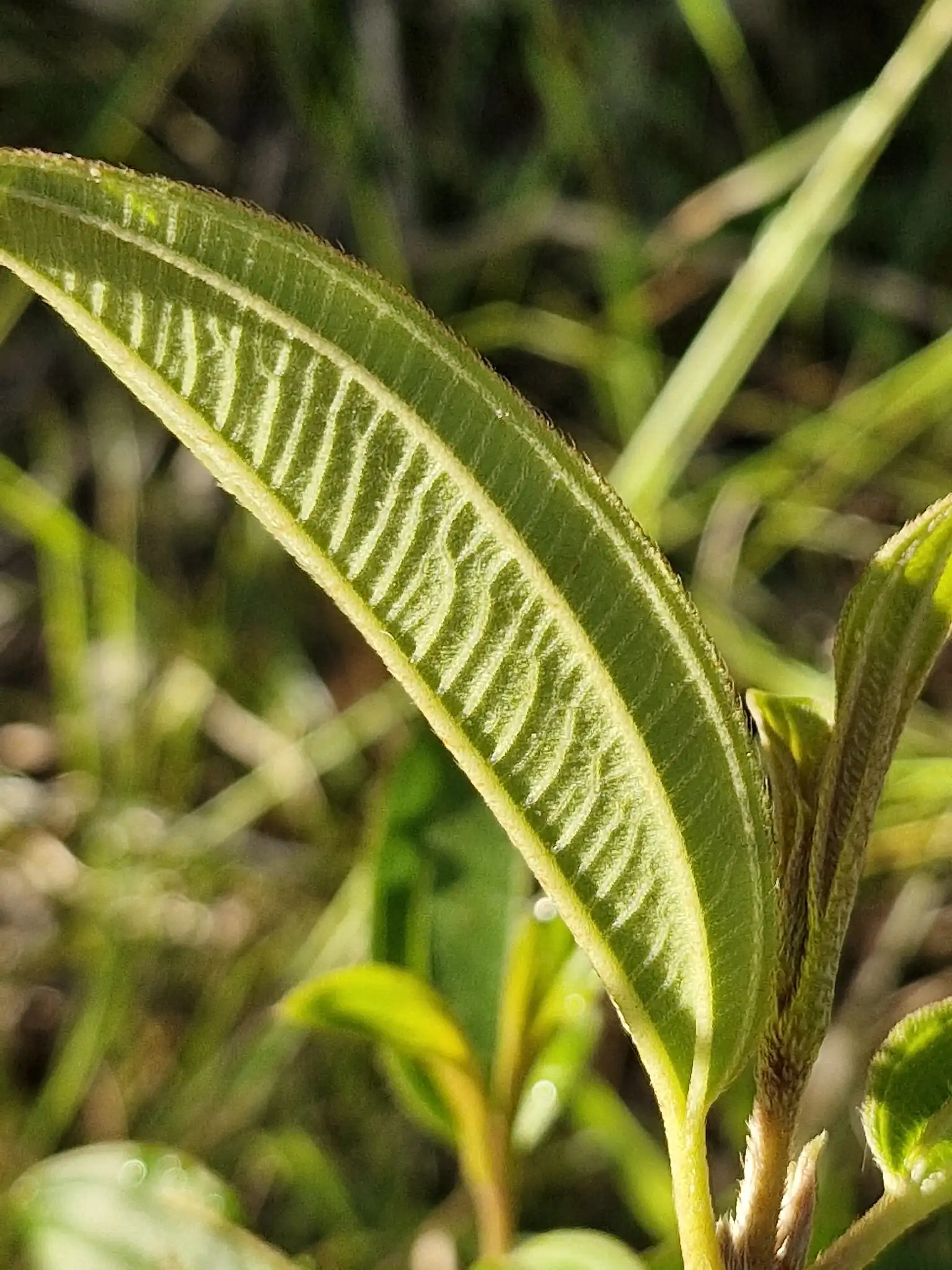
Melastoma malabathricum is an erect, multi-stemmed evergreen shrub featuring distinctive quadrangular reddish stems covered in bristly scales. The rough, opposite leaves display three to seven prominent parallel veins running from base to tip, providing a strong structural texture.
The five-petaled flowers feature highly distinct, unequal yellow stamens shaped like sickles. In tropical climates, these purple or magenta blooms appear year-round, followed by sweet, dark purple berries that stain the mouth.
Uses & Benefits:
Essentials
At a Glance
Plant Type
Shrub
Height
118"
Width
98"
Light
Full Sun, Partial Sun
Zones
10
Water
Moderate
Humidity
High
Lifespan
Perennial
Native To
Asia, Pacific Islands, Australia
Toxicity
Non-toxic
Bloom period
Spring – Summer
In flower about 6 months of the year
Planting
How to Grow
- Select a planting site in full sun to partial shade with acidic to neutral soil.
- Ensure the soil is well-drained, though the plant tolerates moist conditions near water margins.
- Water regularly during the establishment phase to maintain consistent soil moisture.
- Apply a balanced, slow-release organic fertilizer sparingly to avoid excessive vegetative growth.
Pro Tip
Prune lightly immediately after a flowering flush to maintain a bushy form; cutting back into old, leafless wood causes severe branch dieback.
Keep It Thriving
Care Guide
Do
- Prune lightly after flowering to encourage new buds.
- Provide high humidity and shelter from cold winds.
- Grow in a container if located outside USDA Zones 10 to 11.
Don't
- Do not prune heavily into old, bare, woody stems.
- Do not allow the soil to dry out completely during establishment.
- Do not plant outdoors in regions subject to hard frost.
Seasonal Care Calendar
| Task | Jan | Feb | Mar | Apr | May | Jun | Jul | Aug | Sep | Oct | Nov | Dec |
|---|---|---|---|---|---|---|---|---|---|---|---|---|
| Fertilize | ||||||||||||
| Pest Check | ||||||||||||
| Prune | ||||||||||||
| Winter Prep |
Watch Out For
Pests & Diseases
Common Pests
Common Diseases
In the Garden
Landscape Uses & Companions
Landscape Uses
Companion Plants
Multiply
Propagation Methods
Good to Know
Common Questions
Malabar Melastome questions
What zones can Malabar Melastome grow in?
Malabar Melastome is hardy in USDA Zone 10. Inside that range it survives winter in the ground; outside it, grow it as an annual or a container plant you protect.
Is Malabar Melastome deer resistant?
Not reliably. Deer may browse Malabar Melastome, especially tender spring growth — plan on repellents or fencing where pressure is high.
When does Malabar Melastome bloom?
Malabar Melastome typically blooms in spring through summer. Exact timing shifts a week or two with your zone — Sow's bloom calendar maps it to your garden.
Does Malabar Melastome need full sun?
Malabar Melastome does best in full sun to part shade. In hot climates, afternoon shade keeps blooms fresher longer.
Is Malabar Melastome drought tolerant?
Yes — once established (usually after the first full season), Malabar Melastome handles dry spells with minimal watering. Water deeply its first year to build the root system that makes that possible.
Keep exploring
Explore the genus
Hardy in your zone?
Grow Malabar Melastome with confidence
See it in a design of your actual yard, get zone-matched care reminders, and track it season by season in your garden journal.