1 named cultivar

The Story
Plant Bio
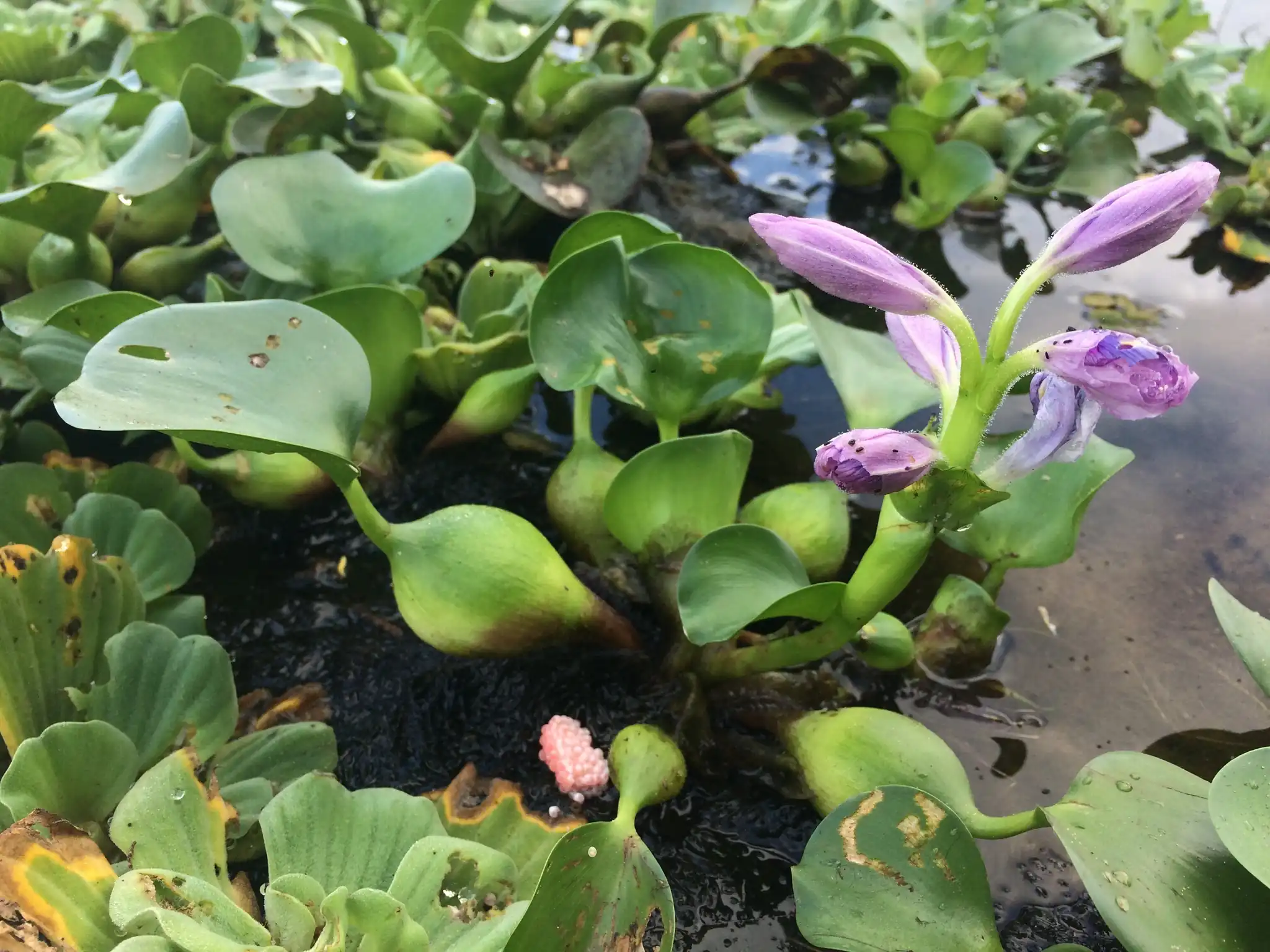
Eichhornia crassipes, the common water hyacinth, is a free-floating aquatic perennial of pantropical origin, sitting six to nine inches above the water on rosettes of glossy rounded leaves. Each leaf stalk is swollen into a spongy bladder that keeps the plant afloat, and lilac to lavender flower spikes open from June to September above trailing dark roots.
It is one of the most damaging aquatic weeds in the world, doubling its area in as little as a fortnight and sealing waterways into solid mats that kill the water beneath. It is a federal noxious weed and illegal to possess in several states, so check the law before acquiring it; a hardy water lily gives surface cover with none of the risk.
Uses & Benefits:
Essentials
At a Glance
Plant Type
Perennial
Height
8"
Width
12"
Light
Full Sun, Partial Sun
Zones
8, 9, 10
Water
Aquatic
Humidity
High
Lifespan
Perennial, grown as an annual in cold regions
Native To
Pantropical; South American in origin
Toxicity
Non-toxic
Planting
How to Grow
- Check whether it is legal to keep in your state before acquiring it.
- Keep it only in a self-contained pond or tub with no outflow.
- Site in full sun on still water.
- Thin the mat regularly; it doubles in a fortnight.
- Compost surplus plants well away from any watercourse.
- Remove and destroy everything before autumn in mild regions.
Pro Tip
Never dispose of surplus plants near water; a single rosette washed into a watercourse is how most infestations begin.
Keep It Thriving
Care Guide
Do
- Check state law before acquiring it 📋
- Keep it in a closed pond or tub only 🪣
- Thin the mat regularly through summer ✂️
- Compost surplus far from any watercourse 🚫
Don't
- Release it into any natural water ❌
- Let it cover more than a third of a pond surface ❌
- Dispose of it into a drain or ditch ❌
Seasonal Care Calendar
| Task | Jan | Feb | Mar | Apr | May | Jun | Jul | Aug | Sep | Oct | Nov | Dec |
|---|---|---|---|---|---|---|---|---|---|---|---|---|
| Clear | ||||||||||||
| Thin |
Watch Out For
Pests & Diseases
Common Pests
Common Diseases
In the Garden
Landscape Uses & Companions
Landscape Uses
Multiply
Propagation Methods
Good to Know
Common Questions
Water Hyacinth questions
What zones can Water Hyacinth grow in?
Water Hyacinth is hardy in USDA Zones 8–10. Inside that range it survives winter in the ground; outside it, grow it as an annual or a container plant you protect.
Is Water Hyacinth deer resistant?
Yes — Water Hyacinth is rated deer-resistant. Deer typically pass it over, though extreme hunger can override any plant's defenses.
When does Water Hyacinth bloom?
Water Hyacinth typically blooms in early summer to early fall through early fall. Exact timing shifts a week or two with your zone — Sow's bloom calendar maps it to your garden.
Does Water Hyacinth need full sun?
Water Hyacinth does best in full sun to part shade. In hot climates, afternoon shade keeps blooms fresher longer.
Keep exploring
Explore the genus
Hardy in your zone?
Grow Water Hyacinth with confidence
See it in a design of your actual yard, get zone-matched care reminders, and track it season by season in your garden journal.